‘Everything has ended for us’: Delhi Race Club workers lose jobs, some lose homes
He first cleaned the stables, and gave the horses a bath and a massage. “Then, I’d put the saddles on them and take them out for a walk. The jockey would then wait while I prepared Ashwa Bravo for a race. I would bring it back at 3 pm. At night, I’d make rounds to refill their water and check if they needed anything,” said Kaleem.
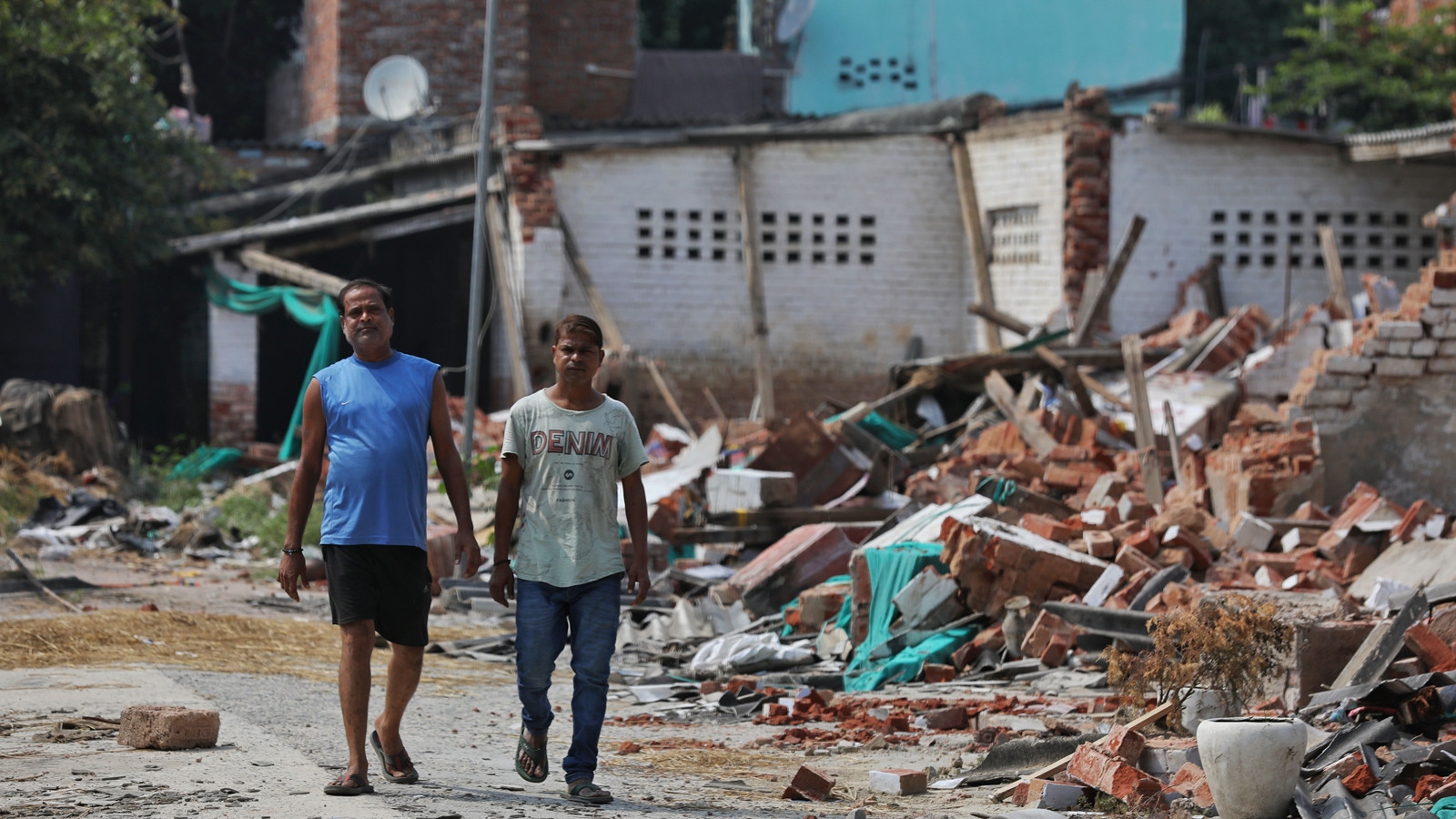
On Tuesday, the 48-year-old stood amid the rubble of the horse-wash rack, staring at the row of partially demolished stables where he had spent 20 years caring for racehorses.
Following the Centre’s takeover of the Delhi Race Club and Jaipur Polo Ground, near the Prime Minister’s residence in Lutyens’ Delhi, Kaleem and others who live in three nearby settlements — Bhai Ram Camp, DID and Masjid Camp — have lost the only jobs they knew.
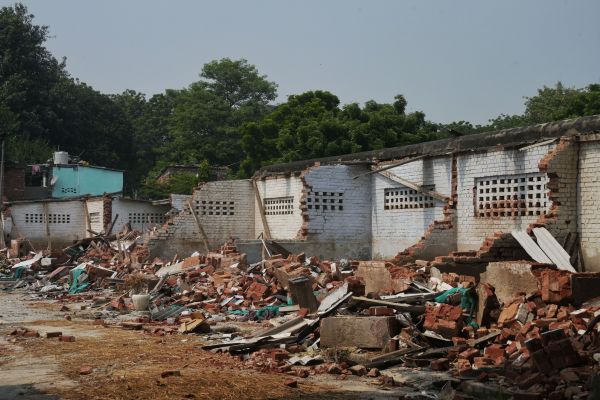 A row of partially demolished stables at the Delhi Race Club. (Express Photo by Abhinav Saha)
Kaleem, a resident of Bhai Ram Camp, said around 1,500-2,000 residents of the three camps were employed here as caretakers, grass cutters and caddies. From having a fixed income, they are now left struggling, depending on daily-wage jobs.
“I used to earn around Rs 19,000 a month, but now I am trying to find work at construction sites. A few times, I get work at the Air Force station, but it does not even pay Rs 500 a day,” Kaleem said.
Earlier in the day, Kaleem and another ex-employee Tara Chand, 40, had gone looking for work together. Chand had worked at the club maintaining the betting register and earned around Rs 18,000 a month.
Story continues below this ad
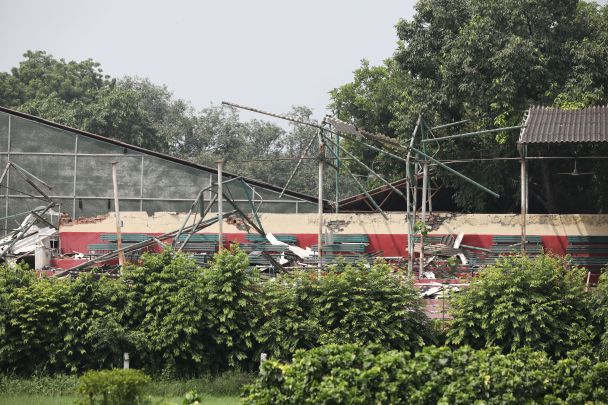 The iron benches where spectators once sat were rusted and, in places, uprooted, with tall grass growing around them. (Express Photo by Abhinav Saha)
Picking up a small square book with a photograph of a horse on its cover, titled ‘BOL Race Card,’ he said, “We’ve grown up selling these race cards at traffic signals for Rs 50. We used to get Rs 5 as our cut.”
Kaleem’s own connection to the Race Club went back even further. His father had worked as a “sais”, a local term for people who cared for horses. “He was their union leader, so I grew up watching him care for them.”
“I was very sad when the horses — 200-250 of them — were sold,” he added.
On August 11, the Estate Officer of the Land and Development Office (L&DO), which comes under the Union Ministry of Housing and Urban Affairs, issued an eviction order to the Club under the Public Premises (Eviction of Unauthorized Occupants) Act. It directed the club to vacate the premises within 15 days, terming them to be “unauthorised occupant” of the land.
Story continues below this ad
Last month, the Supreme Court dismissed the Club’s appeal against a High Court order, which had vacated a stay on the eviction proceedings initiated by the Centre. A district court also refused to grant any interim stay on the eviction proceedings.
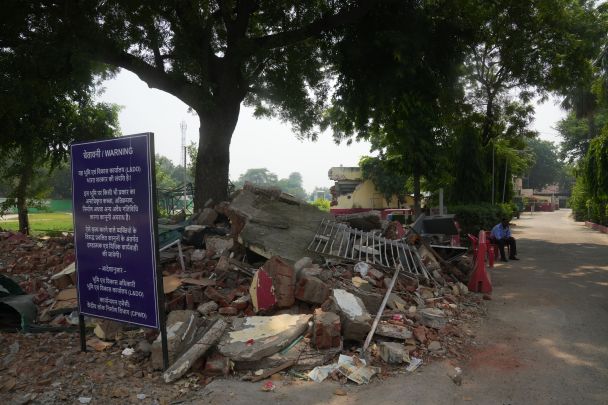 A total by the Land and Development Office on the premises. A guard is stationed next to it. (Express Photo by Abhinav Saha)
Jobs gone, now homes uncertain
For several former staff, the uncertainty surrounding their homes has dealt a double blow.
Nearly 700 families across three camps have got eviction notices. In court, the Centre said clearing these unauthorised structures was necessary to strengthen defence infrastructure and protect high-security installations.
Story continues below this ad
Their new homes are nowhere close — they are 45 km away in Savda Ghevra, a resettlement colony in Northwest Delhi.
That distance has become a problem for those still looking for work around Lutyens’ Delhi. “How will we travel for work here from there?” asked Chand. “My children are in school… Everything has ended for us.”
As of May 2026, while the litigations were pending at Delhi High Court, 192 dwellers had accepted the allotment letters and 136 had taken possession of the flats at Savda Ghevra.
 On August 11, the Estate Officer of the Land and Development Office issued an eviction order to the Club. (Express Photo by Abhinav Saha)
For one family in Masjid Camp, the move proved difficult.
Story continues below this ad
A woman in her late 40s was waiting anxiously for her husband. He had lost his job at the club and was now working as a caddie at the nearby Delhi Golf Club. But he was paid only when he assisted someone.
“Aas laga ke baithe rahete hai ki aajaaye number, teen din se aaya nahi hai, abhi bhi vo kahde honge line main (I sit here hoping that his turn will come, but it hasn’t for the past three days. He must be waiting),” she said.
The family had shifted to Savda Ghevra three months ago, but her husband was unable to find work there. “He is a BA graduate from Dyal Singh College but hasn’t been able to find a skilled job,” she said.
Then, there was the question of her son’s school. “My son is in Class 12. We would leave at 6 am for school but couldn’t reach even by 8 am. So we shifted back last month,” she said.
Story continues below this ad
Meanwhile, a bouncer who had been hired on contract still had a job. But his duties had changed: he now guarded the security staff and iron rods at the site.
“There used to be 10 of us, but now we’re just three left,” he said, speaking on condition of anonymity.
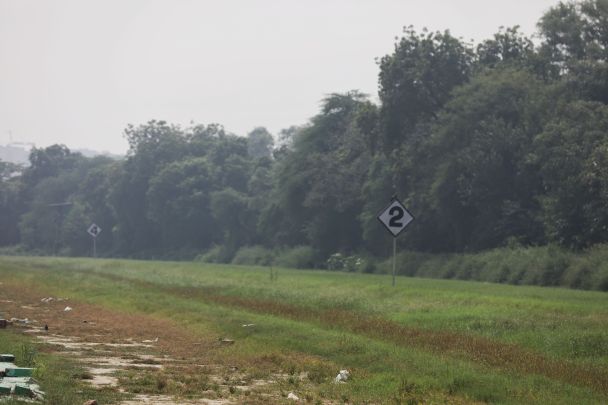
At the Club, Kaleem and Chand walked from their homes abutting the Club, past the razed stables, and looked across the 53-acre grounds. The iron benches where spectators once sat were rusted and, in places, uprooted, with tall grass growing around them. Guards remained at the site.
KioskNews shows a cleaned-up reading view extracted from the publisher’s page — the original always lives on their site, not ours.