Fuel protests reveal the economic risks threatening Syria’s fragile transition - analysis
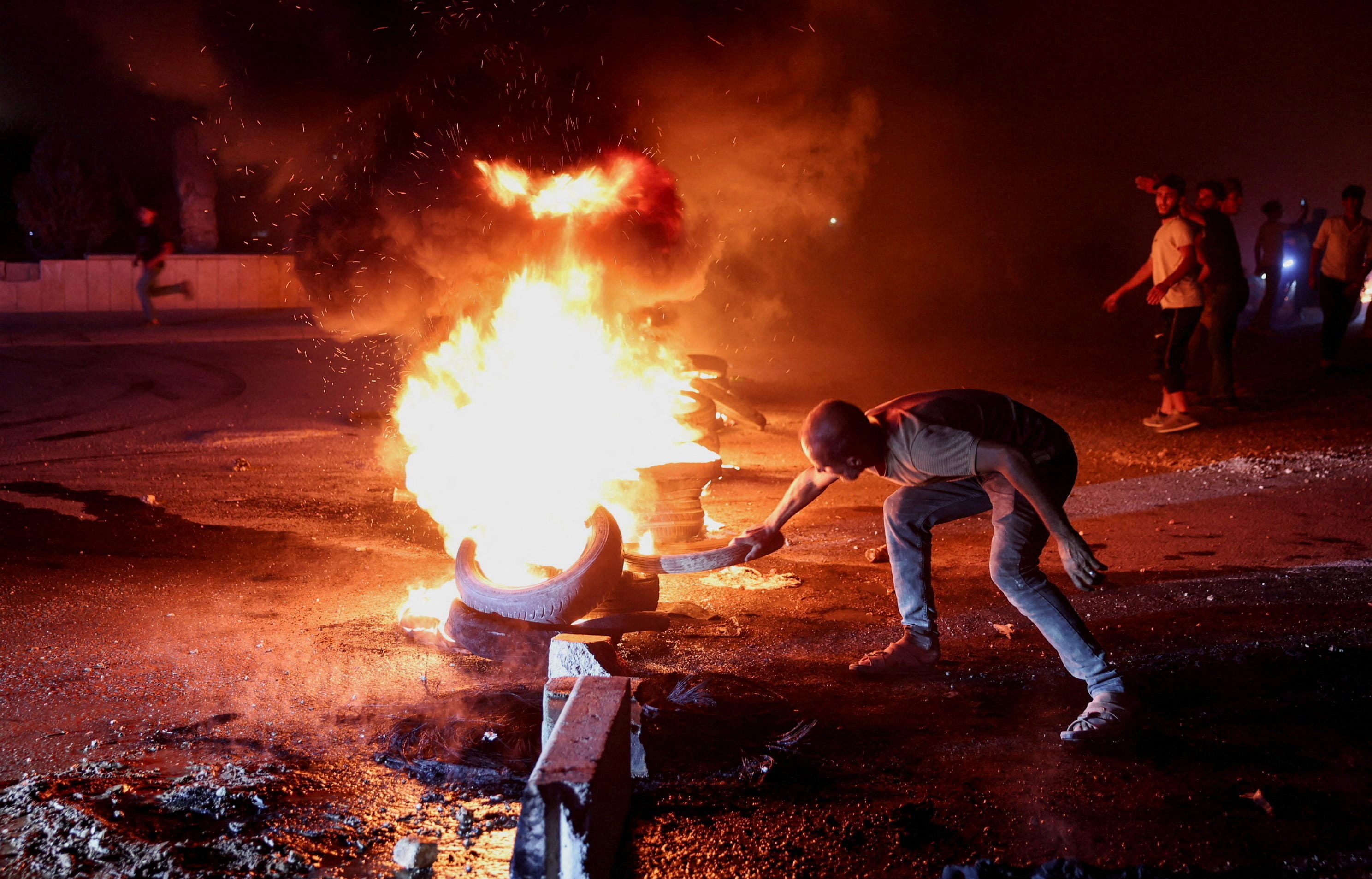
The protests have affected most of the country. This includes incidents in Aleppo in the north, Dara’a in the south, Deir Ezzor on the Euphrates River, and Hasakah.

Syria is facing a wave of protests over the price of fuel. The protesters have blocked roads, and videos show them burning tires and other debris. Reuters reported that “Syria's government on Saturday raised diesel prices by 40% to 175 Syrian pounds ($1.32) a litre.” This is expensive for Syrians who are trying to recover from years of war and reconstruct their country.
The protests have affected most of the country. This includes incidents in Aleppo in the north, Dara’a in the south, Deir Ezzor on the Euphrates River, and Hasakah. As such, it is a major test for Damascus. The protests come as Syria continues to try to rebuild and attract investment. It also comes in the wake of the murder of a Kurdish soldier and protests in Kobani, in which nine people were killed in a local prison. As such, Syria faces many tests at this time.
Conflict with Iran leads to broad energy crisis across region
The fuel crisis is connected to the broader energy price crisis due to the conflict with Iran. As such, the Iran conflict may be roiling Syria at a time when Damascus can least afford this. Energy companies have begun investing in Syria. In addition, Iraq has been exporting oil via Syria.
A large US business delegation visited Damascus on September 14 as the United States and Syria seek to expand economic ties and encourage investment in the country. The delegation includes representatives of 50 companies and more than 80 participants, according to Syria’s state-run SANA news agency.
US Deputy Assistant Secretary of State Jake McGee said American companies were being encouraged to invest in Syria. “We encourage US businesses to invest in the Syrian market, which offers significant opportunities,” he said, according to SANA. He noted that companies such as Chevron, HKN, Visa and Mastercard had already taken steps to enter the Syrian market or reached agreements with Syrian counterparts.

Syria has undergone major changes since the fall of the Bashar al-Assad regime
The visit is the first US Chamber of Commerce mission to Syria. It comes amid improving ties between Washington and Damascus following the removal of broad US sanctions in 2025. Syrian officials said they hope political progress can now lead to investment and longer-term economic partnerships.
Syria has undergone major changes since the fall of the Bashar al-Assad regime in December 2024. Assad fled the country after a rapid offensive led by Hayat Tahrir al-Sham (HTS) captured Aleppo and then Damascus, ending more than five decades of Assad family rule. HTS, which emerged from groups linked to al-Qaeda but broke with the organization years ago. It had previously controlled Idlib in northwest Syria. Its leader, Ahmed al-Sharaa, subsequently became Syria’s transitional president and has sought to transform the former rebel movement into the nucleus of a new Syrian government.
Syria has also begun a political transition. Parliamentary elections were held in October 2025, the first since Assad’s fall. Two-thirds of the 210-member People’s Assembly were chosen through electoral colleges, while Sharaa was given authority to appoint the remaining third. Voting was postponed in areas outside Damascus’s control, including parts of northeast Syria and Suwaydah.
A key challenge is unifying Syria after years of war. Damascus has sought to integrate armed groups into new national institutions. This includes the US-backed Syrian Democratic Forces (SDF), which signed an agreement with Sharaa in March 2025 to integrate its military and civilian institutions into the Syrian state. The process has continued into 2026, potentially bringing much of eastern Syria back under Damascus’s authority.
KioskNews shows a cleaned-up reading view extracted from the publisher’s page — the original always lives on their site, not ours.