Labor migration plan revealed: Burke to ramp up deportations and bring in backpacker ballot
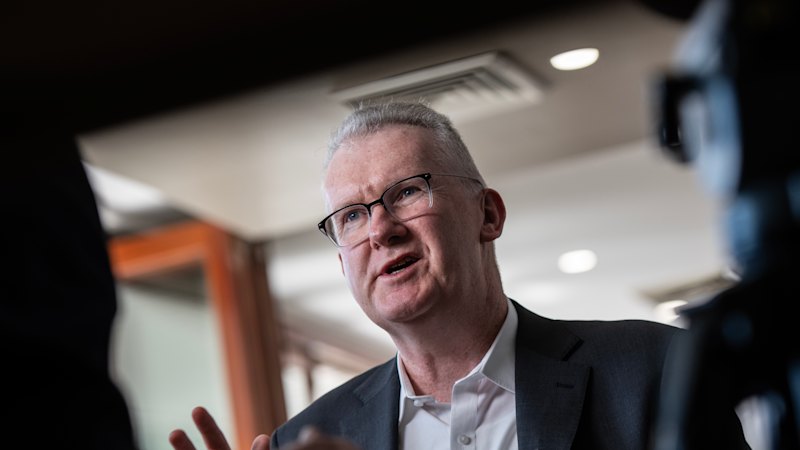
Home Affairs Minister Tony Burke will ramp up deportations, introduce a ballot system for backpackers and prioritise construction workers as he seeks to restore confidence in the migration program and salvage Labor’s long-awaited reforms.
More than a month after his initial speech was cancelled following a cabinet debate, Burke will try to stem bleeding to One Nation by balancing economic needs with a crackdown on those who “seek to rort or defraud the system”.
They will include bolstered efforts to boot out of the country 77,000 unlawful non-citizens, as first revealed in this masthead.
The government scheduled Burke’s speech on the same day as the Bureau of Statistics released a potentially damning set of stats on migration, and a day before Prime Minister Anthony Albanese departs to the United Nations in New York.
Released an hour before Burke spoke, the figures showed net migration moderating from 309,500 to 292,000. The number was slightly better than budget forecasts for this period but still well above Labor’s forecast of 245,000 for the 2026-27 year, justifying Labor’s desire to do more to bring down numbers.
Burke will also curtail visa-hopping and stop most students from bringing in relatives, pledge to pursue dodgy migration agents, and give higher priority to skilled workers in a range of sectors including health, defence and agriculture. Backpackers in the second and third year of their stay will have to submit to a ballot to see if they can remain, in a model that already applies for temporary migrants from China, India and Vietnam.
Labor failed to get support from the Coalition for what the government believed were the toughest measures. This masthead reported last week that Albanese asked Opposition Leader Angus Taylor to create a new expression of interest system that would effectively strip students of the right to appeal against their visa refusals, as well as rules that would have tested the legal limits of the Commonwealth’s ability to remove the right to apply for asylum protection.
These major moves, which would have cut back on the rising number of bogus asylum claims, will now struggle to be enacted because Albanese would not agree to Taylor’s demands to make it harder to repatriate ISIS brides and bring the net migration rate down by about 50,000 fewer than Labor’s target.
Labor’s new measures aim to bring net migration down from more than 300,00 to 225,000 next year – Labor’s budgeted forecast after years of overshooting targets. Burke admitted on Wednesday that the opposition’s recalcitrance to pass legislation had narrowed his options.
“The government supports immigration but is opposed to anyone rorting the immigration system,” Burke said in a statement released ahead of his speech.
“Almost everyone who comes to Australia is a good guest in our country. These reforms are to ensure that our migration system can be better targeted to the current needs of Australia.”
One Nation leader Pauline Hanson is proposing to radically reduce the figure for three years, temporarily reducing Australia’s population, a proposal large business groups said would trigger a recession, before settling after three years on a net overseas migration target of about 130,000. Nationals leader Matt Canavan sparked controversy inside the Coalition when he began advocating for negative migration in recent days, sparking a split with Taylor who does not support such a severe cut.
The Coalition will soon release a policy to lower net migration to a figure below the previously announced 170,000. The lower figure will reflect expectations of lower housing supply over coming years, according to opposition sources.
Burke will also announce a “No Further Stay” condition to make sure visitor visas are not misused, and update a ministerial direction to protect children and victims of domestic violence.
After business groups raised alarm bells about Labor’s go-slow on processing backpacker visas, Burke promised to ensure that processing times for backpacker applications would take no more than three months.
It is unclear if Burke’s announcement will go far enough to respond to community concern on migration. Former Labor adviser and migration expert Henry Sherrell wrote last month that a “few tweaks” would not go far enough to fix a broken system and counter populists such as Hanson.
After ministers last month raised concerns about the economic impact of Burke’s first proposal, the government said on Thursday, “Our focus is on attracting the skills Australia needs, supporting economic growth and productivity, and ensuring migration settings work for Australian workers and communities.”
“Australia welcomes people who make a genuine contribution to our country. Australia does not support people who seek to rort or defraud the system. We’re making changes to give us more control over who arrives, who stays and who leaves.”
The Coalition said Labor’s heart was not in the migration overhaul.
“Australians are being let down. The only way this government can grow the economy is through migration, population growth. It’s failing Australians, and that’s because their economic policies have failed, absolutely failed. Australians are getting poorer, and this is their only answer to try and keep their budget,” Taylor told reporters.
KioskNews shows a cleaned-up reading view extracted from the publisher’s page — the original always lives on their site, not ours.