Tainan’s diplomacy takes root in Britain
A new partnership with Greater Lincolnshire puts farming, food and heritage at the heart of Taiwan’s local outreach
By Ming-yeh T. Rawnsley / Contributing reporter in London


Tainan’s temples and food culture might seem a world away from Lincoln’s cathedral and the farmland of eastern England. Yet agriculture, historic places and the communities that depend on them offer a persuasive explanation for Taiwan’s newest local partnership in Britain.
Tainan Mayor Huang Wei-che (黃偉哲) and Greater Lincolnshire Mayor Andrea Jenkyns on Oct. 19 signed a sister-city agreement in a virtual ceremony witnessed by Taiwan’s representative to the UK, Vincent Yao (姚金祥). The Tainan government described it as Taiwan’s first sister-city partnership in Britain. Seven months after initial contact, the two sides had established a formal relationship.
The British partner is Greater Lincolnshire, rather than Lincoln City Council. That distinction gives the agreement a regional reach, encompassing interests in farming and food production alongside the university and historic city. It also helps explain why the connection has developed around agriculture, with potential extending into cultural exchange and environmental cooperation.
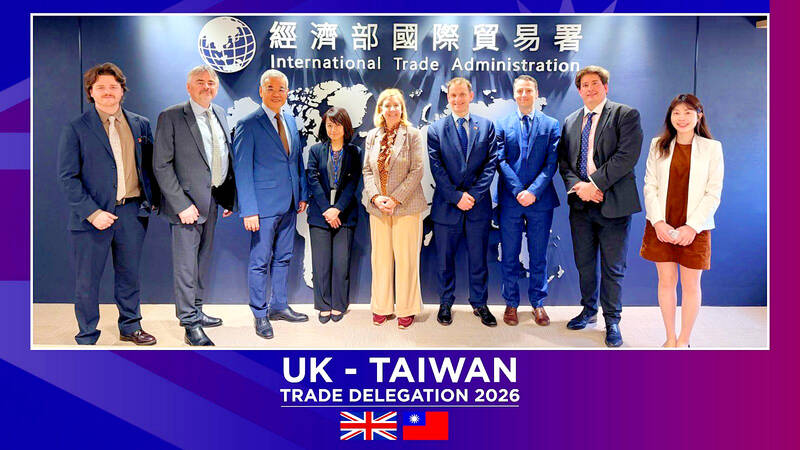
Greater Lincolnshire delegation visits Taiwan to advance landmark international partnership.
Photo courtesy of the Greater Lincolnshire Combined County Authority
DIPLOMACY WITH LOCAL ROOTS
The relationship began to take shape during Jenkyns’s visit to Tainan in March, when a delegation involving business and University of Lincoln representatives explored opportunities for cooperation. Taiwan’s representative office helped facilitate the contacts. Huang has identified agriculture and food as a starting point, with the possibility of expanding into trade, culture and tourism.
This is an example of paradiplomacy, the international engagement of local and regional governments. For Taiwan, such relationships carry particular significance. The nation’s restricted formal diplomatic relations and exclusion from many international institutions make local connections valuable routes to participation. A partnership allows Taiwanese communities to enter international conversations through what they know and do.
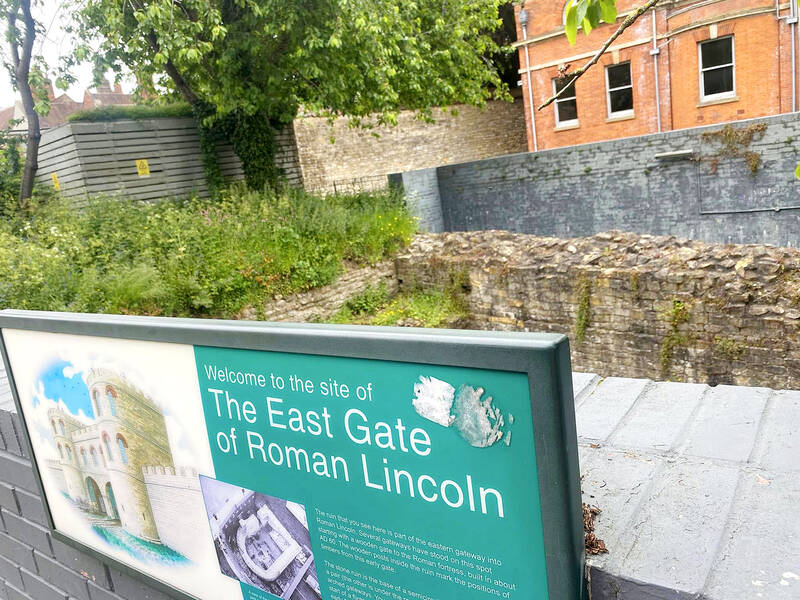
The remains of the East Gate of Roman Lincoln offer a glimpse into the city’s ancient past. Tainan and Lincoln’s histories differ substantially, but both places face questions about the relationship between inherited environments and contemporary life.
Photo: Ming-yeh T. Rawnsley
The diplomatic value, however, rests partly on the local rationale. An agreement is more likely to endure when local residents, researchers or businesses have a reason to maintain it. International visibility then grows from cooperation that residents can recognise as useful.
Tainan and Greater Lincolnshire illustrate how national and local engagement can reinforce one another. Diplomatic representatives helped bring the partners together, while regional leaders, businesses and a university supplied interests around which a relationship could develop. This makes paradiplomacy a collaborative undertaking, with several institutions contributing to its progress.
Its possibilities remain constrained. As research on Taiwan’s paradiplomacy suggests, practical cooperation often creates openings that are less accessible to national diplomacy. Those openings can narrow when Beijing interprets local engagement as implying sovereign recognition. Sister-city ties expand Taiwan’s options, but remain exposed to the political pressures surrounding its international participation. Their resilience depends partly on whether foreign partners and local communities see sufficient value in sustaining them.
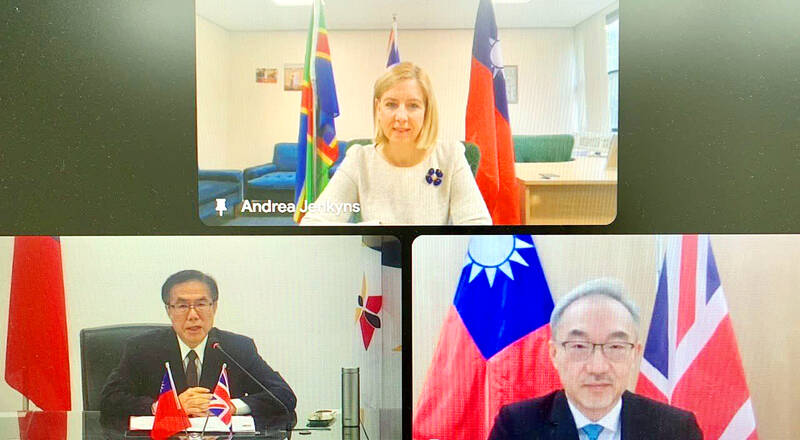
Mayor of Greater Lincolnshire Andrea Jenkyns, top, Tainan Mayor Huang Wei-che, bottom left, and Representative to the UK Vincent Yao, bottom right, virtually attend the signing of a sister-city agreement yesterday.
Photo courtesy of the Tainan City Government
‘INFINITE CITIES FORUM’
A useful framework for assessing the new sister-city partnership comes from Democratic Progressive Party’s Taipei mayoral candidate, Puma Shen (沈伯洋). He has proposed an “Infinite Cities Forum” (無限城論壇), opening exchanges between Taipei and cities such as Tokyo, New York, Paris and London in place of the Taipei–Shanghai Twin-City Forum.
The proposal’s name generated exchanges about anime references. Its more substantial contribution concerns the purpose of city diplomacy. Shen has emphasised activities that produce continuing value, opportunities for young people to participate, and follow-up between forums. These are useful standards for assessing international exchanges across party lines.

Lincoln Cathedral is a magnificent part of England’s historical heritage, standing above the city for centuries and carrying the stories of generations.
Photo: Ming-yeh T. Rawnsley
A relationship’s worth cannot be established simply by the prominence of its participants or the number of agreements signed. The more revealing questions concern who becomes involved and whether contact leads to sustained work. These questions apply as readily to Tainan’s British partnership as to Taipei’s dealings with Shanghai.
Greater Lincolnshire also broadens the discussion beyond global capitals. For a city seeking agricultural expertise, a region with relevant research and industry connections might be a more productive partner than a famous metropolis. The Tainan agreement suggests that the geography of city diplomacy can emerge from shared needs, including those of communities outside major urban centres.
AGRICULTURE GIVES THE PARTNERSHIP SUBSTANCE
Agriculture provides the clearest rationale for the new relationship. Both places are important agricultural areas, while the University of Lincoln’s Institute for Agri-Food Technology brings together expertise in robotics, artificial intelligence, crop science and food production. Tainan combines agricultural activity with a substantial technology sector.
This creates potential for cooperation around the practical conditions of farming. Labour requirements, equipment costs and the efficient use of resources are questions through which researchers and producers can find common ground. Agricultural technology becomes valuable when it works under the conditions farmers actually face.
Different crops, climates and farm structures also make the comparison useful. An approach developed in eastern England cannot automatically be applied in southern Taiwan. Understanding why it succeeds in one setting, and what would need to change in another, is itself an opportunity for learning. The relationship could connect technical expertise with experience that remains rooted in particular places.
Food extends these possibilities beyond the farm. For Tainan, cuisine connects agricultural production with cultural identity and tourism. Greater Lincolnshire’s food businesses bring another set of experiences in processing, marketing and reaching consumers. Exchanges in these areas could give smaller enterprises access to knowledge and contacts that are difficult to establish independently.
There is a cultural dimension to this economic connection. Food allows people to encounter a place through products and practices that are part of everyday life. Cooperation grounded in production and consumption could make the partnership intelligible to residents who have little direct interest in diplomatic affairs.
HERITAGE AND ENVIRONMENT
Lincoln’s cathedral, castle and historic streets offer another point of connection with Tainan’s temples and historic neighbourhoods. Their histories differ substantially, but both places face questions about the relationship between inherited environments and contemporary life. Conservation involves choices about accessibility, the reuse of buildings and the effects of visitors on residents and local businesses. It also involves decisions about which histories are told. These shared questions give cultural exchange a purpose beyond promoting destinations: they create opportunities to compare how communities manage places that people continue to inhabit.
Water offers a further connection. Lincolnshire’s coastal flood risks and Tainan’s coastal wetlands provide grounds for examining the relationships among land use, livelihoods and environmental protection. Their weather patterns and administrative arrangements differ, but both settings invite discussion of how communities understand environmental risk and adapt to changing conditions.
These are potential areas of cooperation, rather than outcomes already secured by the agreement. Their importance lies in the breadth of the relationship’s rationale. Farming, historic environments and coastal communities connect international engagement with questions that already matter locally.
MAKING THE PARTNERSHIP LAST
Whether these connections develop will depend on institutions and people beyond the two mayors. Responsibilities differ between Britain and Taiwan, and regional leadership cannot deliver every aspect of cooperation directly. Universities, relevant councils, businesses and community organizations can provide the expertise and continuity that a broad agreement needs.
Participation also determines how widely its benefits are felt. Shen’s emphasis on opportunities for young people is relevant. For students, emerging researchers, creators or young farmers, an international relationship might become meaningful through access to collaborators and experience. Without such opportunities, city diplomacy can remain concentrated among those who already travel and maintain institutional connections.
Sustaining that participation takes resources and administrative attention. Changes of leadership can weaken relationships built around individual enthusiasm. Cooperation rooted in several organizations has a stronger chance of continuing because more people have an interest in preserving it.
The Tainan—Greater Lincolnshire signing has created space for that process to begin. Its significance will become clearer in the relationships that follow: whether a producer finds a useful collaborator, a researcher develops a shared question, or a community learns from another’s experience. For Taiwan, these connections make international participation part of everyday work. That is where a sister-city agreement can acquire a life beyond the ceremony.
Ming-yeh T. Rawnsley is a research associate at SOAS University of London’s Center for Taiwan Studies.
KioskNews shows a cleaned-up reading view extracted from the publisher’s page — the original always lives on their site, not ours.