International climate talks end in disappointment
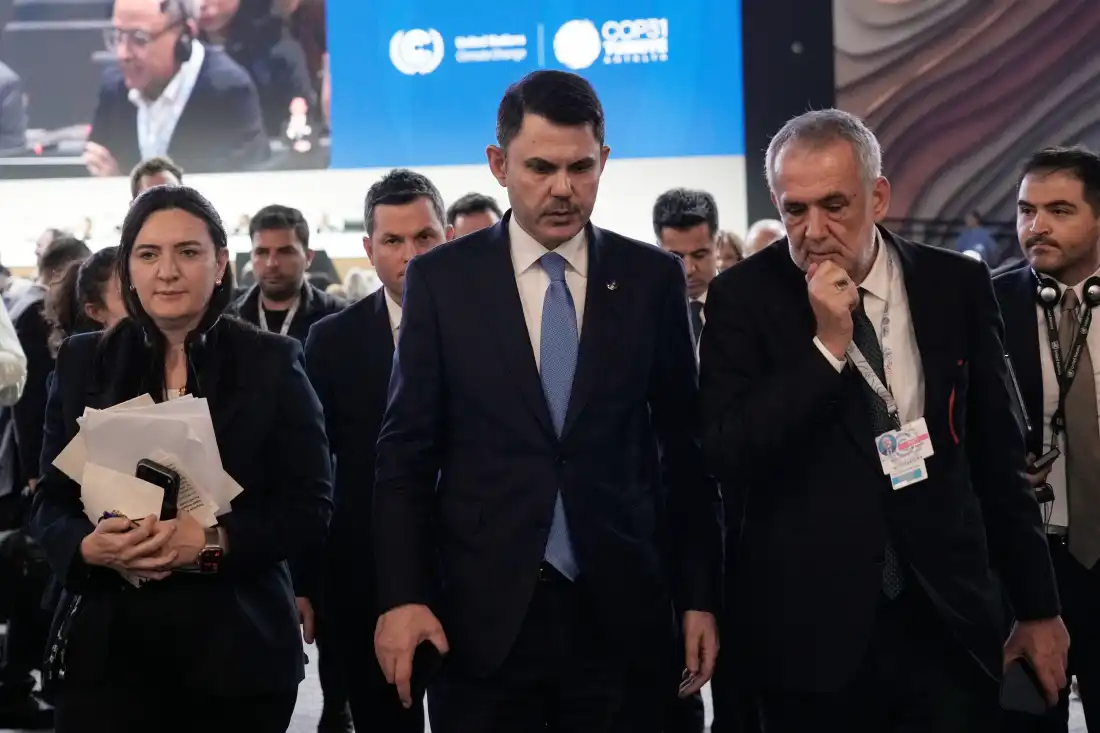
COP31 President Murat Kurum, center, leaves a closing plenary session at the U.N. Climate Summit, Sunday, Nov. 22, 2026, in Antalya, Turkey. Nearly 200 countries failed to reach an agreement on whether they should move away from fossil fuels like coal and natural gas.
Khalil Hamra/AP
hide caption
Khalil Hamra/AP
ANTALYA, Turkey – International climate change talks in Antalya, Turkey, broke down in overtime hours over the main cause of planetary warming — fossil fuels. On Sunday, nearly 200 countries failed to reach an agreement on whether they should move away from energy sources like coal and natural gas.
The talks ended in a dramatic fashion, with the European Union negotiators saying they could not agree to a final agreement without mentioning the transition away from fossil fuels — the primary driver of climate change. The EU bloc then walked out of the room. Burning fossil fuels like oil, gas and coal make up roughly 73% of global emissions.
After the EU walked out, so did other countries pushing for a speedy transition away from fossil fuels.
The European climate chief, Wopke Hoekstra, said that when the world is heading for an overshoot of 1.5 degrees, the EU could not tolerate an agreement that does not mention fossil fuels. "That is not acceptable," Hoekstra told reporters after walking out of the talks. "We do that with a heavy heart with many other countries, but we simply cannot accept this."
This is the first U.N. climate summit where there's been scientific consensus that the world will surpass a key global warming threshold. Countries agreed in 2015 to limit climate change to 1.5 degrees Celsius (2.7 degrees Fahrenheit), but the planet has essentially reached that limit already.
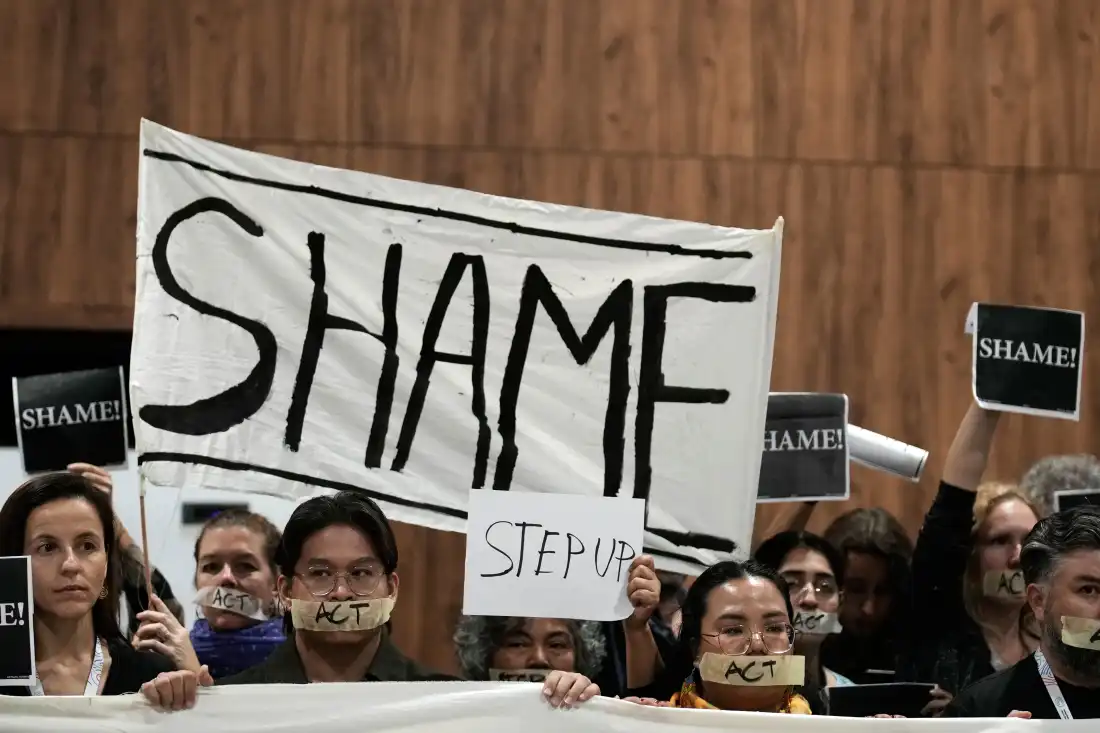
Negotiations at this year's U.N. Climate Summit were supposed to end Friday but there was no agreement on language about fossil fuels. Activists demonstrated by holding signs that read "shame" at COP31, Friday, Nov. 20, 2026, in Antalya, Turkey. Khalil Hamra/AP hide caption
Khalil Hamra/AP
Passing that threshold means more severe climate impacts, like more intense hurricanes and heat waves. The United Nations found that a best-case scenario of 1.7 or 1.8 degrees Celsius would require cutting emissions immediately, reducing them by 45% by 2035. That, scientists say, would require dramatically cutting fossil fuel use.
"It's good that that decision has been rejected," says Mohamed Adow, of Power Shift Africa, a nonprofit focused on climate change in Africa. "It doesn't have enough to help protect the people who are most vulnerable to climate change, who have contributed the least and are now suffering firsthand the worst."
NPR correspondent Michael Copley contributed to this story. This story was edited by Sadie Babits.
KioskNews shows a cleaned-up reading view extracted from the publisher’s page — the original always lives on their site, not ours.