Can you trust your home blood pressure monitor? Cardiologist explains
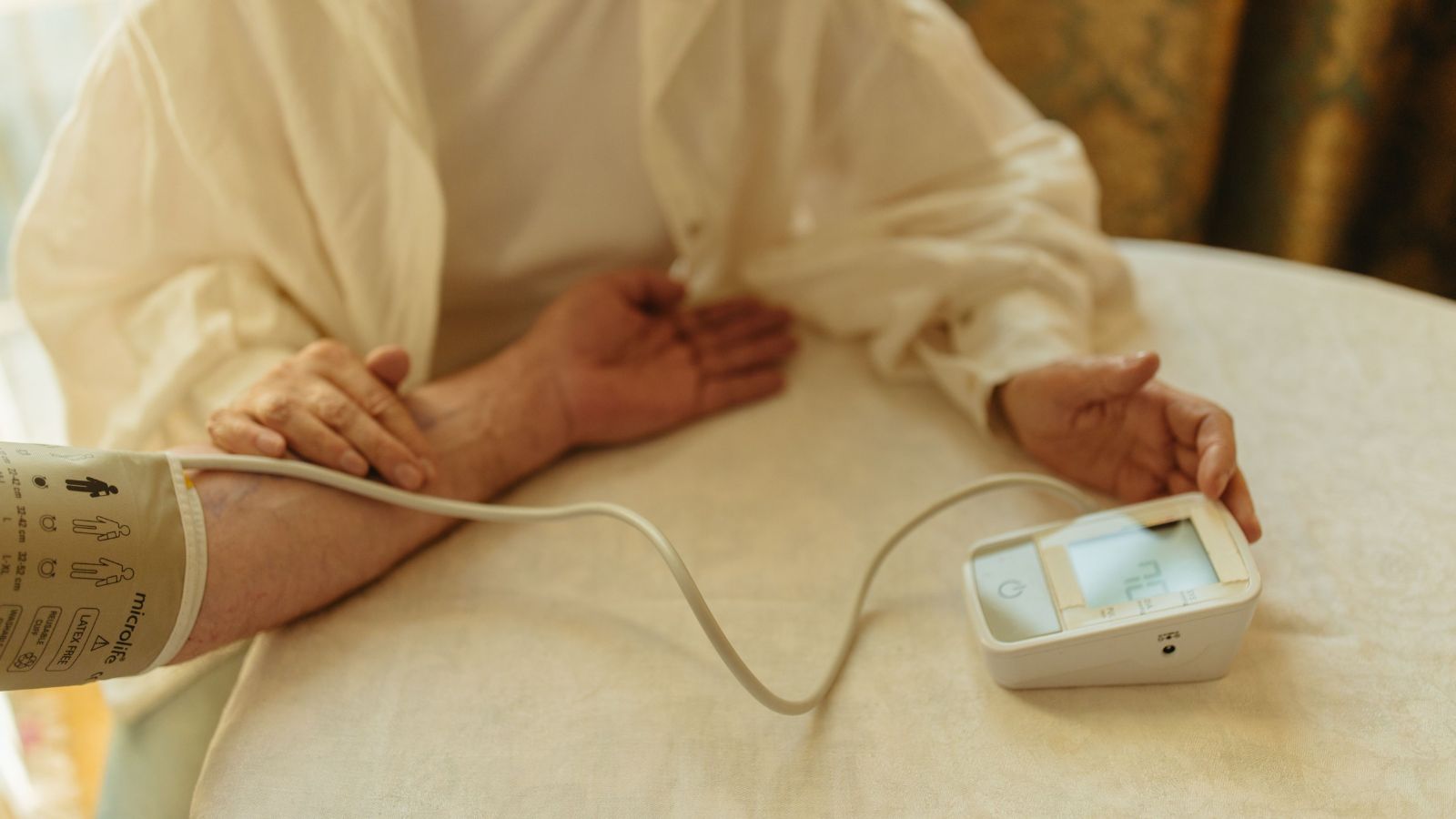
Home blood pressure monitoring is a reliable, convenient way to track cardiovascular health, provided the device is clinically validated and readings are taken correctly.
In fact, Dr Akhil K Rustagi, Senior Director and HoD, Cardiology, ShardaCare – Healthcity, says home monitoring often gives a more realistic picture of a person’s blood pressure than a single reading taken at a hospital or clinic, as it helps assess blood pressure over several days and reduces the impact of anxiety-related fluctuations, commonly known as white-coat hypertension.
DISCLAIMER: This article is based on information from the public domain and/or the experts we spoke to. Always consult your health practitioner before starting any routine.
Factors on which home monitoring depends
The accuracy of home blood pressure readings depends on several factors as mentioned by Dr Rustagi:
The first and most important consideration is choosing the right device. Patients should preferably use an automated, clinically validated upper-arm blood pressure monitor rather than wrist or finger devices, as the latter can be more sensitive to body positioning and may produce inaccurate readings.
It is also essential to select the correct cuff size, since a cuff that is too small can give falsely elevated readings, while an excessively large cuff may underestimate blood pressure.
The technique used while measuring blood pressure is equally important. Avoid smoking, consuming caffeine, or exercising at least 30 minutes before taking a reading.
Story continues below this ad
It is advisable to empty the bladder, sit quietly for five minutes, keep the back supported, feet flat on the floor and legs uncrossed.
The arm should rest at heart level, and the cuff should be placed directly on the skin rather than over clothing.
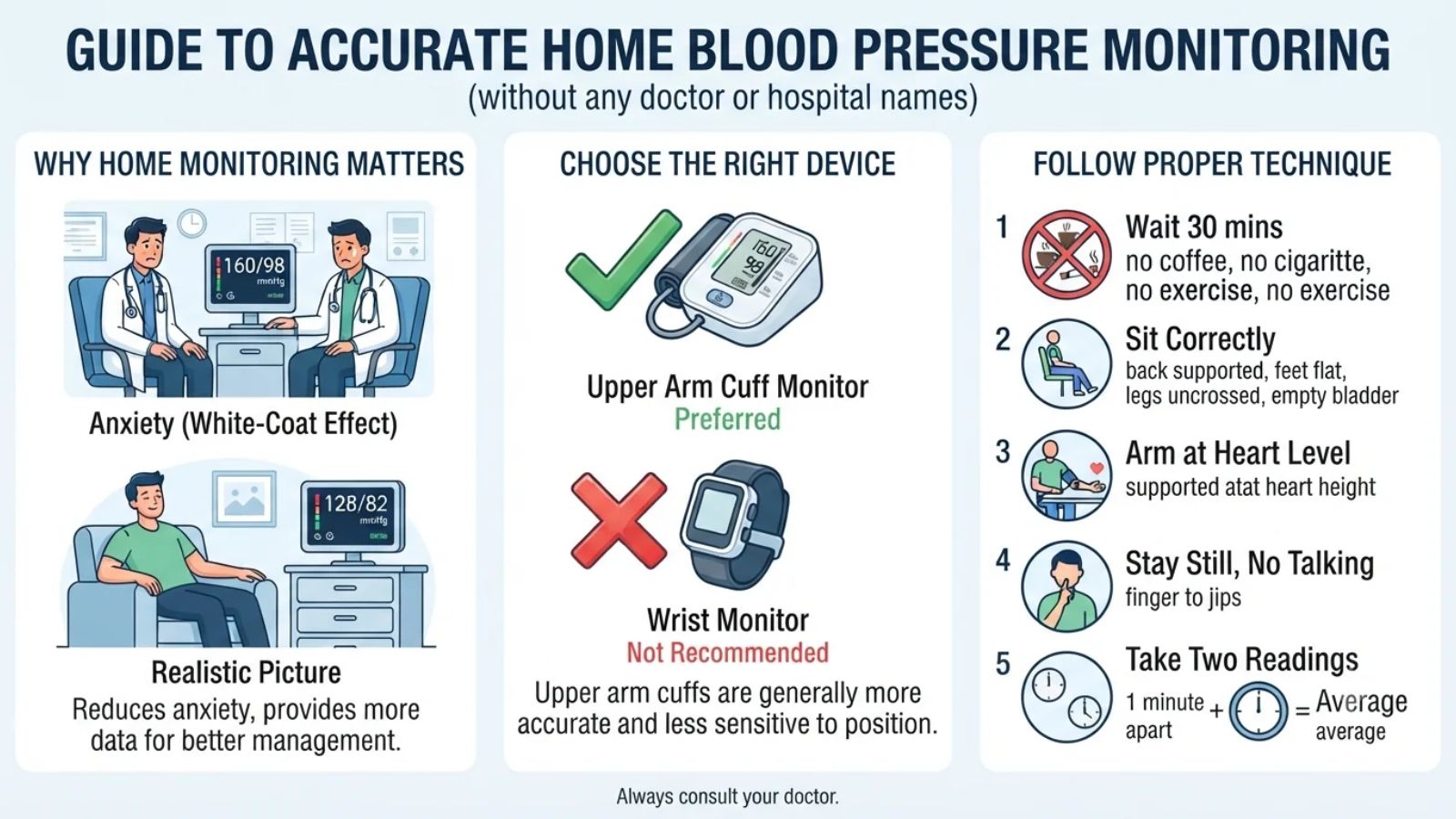 Things to keep in mind while checking blood pressure at home (AI-generated image for representational purposes only)
Ideally, take two readings one minute apart, and record the average.
Patients should monitor their blood pressure at consistent times, preferably once in the morning and once in the evening, and maintain a record to share with their cardiologist. They should not change medication doses based on individual readings without medical advice.
Story continues below this ad
‘Not substitutes for professional evaluation’
“It is important to remember that home devices are monitoring tools, not substitutes for professional evaluation,” says Dr Rustagi, adding, “Irregular heart rhythms, certain vascular conditions and faulty or poorly calibrated devices can affect accuracy.”
Consistently high or unusually low readings should be discussed with a doctor. If a reading is above 180/120 mmHg, repeat it after one minute; if it remains high, seek immediate medical advice, and if accompanied by chest pain, breathlessness, weakness, vision changes or difficulty speaking, seek emergency care.
DISCLAIMER: This article is based on information from the public domain and/or the experts we spoke to. Always consult your health practitioner before starting any routine.
KioskNews shows a cleaned-up reading view extracted from the publisher’s page — the original always lives on their site, not ours.