The 10 Bleakest TV Miniseries of All Time, Ranked

Justine Kraemer is a Senior List Writer at Collider and a freelance writer based in Ontario, Canada. She is passionate about finding new angles on the latest movies and TV shows. With over five years of industry experience, her goal is to highlight lesser-known and interesting elements of pop culture projects.
Sign in to your Collider account
Miniseries combine the best of movies and TV shows in that their limited runtimes allow for focused, emotionally sharp storytelling. The limited length of miniseries also allows for layered character studies. They unfold like extended films, using their episodic format to gradually build tension, explore character stories in depth, and deliver satisfying, if sometimes painful, resolutions. Miniseries are the perfect length for particularly devastating and bleak narratives.
The bleakest miniseries of all time share several key traits, including emotional honesty, psychological realism, and an unflinching willingness to confront suffering without offering easy outs. They strip away the comforts of heroism or resolution, replacing them with a stark look at the cost of survival. These series are all deeply rooted in the human experience and present characters who are in situations that feel inescapable.
10 'The Haunting of Hill House' (2018)

The Haunting of Hill House is a supernatural drama that introduces five siblings who are traumatized after having a paranormal experience as children. After the Cain family moves to Hill House with the goal of renovating the mansion, the increasingly terrifying, unexplainable phenomena lead to tragedy. The Haunting of Hill House goes between the past and present, and sees the family reckon with the trauma and loss they survived.
The Haunting of Hill House stands out as one of the bleakest miniseries ever because it's a heartbreaking examination of how loss impacts people for their entire lives. The series effectively uses the Cains' paranormal experiences as a framing device to highlight the fact that, even though they "move on" with their lives, their loss is always with them. Nell's (Victoria Pedretti) arc is particularly devastating and bleak. Watching her try to reach out for help multiple times and be met with denial or avoidance is heartbreaking.
9 'Unbelievable' (2019)

Unbelievable is based on true events, following the harrowing story of Marie Adler (Kaitlyn Dever), a teenager in Washington state who reports being sexually assaulted but is not believed by the police. As a result, she retracts her story under pressure and faces legal consequences for making a false report. Meanwhile, in Colorado, two determined detectives, Grace Rasmussen (Toni Collette) and Karen Duvall (Merritt Wever), investigate a series of similar assaults that end up being connected.
Unbelievable is so bleak because it's a stark reflection on the reality of the American justice system and how it so often fails sexual assault survivors. Marie is consistently retraumatized when she has to relive this attack and be dismissed by everyone in her life, including the institutions that are supposed to protect her. Even though the meticulous detective work ultimately leads to justice, viewers have to confront the fact that too many survivors of sexual assault are left behind simply because no one believes them.
8 'Dopesick' (2021)

Dopesick is an American miniseries that offers a unique analysis of the origins of the opioid crisis and looks at the people who have been impacted by it. The fictionalized series also highlights the role Purdue Pharma has played in the epidemic and how the company's aggressive marketing strategy has contributed to the crisis. Dopesick specifically follows Dr. Samuel Finnix (Michael Keaton), a compassionate physician who unwittingly contributes to the epidemic before realizing the drug's devastating effects.
What makes Dopesick stand out as one of the bleakest miniseries is that it explores the devastating human cost of corporate greed, systemic corruption, and institutional failure. What makes the fictionalized series particularly devastating is the fact that the story shows how these failures impact so many levels of American society. It's heartbreaking to watch well-meaning doctors and healthcare workers do their best to support their patients, and families try to support their loved ones, only for tragedy to strike repeatedly.
7 'Sharp Objects' (2018)
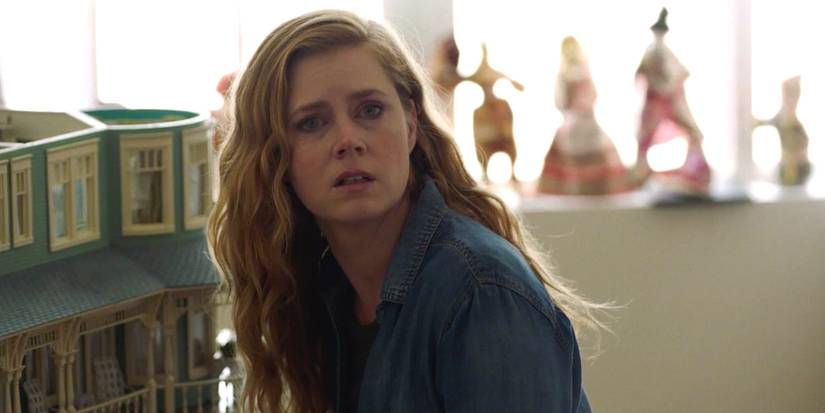
Sharp Objects is a thriller series that follows troubled journalist Camille Preaker (Amy Adams) as she returns to her hometown in Missouri to investigate the murder of two girls. While doing so, she has to confront her own traumatic past, which includes the death of her sister. She also has to navigate her toxic relationship with her mother. Sharp Objects follows Camille as she has to balance her personal and professional life before uncovering the truth.
Sharp Objects' bleakness comes from the fact that it's unrelenting. Rather than relying on jump scares and violence, the series paints a dark psychological picture of a woman being slowly suffocated by her past. What makes it especially bleak is the overwhelming sense of claustrophobia. Camille returns home not just to report on a murder, but to be psychologically dismantled by a town and a mother that never allowed her to heal.
6 'Scenes From a Marriage' (1973)

Scenes From a Marriage is a Swedish miniseries that explores the dynamics of a crumbling marriage. The series follows Marianne (Liv Ullmann), a lawyer specializing in divorce, and Johan (Erland Josephson), a university professor, over the course of a decade as their seemingly stable relationship unravels. Scenes From a Marriage is a devastating look at two people who grow apart slowly over time. The American remake of the series stars Jessica Chastain and Oscar Isaac.
Scenes from a Marriage is considered one of the bleakest ever because of its unflinching look at a relationship that unravels into alienation. The series strips away all romantic illusions to expose the emotional violence, selfishness, and quiet desperation that can define even the most intimate relationships. Johan and Marianne start as an ideal couple, but their relationship deteriorates slowly and painfully in ways that feel scarily plausible.
Collider Exclusive · Universe Personality Quiz Which Iconic Universe Do You Belong in the Most? Star Wars · Lord of the Rings · Harry Potter · Game of Thrones · Star Trek
Five legendary universes. Five completely different visions of what the world could be — or already was. One of them is the world your instincts, your values, and your particular way of existing were built for. Eight questions will tell you which one.
🚀Star Wars
💍Lord of the Rings
🧙Harry Potter
👑Game of Thrones
🖖Star Trek
01
What gives your life its deepest sense of meaning? Every universe is built around a different answer to this question.
02
Which kind of world do you most want to inhabit? The environment shapes who you become. Choose carefully.
03
How do you prefer your conflicts resolved? The shape of a world's conflicts tells you everything about its soul.
04
Who do you want beside you when things get difficult? Your ideal companions reveal the world you were made for.
05
What is your relationship with power? How you seek, wield, or resist power is the map of who you are.
06
How does your universe treat good and evil? A world's moral architecture tells you more about it than any map.
07
What role would you naturally fall into? Every universe has archetypes. Which one fits you without trying?
08
What do you ultimately believe about the future? The answer to this is the clearest window into which universe already lives inside you.
Your Universe Has Been Chosen You Belong In…
Your answers point to the iconic universe your values, your instincts, and your particular way of seeing the world were built for. This is where you would find your people — and your purpose.
Star Wars
You believe in the cause — in the idea that freedom is worth fighting for even when the odds are impossible and the empire is vast.
- You are drawn to the moral clarity of a universe where hope itself is a form of resistance.
- You'd find your people in the Rebellion — a ragtag coalition of true believers held together by conviction more than resources.
- Star Wars is fundamentally a story about ordinary people choosing to matter in an extraordinary conflict — and that is exactly your kind of story.
- The Force may or may not be with you. But the will to use it for something larger than yourself certainly is.
Lord of the Rings
You understand, in the deepest part of yourself, that the journey matters as much as the destination — and that the world's beauty is worth protecting even at great cost.
- Middle-earth is a world of ancient wonder, deep friendship, and a darkness that only retreats when enough small acts of courage accumulate.
- You would thrive here because you value the fellowship more than the glory — the road more than the arrival.
- Tolkien's universe rewards patience, loyalty, and the willingness to carry something heavy across a very long distance.
- Those are not burdens to you. They are simply how you move through the world.
Harry Potter
You believe that love, loyalty, and doing what's right are not naive sentiments — they are the most powerful forces in any world, magical or otherwise.
- The Wizarding World is a place of wonder hidden in plain sight, where learning is transformative and the bonds you form at school follow you into every battle.
- You would flourish here because you take both the magic and the friendships seriously — and you understand that one without the other is incomplete.
- Harry Potter's universe ultimately rewards those who choose to stand for something even when standing is terrifying.
- That choice — made quietly, without guarantee — is something you understand completely.
Game of Thrones
You see the world clearly — its power structures, its hypocrisies, its brutal arithmetic — and you are not paralysed by that clarity. You use it.
- Westeros is a world that rewards intelligence, adaptability, and the willingness to understand that every alliance is also a negotiation.
- You would survive here — possibly thrive here — because you don't confuse the world as it is with the world as you'd like it to be.
- Game of Thrones is a story about what happens when the idealists and the realists collide. You are sharp enough to know which one lasts longer.
- Winter always comes. You are already prepared.
Star Trek
You believe the future is worth building — that curiosity, cooperation, and the expansion of understanding are not just ideals but the most practical path forward for any civilisation.
- Star Trek is a universe where the questions matter as much as the answers, and where encountering something utterly alien is cause for wonder rather than fear.
- You would belong here because you are fundamentally optimistic about what intelligence and decency can achieve — while being honest about how hard that achievement is.
- The Federation is the universe's most ambitious thought experiment: what if we actually got better?
- You don't just hope that's possible. You think it's the only thing worth working toward.
5 'Delhi Crime' (2019–2022)

Delhi Crime is an Indian true crime anthology series, each season of which follows a different case and stands alone. The first season is based on the 2012 Delhi gang sexual assault that took place in the neighborhood of Munirka, in South Delhi. The story is told from the perspective of Deputy Commissioner of Police Vartika Chaturvedi (Shefali Shah), who is tasked with tracking down the culprits responsible for the assault and the death of the woman they attacked.
The real case on which this series is based is considered one of the most horrific crimes in modern Indian history that grabbed the attention of the world and drew international condemnation. Watching it dramatized, even without graphic detail, evokes real rage, sorrow, and helplessness. Delhi Crime presents characters who are overworked, emotionally drained officers trying to hold it together while society collapses in outrage. This realism makes the horror more intimate and unavoidable.
4 'Normal People' (2020)

Normal People is a romantic drama that follows the complex relationship between Marianne (Daisy Edgar-Jones) and Connell (Paul Mescal), two Irish teenagers from different social backgrounds. The series sees these two navigate love, identity, and emotional vulnerability from high school into their university years. Set in small-town Ireland and later at Trinity College Dublin, the series explores how deeply people can be connected yet still struggle to communicate their needs and feelings.
Normal People is often seen as one of the bleakest miniseries, not because of overt tragedy or violence, but because of the quiet and desperate sadness it portrays. It's clear from the beginning that Marianne and Connell love each other deeply. However, they repeatedly fail to express themselves when they need to. The show doesn't dramatize these struggles. Instead, it lets viewers sit with them, quietly and painfully, making their story feel all the more suffocating.
3 'Chernobyl' (2019)
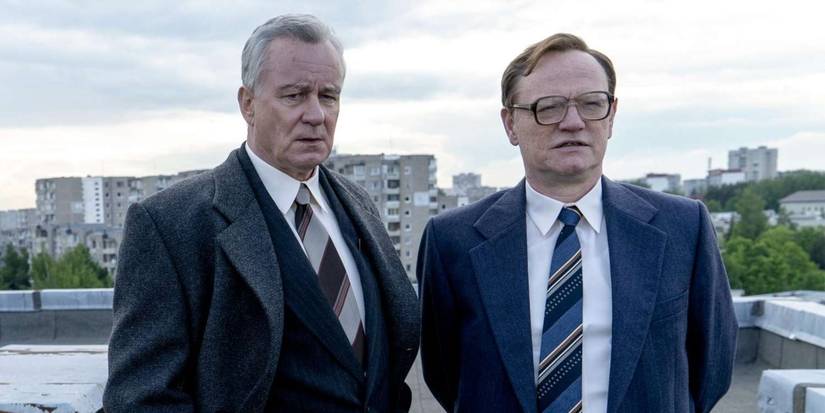
Chernobyl is a dramatization of the real tragedy that took place in 1986 when the Chernobyl Nuclear Power Plant exploded. The series chronicles the disaster itself, the subsequent cleanup, and the stories of real people who had to live through the aftermath. Chernobyl is mainly told from the perspective of Valery Legasov (Jared Harris), a Soviet nuclear physicist, whose moral reckoning and battle against state secrecy highlight the human cost of political lies.
Chernobyl is such a bleak miniseries because it highlights the human cost of government and systemic failures. While the aftermath of the nuclear disaster is bleak enough, the truly devastating part of the series is that it forces viewers to reckon with the fact that real human beings were sacrificed in the name of preserving appearances. The series highlights the fact that the terrifying force isn't radiation. Instead, it's the machinery of denial and the human cost of ignoring reality until it's too late.
2 'The Pacific' (2010)

The Pacific is based on the memoirs of three US Marines, Robert Leckie (James Badge Dale), Eugene Sledge (Joseph Mazzello), and John Basilone (Jon Seda). The series follows their experiences fighting in the Pacific Theater of World War II, which saw some of the most brutal fighting. The Pacific portrays some of the most pivotal battles of World War II, including Guadalcanal, Peleliu, Iwo Jima, and Okinawa.
The Pacific is one of the bleakest miniseries ever because it strips war of any romanticism and immerses the viewer in the relentless, dehumanizing brutality of war. Unlike other war dramas that highlight camaraderie or clear moral victories, The Pacific portrays the physical and psychological consequences faced by those who had to live through these brutal battles. The series doesn't offer closure or triumph. Instead, it ends with men trying to reintegrate into a world that no longer understands them.
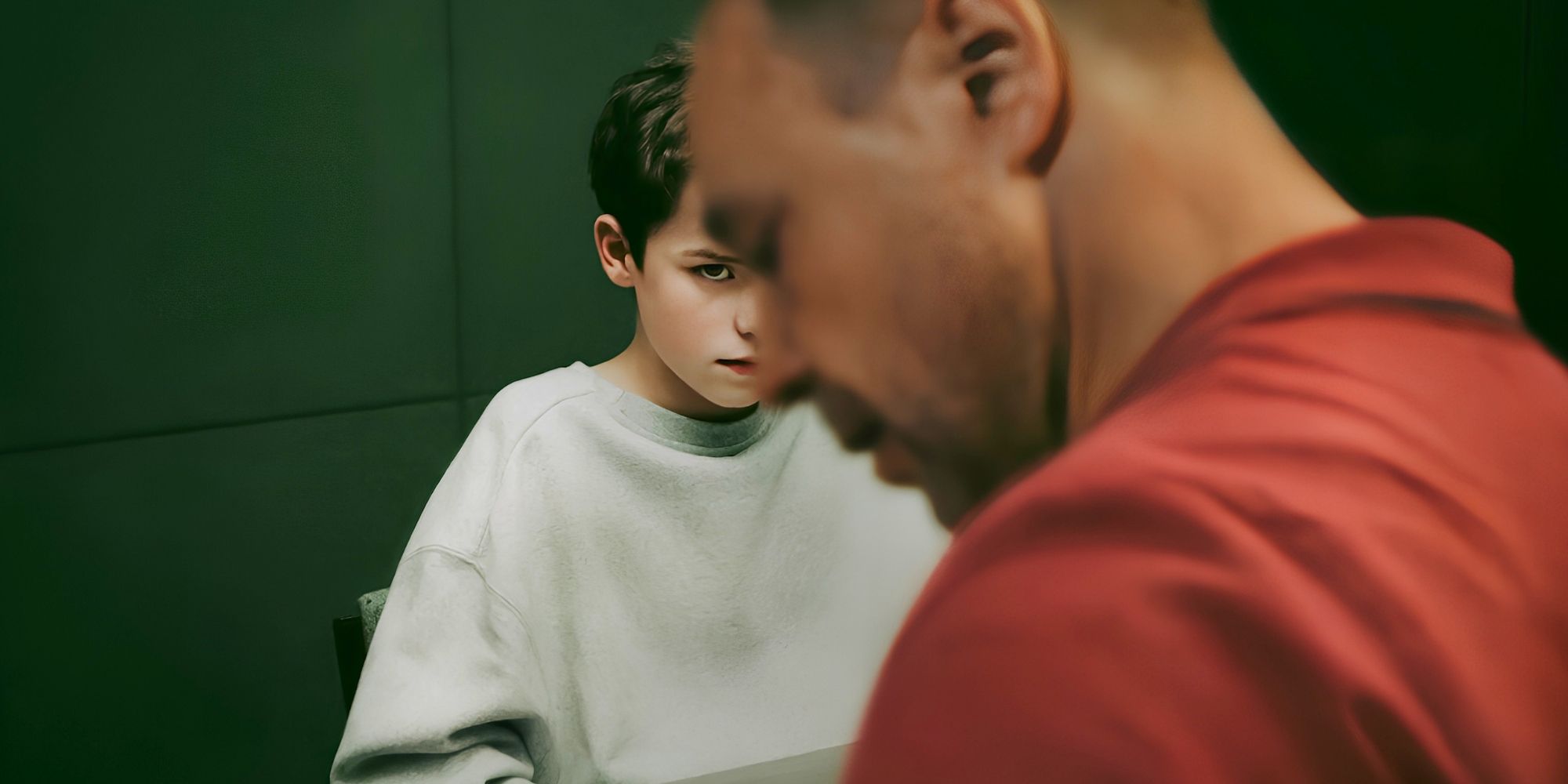
1 'Adolescence' (2025)

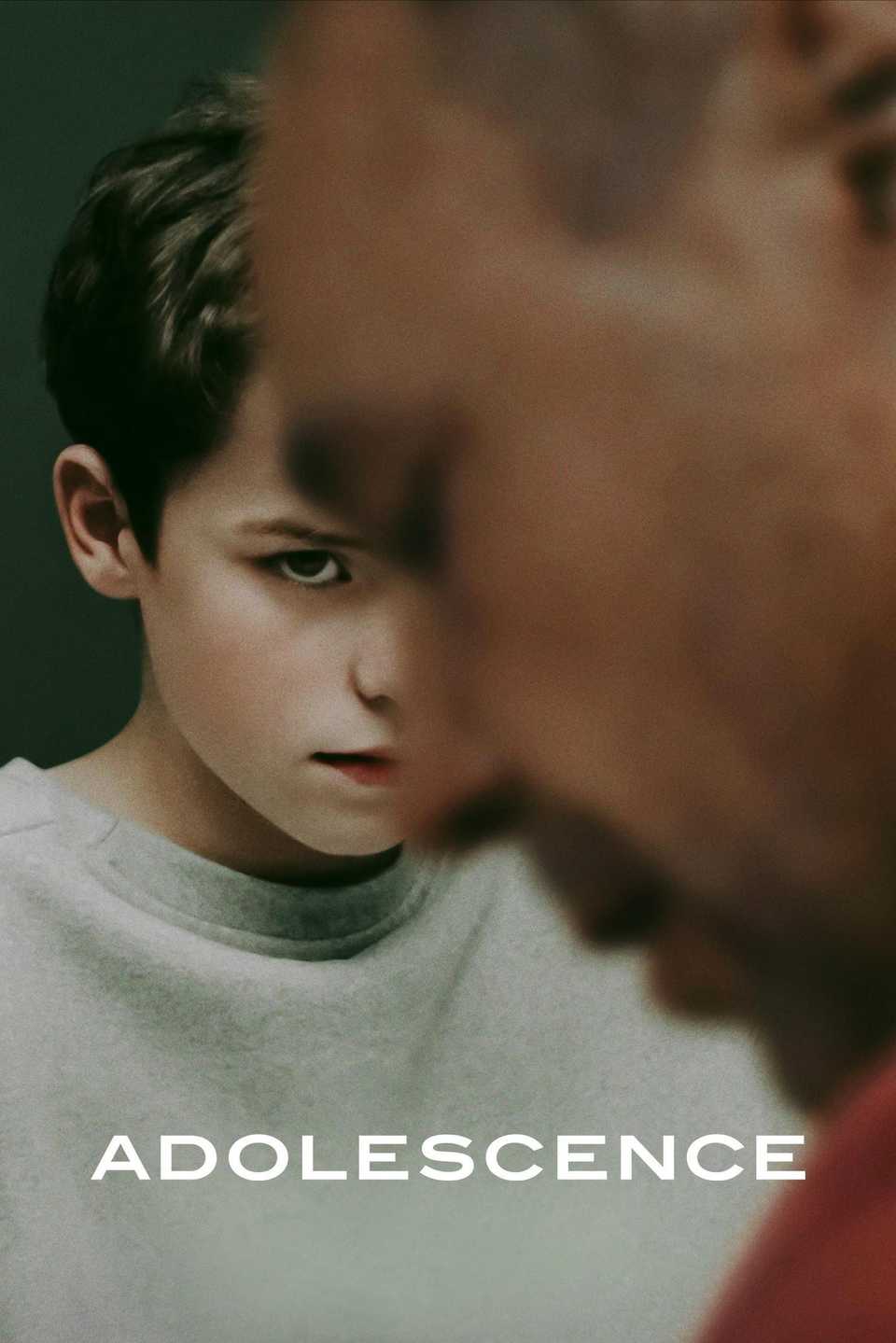
Adolescence is a British psychological drama that begins with the arrest of 13‑year‑old Jamie Miller (Owen Cooper), who's accused of murdering his classmate. What follows is a heartbreaking look at the case, from Jamie's imprisonment to the investigation to his sentencing. Adolescence is an examination of how social media and toxic online cultures are impacting kids around the world in real time.
Adolescence is so bleak because it's such a timely reflection of how toxic and sometimes dangerous online culture has become, particularly for kids. The series raises uncomfortable questions about who is ultimately responsible for children getting radicalized online, without ever providing easy answers. Ultimately, with only four episodes, this series compels viewers to think about the real-world consequences that come from children having unlimited internet access and not enough support.
Adolescence
9 10
- Release Date
- March 13, 2025
- Network
- Netflix
- Directors
- Philip Barantini
- Writers
- Stephen Graham, Jack Thorne
KioskNews shows a cleaned-up reading view extracted from the publisher’s page — the original always lives on their site, not ours.