Chinese drug iza-bren doubles lung cancer survival window in phase 3 trial
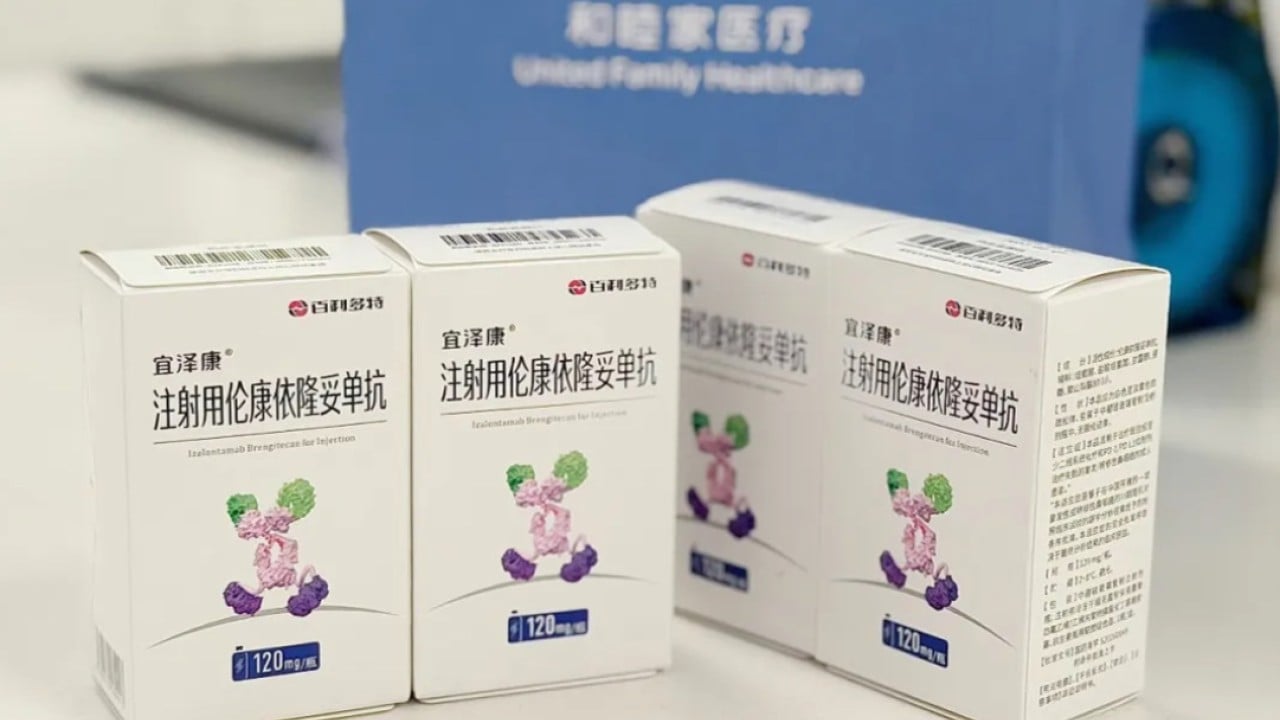
An anticancer drug developed by Sichuan Biokin Pharmaceutical took centre stage in a late-breaking oral presentation at the European Society for Medical Oncology (ESMO) Congress in Madrid last week.
Researchers said the drug, iza-bren, showed a significant advantage over platinum-based chemotherapy in a phase 3 randomised, double-blind clinical trial conducted at 73 hospitals in China and involving 432 patients with advanced lung cancer.
The median progression-free survival (PFS) – the length of time a patient lives with a disease without the condition getting worse during or after treatment – for participants who received chemotherapy but not iza-bren in the study was 5.7 months.
For the group receiving iza-bren intravenously, the median PFS was 11.1 months, nearly double that of chemotherapy, according to the study, which was published online by The Lancet on October 26, after the presentation at the congress.
Compared with chemotherapy drugs, iza-bren showed an increased incidence of adverse reactions, mainly in terms of blood cell counts, but no new safety concerns were identified, the researchers said.
02:35
How man’s best friends could be AI-enhanced doctors able to sniff out tumours
Zhang Li, a leading lung cancer expert at Sun Yat-sen University Cancer Centre and one of the paper’s joint senior authors, said the findings suggested iza-bren “could change the trajectory of the disease, offering patients more time before their disease worsens”.
“These results could mark an important shift in how we approach acquired resistance in this disease to significantly improve patient outcomes,” he said in a statement from Bristol Myers Squibb (BMS), Biokin’s collaborator outside China on the new treatment.
Iza-bren – full name izalontamab brengitecan – is a first-in-class bispecific antibody-drug conjugate (ADC) that targets two tumour-associated antigens, EGFR and HER3, and could make treatment of tumours more effective.
It is the world’s first and only approved bispecific ADC, a type of drug that combines a targeting antibody that binds to specific tumour-associated antigens with a cytotoxic payload that acts on tumour cells.
According to the study, 98 per cent of participants in the phase 3 trial had stage 4 cancer. All had received a third-generation EGFR tyrosine kinase inhibitor (TKI) treatment. Between 72 and 73 per cent had also received one previous line of systemic therapy.
Once patients develop resistance to targeted therapies, chemotherapy is almost the only remaining option. The new treatment is precisely aimed at overcoming this challenge.
In terms of confirmed objective response rate – the proportion of patients whose tumour burden shrank by a pre-specified minimum amount – the iza-bren group achieved 60.2 per cent versus 34.5 per cent for the patients who received chemotherapy.
Severe side effects occurred in 79 per cent of patients who received iza-bren and 62 per cent in the chemotherapy group. Only 1.9 per cent of those on the new drug discontinued it because of the severity of treatment-related adverse events.
According to Cristian Massacesi, executive vice-president, chief medical officer and head of development at BMS, the phase 3 clinical trial results “mark an important inflection point for iza-bren”.
“[The results] reinforce our belief that this potentially first-in-class EGFR×HER3 bispecific ADC could, if approved, improve outcomes across the cancer treatment landscape,” he said in the BMS statement.
09:08
No more painful biopsies? How a new blood test will transform cancer detection in Hong Kong
Founded in southwest China’s Sichuan province in 1996, Biokin initially produced generic drugs and traditional Chinese medicines. Since 2011, it has shifted focus to the research and development of novel ADC-based tumour therapeutic drugs.
In December 2023, the Chinese company entered into an exclusive licensing agreement for its flagship asset iza-bren with the global pharmaceutical giant BMS.
The transaction – with a potential total value of up to US$8.4 billion, including an upfront payment of US$800 million – was also the largest overseas “out-licensing” deal for innovative drugs in China that year.
As of June 2026, there were more than 40 clinical trials, targeting various tumour types, being conducted in China and the United States into iza-bren, which has shown clinical benefits across five phase 3 tests, each assessing a distinct indication.
These included EGFR-mutated non-small-cell lung cancer, nasopharyngeal carcinoma, esophageal squamous cell carcinoma and two types of breast cancer. All had been previously treated.
China has already approved iza-bren for two indications – nasopharyngeal and esophageal squamous cell carcinomas – and three more, lung cancer and two types of breast cancer, have marketing applications under review.
The treatment has not yet been launched in the US or Europe but an increasing number of European and American patients are choosing to come to China, with its lower prices and early adoption, to buy the latest anti-tumour drugs.
These new treatments have helped China to take a leading position in both cost and efficacy.
According to research by Britain-based medical journal the BMJ, China was the leader in clinical trial registrations and accounted for 24 per cent of the global total between January 2024 and June 2025.
A study published in the March 2026 issue of JAMA, the American Medical Association’s journal, China’s share in global early-stage drug development projects increased from 8 per cent in 2015 to 32 per cent in 2024, narrowing the gap with the US.
During the same period, the United States’ share decreased from 48 per cent to 37 per cent, it said.
The South China Morning Post has contacted Sichuan Biokin Pharmaceuticals and Bristol Myers Squibb for comment.
Passionate about science? Dive deeper with the Dark Matters newsletter, a weekly in-depth analysis on China’s rise in science, technology and military that goes beneath the surface. Sign up for free now.
KioskNews shows a cleaned-up reading view extracted from the publisher’s page — the original always lives on their site, not ours.