Israel election: What are the possible scenarios as Netanyahu, Eisenkot fail to get majority
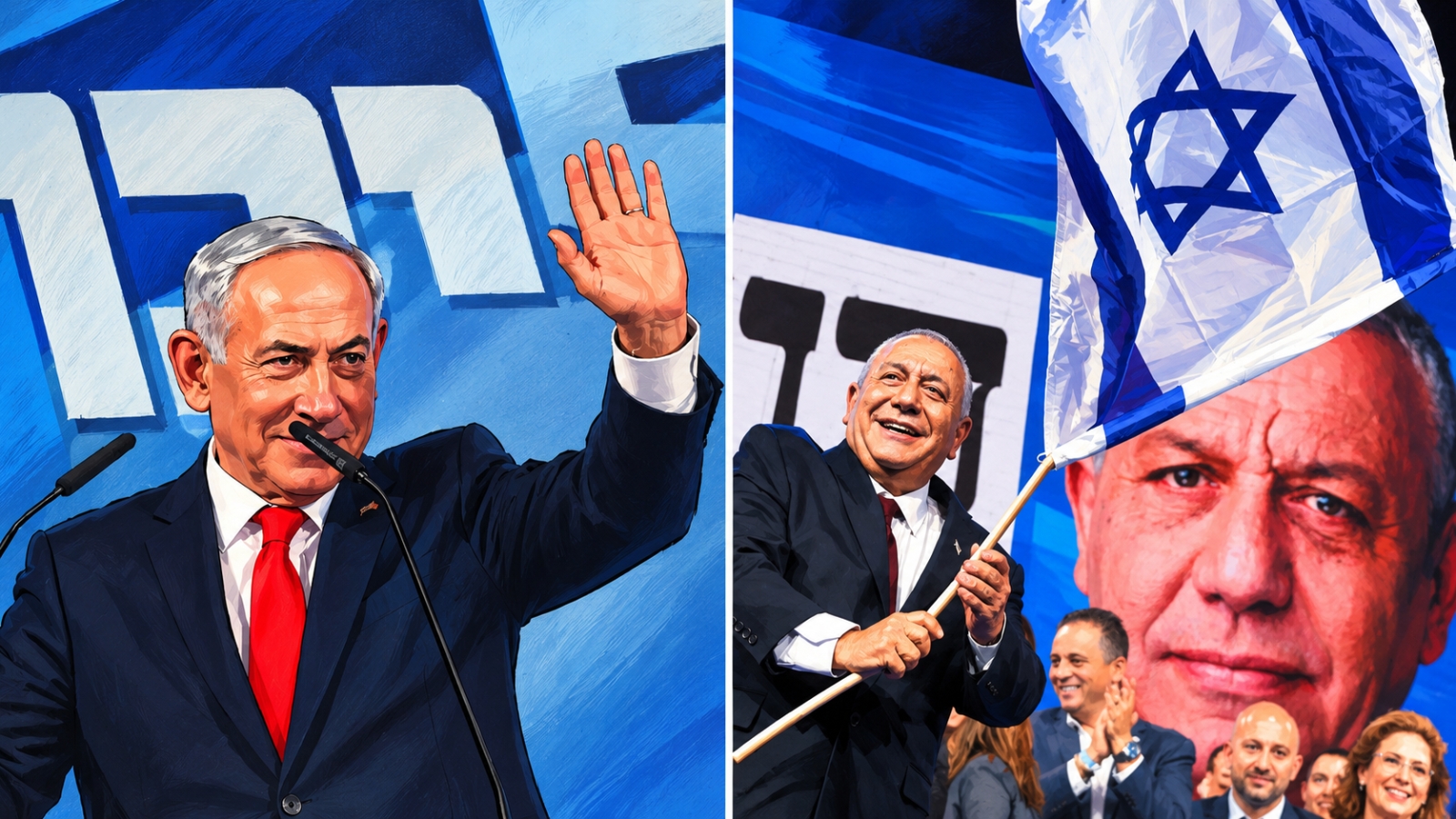
The ruling coalition has 53 seats, and Eisenkot’s alliance 48. Arab parties, which include the Joint List and Ra’am, currently hold 19 seats in the 120-member Knesset, according to the latest figures from The Times of Israel. The magic number required to form government is 61.
The counting has concluded for most polling stations, with only absentee ballots remaining, largely from IDF soldiers and Israeli representatives on missions abroad.
With no clear winner, Israel could likely see an alliance, a phenomenon not uncommon in the country’s politics. The election trends also seem concerning for Netanyahu, who has served as the Prime Minister for over 19 years.
Where Netanyahu’s Likud and Eisenkot’s bloc stand?
While the election has turned out to be full of surprises, it has turned out to be an unprecedented performance for Arab-led parties. Though it is not yet clear if the major blocs in Israel will reach out to the Joint List and Ra’am, the parties are hard to ignore this election.
The current scenario after Israel results:

Israel · Election 2026
Israel election: who won what
Seats by party, and the coalition paths open to Netanyahu and Eisenkot.
Provisional: about 89% of votes counted (Oct 28 night). Double-envelope ballots could still change seats.
Seats by party
Provisional seats for the 120-member Knesset, with about 89% of votes counted.
61 = majority 120seats
Netanyahu bloc
53 seats
Likud
Benjamin Netanyahu
26
Shas
Aryeh Deri
7
UTJ
United Torah Judaism
7
Otzma Yehudit
Itamar Ben-Gvir
7
Religious Zionism
Bezalel Smotrich
6
Eisenkot bloc
48 seats
Yashar
Gadi Eisenkot
21
B’Yachad
Naftali Bennett
12
Yisrael Beytenu
Avigdor Liberman
7
The Democrats
Yair Golan
8
Arab-led parties
19 seats
JL
Joint List
Yousef Jabareen
12
Ra’am
Mansour Abbas
7
Below the 3.25% threshold, so no seats: Reservists-Economic Party (2.63%), People of Israel (1.61%), The Charedi Public (0.19%).
Neither side reaches the 61 seats needed. The dashed line marks the majority.
Netanyahu bloc
53
8 short. Likud, Shas, United Torah Judaism, Otzma Yehudit, Religious Zionism. It held 68 seats in the outgoing Knesset.
Eisenkot bloc
48
13 short. Yashar, B’Yachad, The Democrats, Yisrael Beytenu.
Arab-led parties
19
Record high. Joint List 12 and Ra’am 7, up from 10 seats and a previous best of 15.
Eisenkot bloc 48 + Arab-led parties 19 = 67 on paper, but most parties in the Eisenkot bloc have ruled out relying on them.
Four ways this could go. Nothing starts until President Herzog consults party leaders.
Path 1
Netanyahu builds from 53
His bloc needs 8 more seats for 61. Netanyahu stays caretaker prime minister until a new government is formed.
Netanyahu bloc: 53 of 61
Path 2
Netanyahu–Eisenkot unity government
Analysts call it the likeliest route but “far from certain.” Eisenkot has rejected serving under Netanyahu, including in a rotation.
Path 3
Opposition government backed by Arab parties
Eisenkot bloc 48 + 19 = 67. Golan and the Joint List favour it; Bennett has ruled out Arab factions, Liberman objects. Joint List would back it from outside, not join.
On paper: 67 of 61
Path 4
A new election
Possible if deadlock holds. Herzog has urged parties to avoid another vote.
What happens next: Hundreds of thousands of double-envelope ballots (soldiers, diplomats, prisoners and others) are still being counted and could shift seats at the margins, though not the overall balance. Official results are expected around November 4. Herzog then consults the parties and picks who tries to form a government.
Tap a tab to switch. Bloc labels follow how Israeli media group the parties; the Eisenkot bloc is the opposition side without the Arab-led parties.
Sources: Central Elections Committee figures as reported by The Times of Israel (Oct 28, 2026), Israel National News, The Jerusalem Post and Al Jazeera (Oct 29, 2026).
Express InfoGenIECreated by Aniruddha Dhar
The Opposition bloc or the anti-Netanyahu bloc consists of parties, including Gadi Eisenkot’s Yashar, The Democrats, Naftali Bennett’s B’Yachad, and Yisrael Beiteinu.
Netanyahu’s ruling alliance includes Likud, Itamar Ben-Gvir’s Otzma Yehudit, Shas, United Torah Judaism, and Religious Zionism.
Story continues below this ad
What are the possible scenarios in Israel?
A party or a coalition requires at least 61 seats to form a government in Israel. With no party failing to cross the half-way mark, the leading parties have to forge alliances with new parties or head for a new election.
One possible outcomes could be Netanyahu persuading Eisenkot to join his “right-wing national government”. The Israeli PM could try convincing the Yashar Party leader to join his Likud Party by ditching the far-right and ultra-Orthodox parties he is currently in coalition with.
However, the possibility seems distant, given Eisenkot building his campaign against Netanyahu and portraying himself as an alternative.
The more-likely scenario would be Eisenkot’s coalition with Arab Parties. Theoretically, the alliance makes the Arab parties ‘kingmakers’, but the ground situation appears otherwise.
Story continues below this ad
Given the long-rooted Israel-Gaza conflict and a ‘racist’ structure in Israel, no parties would want to enter into an alliance with Arab parties. Both Netanyahu and Eisenkot have in the past rejected alliance with them.
Arab Parties defy expectation
The election in Israel has been an unprecedented one for Arab parties, which defied expectations to score a total of 19 seats.
The Palestinians, who had for years boycotted elections, participated in the election this time.
Though a coalition with Arab parties look imminent, the alliance would a fragile one, given the issues in Gaza and occupied West Bank and the conflict in the region.
Story continues below this ad
New elections?
If Netanyahu fails to get support from Eisenkot’s bloc or if the Opposition fails to ally with Arab Parties, then the only option would be fresh elections.
However, another election would mean setback for the parties. For the ruling Likud, it could mean lesser votes as around 70,000 Israelis flew home to vote. For Arab parties too, it could mean lesser turnout, especially since the record participation led to no change.
KioskNews shows a cleaned-up reading view extracted from the publisher’s page — the original always lives on their site, not ours.