Traveling with electronics? These 5 items could raise TSA red flags


Frame Stock Footage/Shutterstock
While I was traveling a few months ago, TSA pulled my backpack aside at security after it went through the scanner. I was baffled. As it turned out, I was carrying five power banks I was testing and had forgotten to remove them. All was fine once they inspected and saw what they were, but it was a reminder that some electronics can raise red flags.
To begin with, portable power banks have to be brought on the plane with you in your carry-on luggage and can't be stored in your checked luggage. Electronics like smartphones, tablets, laptops, and handheld gaming systems must travel with you. At a minimum, take laptops out of your bag for the security scan, and consider removing other electronics as well to avoid red flags. Specific rules apply to items with lithium batteries, both installed and uninstalled, along with other tech items you might want to travel with. Being informed ahead of time can help you avoid a hold-up when you're rushing to make your next flight.
100 watt hours or more lithium batteries
O_Lypa/Shutterstock
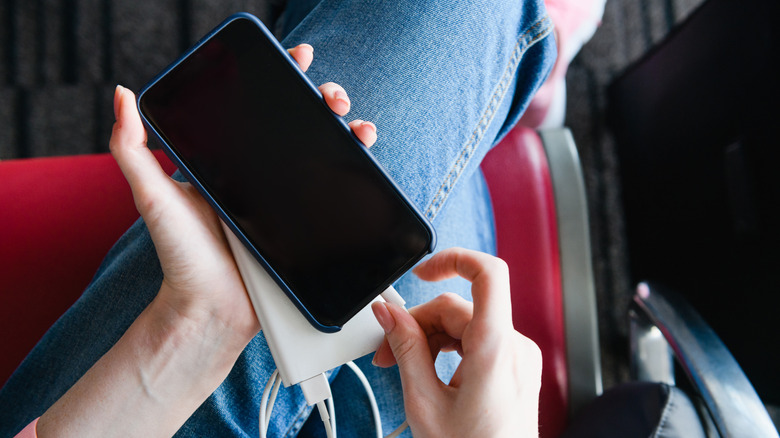
Most portable power banks do not exceed the 100 watt-hour limit, and you must bring it in your carry-on bag along with devices with built-in batteries like cameras, laptops, tablets, and smartwatches. The only exception might be super-high-powered power banks for laptops, but even many of those nowadays, like the 25K Anker Power Bank, meet the limit, so you can travel with them. That one taps out at 90Wh and is advertised as being "flight approved."
You should check the power bank's specifications for watt-hours (Wh) or use the formula mAh x voltage divided by 1,000. For example, a 20,000mAh power bank at 3.7 volts is 74Wh, well within the limit. Most consumer power banks do not exceed this number, and you can always look for the "flight approved" label on packaging to ease your mind.
The reason to keep them with you is that lithium batteries can overheat and potentially cause a fire. What if you have lithium-ion batteries with more than 100 watt-hours, like a spare battery or items for professional AV equipment? These are still not permitted in checked luggage and are only permitted in carry-on luggage under special circumstances and with airline approval. Even then, the limit is two per person.
Non-rechargeable lithium metal batteries, like a package of AA batteries for a toy, are accepted, up to 2 grams of lithium content per battery. Keep them in their packaging for the least hassle, or better yet, avoid bringing them altogether if you can and buy them when you arrive at your destination.
Electronic cigarettes and vapes
Urbazon/Getty Images
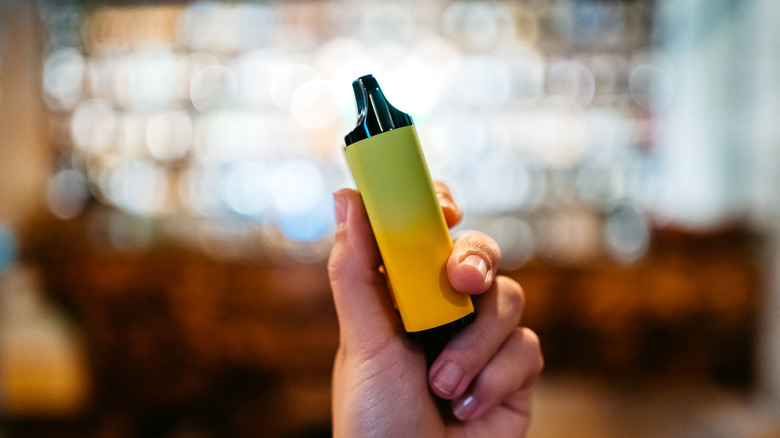
Electronic cigarettes, as well as vapes, must be packed in your carry-on. They are not permitted in checked luggage. You don't need to remove them from your bag and place them in the bin during the TSA security check, but you might prefer to, since they could otherwise trigger a red flag. Southwest Airlines specifically notes that you can only bring two per person and you cannot charge nor use them on the plane.
The same goes for some other similarly sized gadgets, like laser pointers. Though they are generally approved for flights, some airlines have stricter rules. For example, Air Canada does not permit laser pointers on board at all and requires them to be packed in checked luggage. I once went through security when a man's bag was taken to the side and an officer was called in to check a penlight. The officer confirmed it was a functioning device, then let him through.
Smart luggage and ride-on bags
Linaimages/Shutterstock
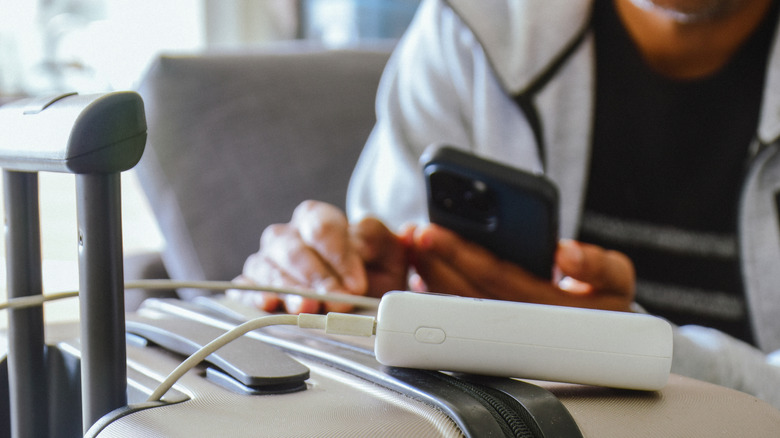
Smart luggage with integrated chargers and charging ports, GPS finding trackers, and/or remote Bluetooth locks fall under the same rules as those for lithium batteries. If you check the suitcase, remove any batteries first to avoid the same fire-hazard concerns. Integrated power banks are usually removable for recharging, so this should be easy. If it's your carry-on, it should be fine as long as the charger meets the aforementioned lithium-battery threshold.
If the bag has a non-removable battery, that will be an issue at security. You may be permitted to bring it on board if the bag and battery meet sizing requirements, but the TSA agent and flight crew may decide otherwise.
For trackers, the battery cannot exceed 0.3 grams of lithium metal or 2.7 Wh of lithium-ion, so verify these specs, too. For example, Apple AirTags are allowed in luggage. The CR2032 batteries they use contain less than 0.1 grams of lithium, aren't rechargeable, and still don't exceed 0.7 Wh. Some airlines have stricter rules, so check before you head to the airport.
If you want to bring a hoverboard or ride-on bag, check with your specific airline. Rules vary and many airlines do not permit them. American Airlines does not permit smart ride-on bags, while Delta Airlines doesn't allow motorized rideable suitcases. Air Canada also doesn't permit electric skateboards, airwheels, mini Segways, balance wheels, battery-assisted bikes, or electric scooters. If you're thinking about a hoverboard, it's not permitted on planes due to safety and fire concerns.
Electronic toothbrush
Denys Kurbatov/Shutterstock
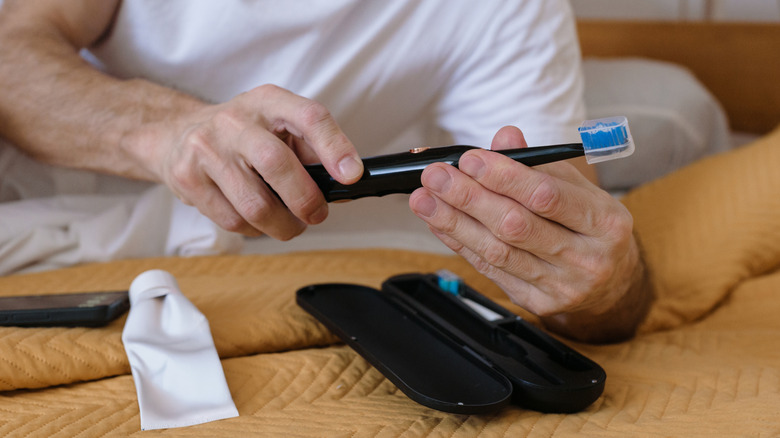
Listen, dental hygiene is important. Some premium electric toothbrushes even come with convenient travel cases. You must bring an electric toothbrush in your carry-on luggage since it has batteries and falls under those rules. The bonus is that you can use it on long flights or at the airport for a refresh before boarding or after you arrive.
Even though they're permitted, an electric toothbrush might still raise a red flag. If you don't properly power down the toothbrush, or other portable devices like massagers, an accidental turn-on and buzzing sound could prompt TSA agents to investigate further. There's no need to remove the toothbrush from your bag to go through the scanner. It's worth checking that you have powered it completely down before tossing your bag in the bin to avoid an embarrassing situation.
Your smartphone
Frame Stock Footage/Shutterstock
There's only one exception when it comes to smartphones: the Samsung Galaxy Note 7 launched back in 2016. It was banned from both checked luggage and cabin travel because of known fire hazards. The phone was recalled, so ten years later, it's unlikely anyone still has one kicking around, much less plans to bring it with them for travel. But if you do, it's not permitted on any flight.
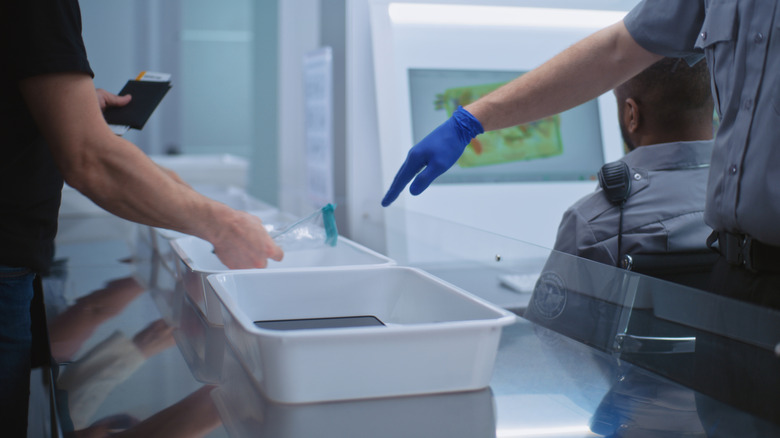
As for other phones, most TSA agents will remind you to remove it and place it in the bin for security. If you're reluctant to leave your phone loose in the TSA bin, you can lay it on top of your jacket, scarf, or another item.
Most importantly, make sure it's clearly visible to the agents as you go through the scanner. The same goes for tablets, laptops, and portable gaming systems. Sometimes, agents will advise you to leave those items in your bags, so follow alternative instructions if given. Otherwise, take everything out. Based on a 2014 ruling, a TSA agent may ask you to power on devices to confirm they're functioning. So, make sure the battery isn't dead.
Overall, if you're asked to remove a tech item from your bag or pocket and place it in the bin, it's best to comply. Chances are that once the item is scanned and cleared, you'll be good to go. But if possible, avoid taking any items that could raise red flags. For items you need, bring tech that isn't permitted in checked luggage, and pack items that aren't allowed in the cabin in your checked luggage. Knowing ahead of time will make your travel go so much more smoothly.
KioskNews shows a cleaned-up reading view extracted from the publisher’s page — the original always lives on their site, not ours.