AI glasses as travel guides? Cheaper in China, but technical hitches slow adoption
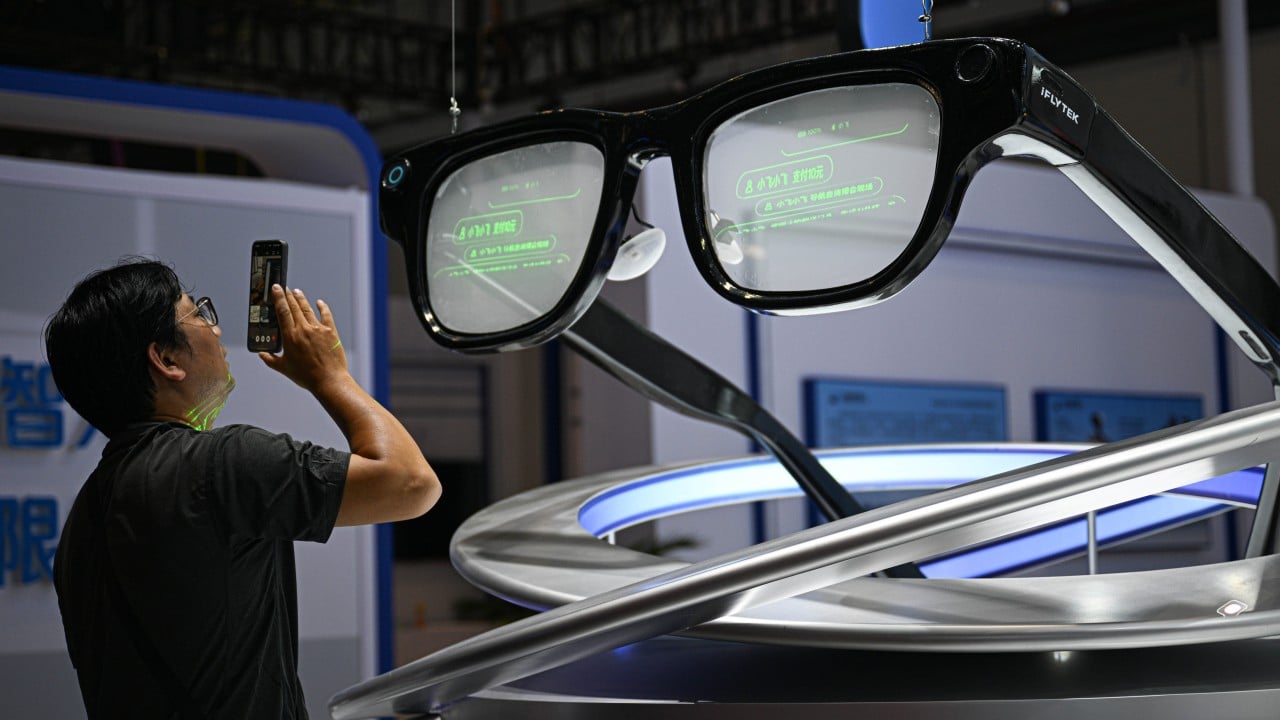
Artificial intelligence-powered glasses can act as tour guides, snap photos hands-free and translate foreign languages. The devices also sell at relatively affordable prices in China.
But are they the perfect travel companion? Not yet.
AI glasses were slowly catching on with travellers as the technology improved and more devices entered the market, analysts said, but technical hitches were slowing mass adoption of the smartphone-linked gear that could be worn like ordinary spectacles.
“They can be particularly useful when walking, sightseeing or interacting in unfamiliar environments, making them especially helpful when travelling in foreign countries,” said Flora Tang, principal analyst at market research firm Counterpoint.
“We believe both Chinese outbound travellers and international travellers visiting China are potentially among the more receptive user groups,” she said. “The availability of lower-priced products is also helping lower the entry barrier and raise consumer awareness.”
Technology companies and tourist sites have already begun exploring the potential of the devices.
Meta Platforms’ Ray-Ban AI glasses, released in 2023, were designed to identify landmarks, translate signs and provide live interpretation, according to the company website.
In China, Alibaba Group Holding’s Qwen Glasses was working with the Hangzhou Culture, Radio, TV and Tourism Bureau to “pioneer” AI-enhanced travel experiences, according to a statement in May. It had also joined a China-Italy association to explore how AI glasses could interpret and share culture. Alibaba owns the South China Morning Post.
“Our goal is to seamlessly integrate AI into everyday life, using popular cultural and tourism experiences as our launching pad,” a Qwen Glasses spokesperson said. “This creates exciting new ways for people to explore local art, culture and travel.”
When comparing leading Chinese and foreign brands, AI glasses are definitely cheaper in China
Shanghai’s Yuyuan Garden tourist attraction said it was separately testing AI glasses for tours and multilingual translation.
The global average selling price for AI glasses was US$360 per unit in late 2025, according to Counterpoint.
By comparison, Xiaomi AI glasses with clear lenses retailed for about 2,000 yuan (US$298), while a pair of Meta Ray-Ban Gen 3 glasses could sell for US$450, said Mark Natkin, managing director at Hong Kong-based market research firm Marbridge Consulting.
Alibaba launched its latest smart glasses series on Tuesday, including the Qwen Glasses N1, which is priced at 2,218 yuan for a standard version. A more advanced version with an eye-tracking function for visual interaction starts at 2,600 yuan.
“When comparing leading Chinese and foreign brands, AI glasses are definitely cheaper in China,” Natkin said.
Global shipments of smart eyewear were expected to reach 18.66 million units this year, including both AI-capable and non-AI models, according to forecasts from tech market research firm IDC.
Some 909,000 smart glasses were sold in China in the first half of 2026, according to market research firm Luo Tu Technology.
During the year, travellers worldwide were expected to shift from “passive response to proactive service” when using smart eyewear, said Julia Sonnemann, public relations manager for business-to-business travel trade show ITB China.
That meant glasses would increasingly anticipate user context and provide relevant information or suggestions without requiring explicit prompts.
“For tourism, I see the greatest potential in hands-free, contextual information – asking about a landmark while looking at it, translating a sign, receiving spoken information during a tour or accessing personalised recommendations without constantly taking out a smartphone,” Sonnemann said.
However, battery life, AI service accessibility and response accuracy remained issues, said Layla Ye, a research analyst with IDC China. As a result, smartphones remained better suited for complex interactions and visual tasks, she added.
According to Meta, its Ray‑Ban (Gen 2) and Oakley HSTN glasses could operate for up to eight hours on a single charge, while their charging cases provided up to 48 additional hours of use.
Chinese brands often featured “superior raw hardware specs” compared with foreign rivals, but users could encounter software and ecosystem hitches overseas, Natkin said.
They were typically integrated with Chinese apps such as Baidu Maps and Alipay, which offered less support outside China, he added.
Meta’s glasses were not officially sold in China and Chinese users had reportedly faced difficulties accessing the company’s AI services.
“Smart eyewear as a travel tool is still in the early adoption phase globally, but the growth rate is accelerating,” Ye said.
KioskNews shows a cleaned-up reading view extracted from the publisher’s page — the original always lives on their site, not ours.