After my last birthday, I worry my children are losing the ability to work at something
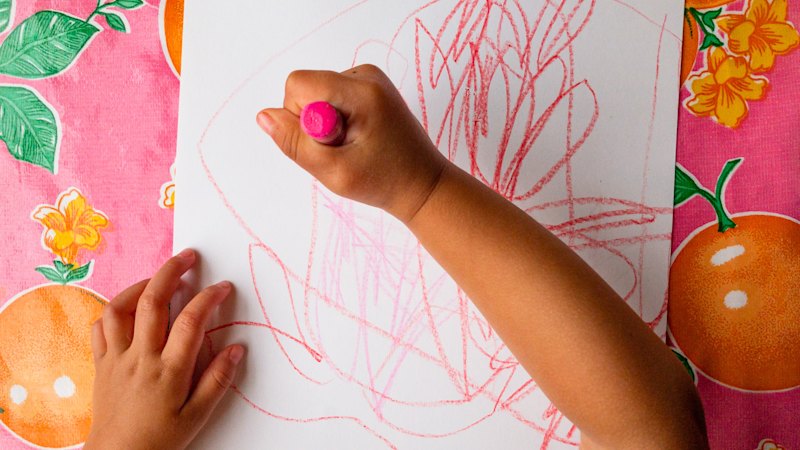
For my birthday, my children gave me a pile of hurried cards. Think crumpled printer paper, pencil-smudged drawings and hastily scribbled notes: “Mum, you are a flower”. I looked at these cards and felt the tenderness of being loved imperfectly. But, then, I also thought about the difference between going through the motions and going all the way in.
In other words, I was a little disappointed by the lack of care demonstrated by a nine- and an 11-year-old.
I could have lectured them about effort and how the person on the receiving end of a half-hearted thing can always feel the difference. Instead, I decided to show rather than tell. To do that, I enlisted two centenarians and a couple of documentaries.
First, we watched a series of Sir David Attenborough clips. My children couldn’t believe that the 100-year-old British naturalist and filmmaker has been making documentaries for longer than their parents have been alive, from the black-and-white days of Zoo Quest in the 1950s to the present-day Ocean with David Attenborough and Kingdom, in which he moves back and forth through decades of footage to show just how much the natural world has changed. Their eyes were glued to the screen as they watched a young Attenborough looking like their favourite Indiana Jones, kneeling among mountain gorillas in Rwanda in 1978 and, in another clip, chasing a Burmese python up a tree in 1956. Somehow, his dedication to the craft made them immediately switch their career options from influencer to documentary maker.
After watching lots of nature in peril and getting a little depressed about the state of the world, we moved to Jiro Dreams of Sushi, another stellar documentary about a humble Japanese sushi master Jiro Ono. Ono was born in 1925 in Hamamatsu, a provincial city between Tokyo and Kyoto, when Japan was in the final years of the Taisho era, a time of rapid modernisation and fascination with Western culture. As Tokyo was rebuilding after the catastrophic Kanto earthquake of 1923, which flattened many street stalls, Japanese sushi vendors were pushed indoors and restaurant businesses started to flourish.
For most of his life, Jiro Ono worked from sunrise to beyond sunset, serving traditional Edomae-style nigiri sushi. He was a stern and demanding boss. Famously, his apprentices spent years washing towels and learning to massage an octopus before they were permitted anywhere near the rice.
“That’s insane,” my son commented with a sneer. But you could tell he was intrigued.
By modern standards, Ono’s training was a little over the top. For the Japanese chef, though, it was a necessary step towards mastery. He was often quoted as saying, “I’ll continue to climb, trying to reach the top, even though no one knows where the top is.”
On the surface, there is little connecting a British naturalist and a Tokyo sushi master beyond age. But both belong to an older understanding of work: a time when people were committed to doing one thing properly, over and over again. While Attenborough’s devotion unfolded in rainforests and coral reefs, Jiro Ono’s played out behind a tiny sushi counter beneath a Tokyo subway station.
These days, we talk a lot about productivity and optimisation, trying to teach our children the best skill set for an era of fast, automated output. But somehow, we’ve forgotten to show them why it’s equally, if not more, important to spend years doing the same thing until you’re really good at it. As my children have shown me numerous times, anyone can learn to fillet a fish or perform a somersault by watching a YouTube clip over a weekend, then go on to identify a bird through an app and write an essay with AI in under an hour. But will they ever become a master of anything?
There is an old idea, Japanese in origin, called shokunin, which describes the spirit of the craftsperson – tea master, woodworker, doll-maker or martial-arts devotee – who gives their whole self to the work. At its heart is the belief that it takes more than a decade to learn the ropes, and many more years of hard work and dedication to become a master. The result is an almost never-ending journey of improvement.
Last year in Japan, I met a 31-year-old woman who had inherited her famous potter grandfather’s set of antique bowls and decided to become a tea master. “I’m still a beginner, and I will keep learning for many years to come,” she told me. Yet she had already been practising for five years. In our Western world, she might already have proclaimed herself an expert and started offering classes, maybe even opened a school. I admired her devotion to taking one step at a time while keeping an eye on the horizon.

KioskNews shows a cleaned-up reading view extracted from the publisher’s page — the original always lives on their site, not ours.