S’pore is experiencing its 12th consecutive day of unhealthy air, the longest since 2015 haze crisis
SINGAPORE – Singapore has registered unhealthy Pollutant Standards Index (PSI) readings daily since Oct 5 - making this 12-day period the longest continuous stretch of poor air quality the country has had to endure since the 2015 haze crisis.
That year, Singapore experienced a 14-day stretch of bad air between Sept 23 and Oct 7, The Straits Times checks on historical 24-hour PSI readings on government data portal Singstat showed.
In comparison, during the haze episodes in 2019 and 2023, Singapore experienced shorter stretches of unhealthy air, with each lasting a couple of days.
A day is considered to have unhealthy air quality when the PSI reading at any point in the day exceeds 100 in any part of Singapore.
Singapore’s PSI has five bands - good (0-50), moderate (51-100), unhealthy (101-200), very unhealthy (201-300) and hazardous (>300).
Based on the health advisories pegged to PSI readings, healthy people should scale down normal activities once PSI readings hit 101 and above.
When air quality is considered very unhealthy, people with no health issues should avoid prolonged or strenuous outdoor physical activity. At hazardous levels, healthy people should minimise outdoor activities.
Singapore’s air quality index breached hazardous levels in 2015, with readings above 300.
This year, air quality has so far reached very unhealthy levels.
The PSI first entered this range at 9pm on Oct 14, with a PSI reading of 203 in the western region of Singapore.
Very unhealthy air quality has persisted, and the PSI in central Singapore was 226 at 8am.
Worsening air conditions have prompted the Government to launch new relief measures.
Community clubs (CCs) across Singapore on Oct 14 began distributing N95 masks to eligible Singaporeans, including Pioneer and Merdeka Generation seniors, lower-income families, pregnant women, children and asthma patients.
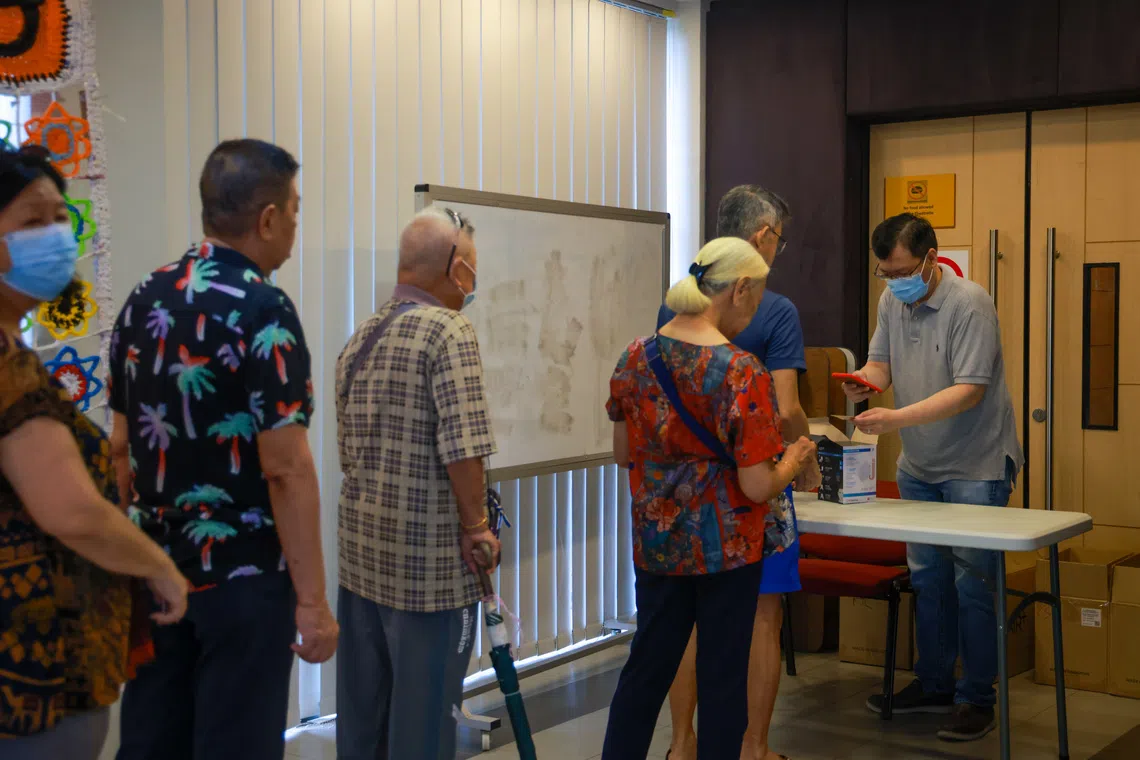
Mask distribution at Kallang CC on Oct 15.
ST PHOTO: JASON QUAH
Air-conditioned rooms at CCs were also opened as public haze shelters for people needing respite from the unhealthy air.
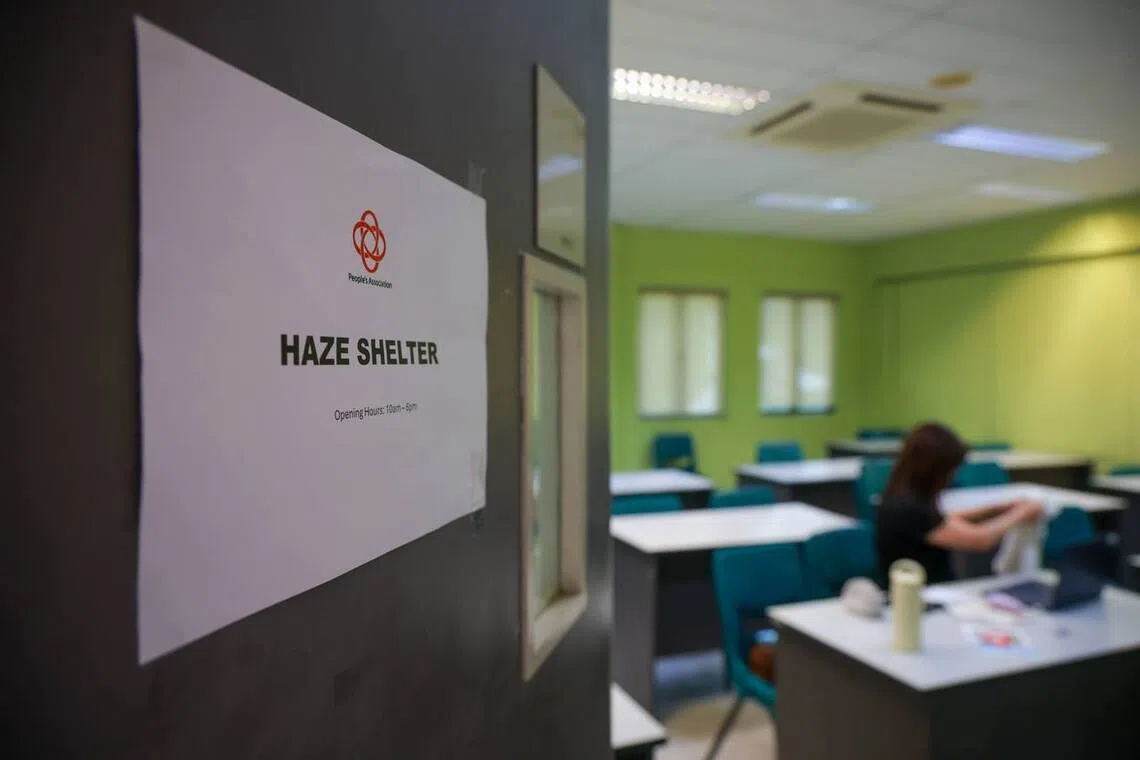
People’s Association staff working in the haze shelter at Kallang CC on Oct 15.
ST PHOTO: JASON QUAH
El Nino haze years
The haze episodes in 2015 and 2026 were worsened by strong El Nino events.
This weather phenomenon is associated with drier, hotter weather in equatorial ASEAN countries, including Indonesia, which causes the forest and plantation fires there to spiral out of control.
So far in 2026, Singapore has endured almost six weeks of hazy conditions.
Air quality first entered the unhealthy range on Sept 4, and Singapore has since been plagued by periodic bouts of poor air quality. The current stretch of bad air is the longest so far.
The overall duration of this year’s haze so far is also similar to the 2015 episode, with hazy conditions affecting Singapore for about six weeks then.
The historical PSI data showed that the Republic started experiencing bouts of haze from Sept 10, when unhealthy air quality was first registered, to Oct 28. Air quality improved and was in the moderate range from Oct 29, 2015.
Impacts of unhealthy air
Hazy conditions can impact human health.
On Oct 13, The Straits Times reported that there has been a spike in visits to clinics and emergency rooms due to haze-related health issues.
The Ministry of Health did not cite figures, but said it was not aware of any cases requiring intensive care unit admission or any mortalities due to the haze.
General practitioners and telemedicine providers also say they have seen a 20% to 30% increase in patients with symptoms that are linked to the haze.
These include runny nose, sore throat, sneezing, conjunctivitis and eye irritation, asthma, skin rashes and respiratory issues.
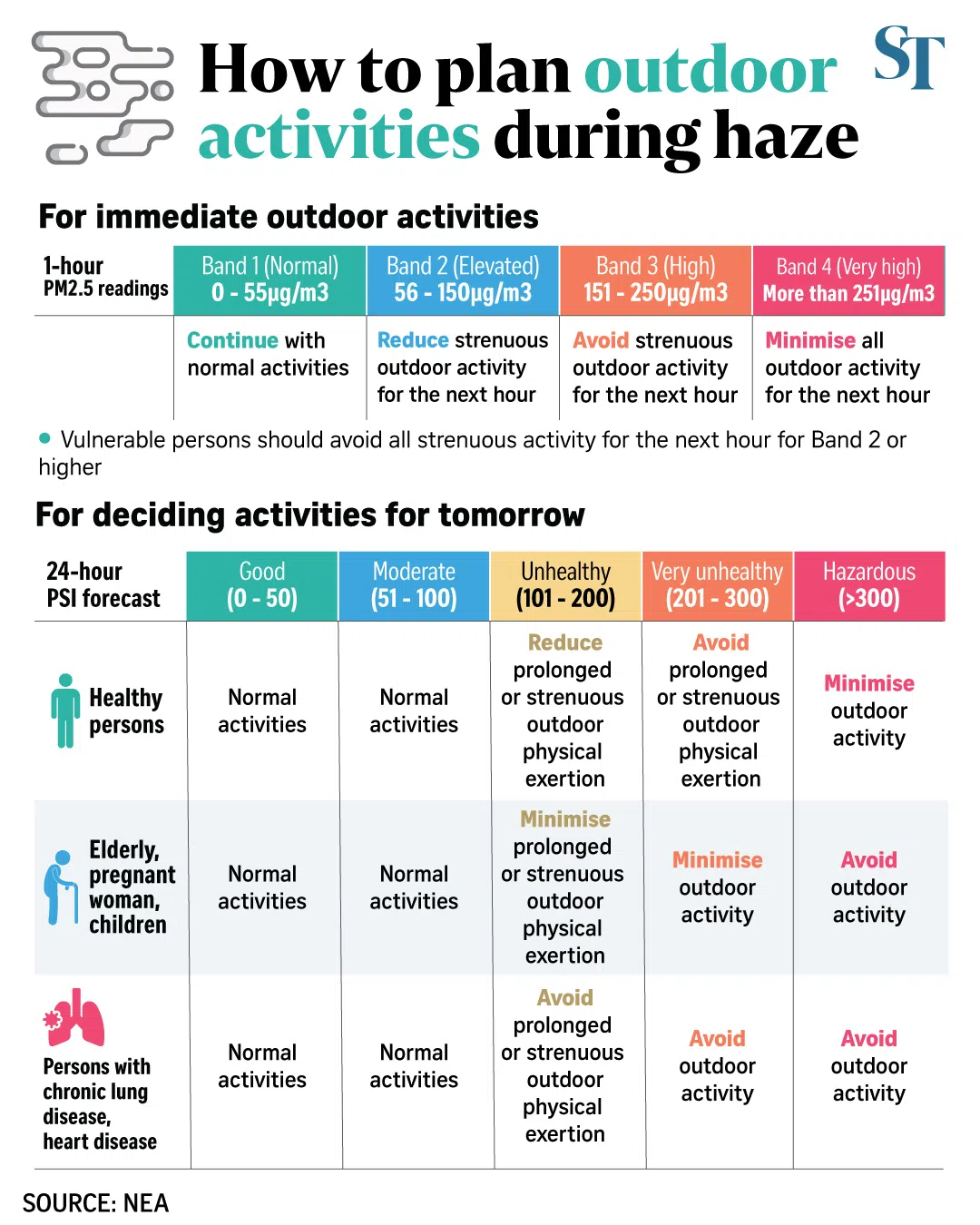
PM2.5 – particulate matter no bigger than 2.5 microns in diameter, smaller than the width of a strand of hair – is one of the six pollutants measured in the PSI, and is the dominant toxin during periods of transboundary haze.
It is an ultra-fine pollutant that can penetrate deep into human lungs.
Past studies have shown that regular long-term exposure to PM2.5 has been linked to increased risk of death from heart and lung complications such as lung cancer or heart disease.
But a local study published on Sept 28 in the medical journal JAMA Network Open found that even shorter-term exposure could also be linked to more emergency room visits.
It was conducted by researchers from Duke-NUS Medical School, Singapore General Hospital, the University of Miami and Duke University.
The study had linked small spikes in fine-particle air pollution to an increase in emergency department visits in Singapore for asthma and chronic respiratory disease just a few days later.
KioskNews shows a cleaned-up reading view extracted from the publisher’s page — the original always lives on their site, not ours.