iPhone Duo vs Xiaomi 18 Fold: How these foldables stack up
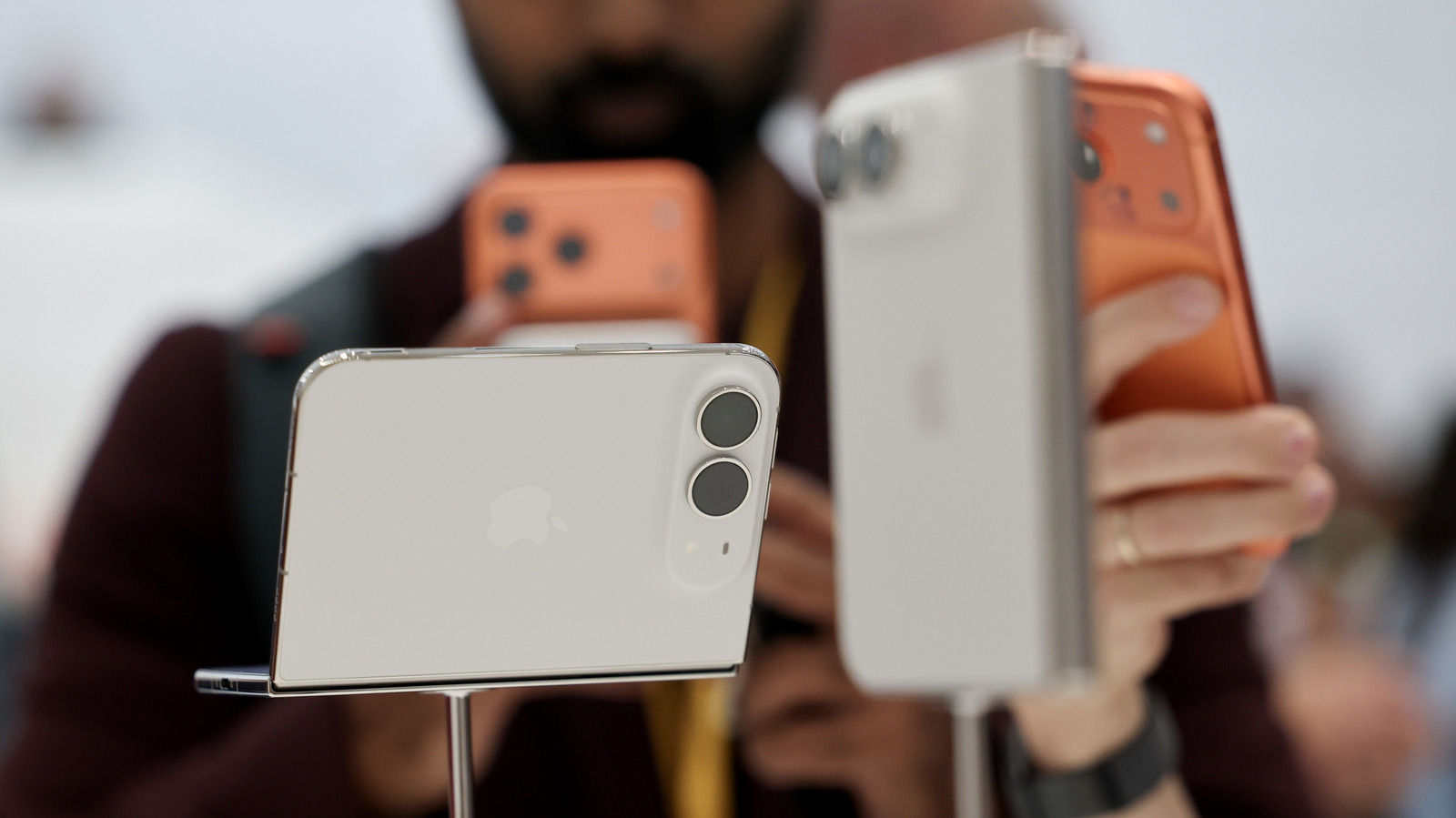
We compare the two on their design, displays, durability and more.
Benjamin Fanjoy/Getty Images
Unveiled just two days apart, the iPhone Duo and the Xiaomi 18 Fold are similar in many ways. They are both premium foldable phones in a passport-style design, moving away from the more square shape that has defined the foldable smartphone category for years.
But that's where their similarities end. Cameras and software are areas where the two are quite different from one another, in addition to price and availability. The Duo starts at $1,999 and goes on sale October 23, with pre-orders opening October 16. The Xiaomi 18 Fold starts at 10,999 yuan, or about $1,640, and is China-only for now. Yet, depending on where you are, comparing these two phones makes perfect sense. Neither of them have undergone an in-depth review yet, but we can already take a look at each one's specs to see how they stack up.
Two foldables that look very similar
Xiaomi
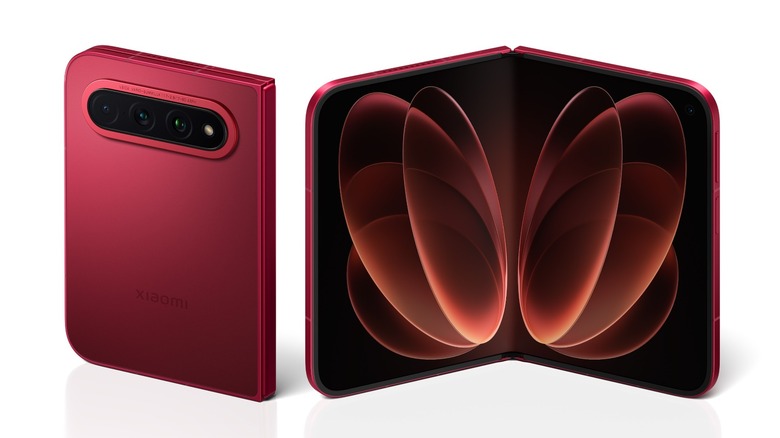
In terms of design and display, the specs of both devices are quite similar. You'll find a 7.6-inch inner screen when these phones are open, and a 5.4-inch outer screen when they're closed — both with a 120Hz refresh rate. But Xiaomi claims that its phone reaches a peak brightness of 4,000 nits, while Apple's only goes up to 3,000 nits. More nits mean a brighter screen, which makes it easier to see content in more environments. Also, the iPhone Duo's internal screen has a nano-textured layer that helps reduce glare and also makes the crease much less visible. The Duo's front-facing camera is also hidden beneath the display and only appears when you need it.
Even though they look similar, the materials on each device are different. Apple built the iPhone Duo with a titanium frame and Ceramic Shield glass for greater durability. It's also certified IP68 for water- and dust-resistance. The Xiaomi 18 Fold, on the other hand, is made of an aluminum frame with its own Shield Glass 3.0. Xiaomi didn't share an IP rating, which is a bit concerning given that these phones tend to be more fragile.
But the 18 Fold tops the iPhone Duo in some areas. For instance, it weighs just 219 grams, compared to the iPhone Duo's 254 grams. It's also one of the lightest foldable phones on the market. The 35-gram difference may not seem huge, but a heavier phone tends to be more uncomfortable when you hold it for long periods of time.
Both the iPhone Duo and the Xiaomi 18 Fold are powered by custom chips designed by their respective companies. The A20 Pro is Apple's most powerful mobile chip, and is also the first built on a 2-nanometer architecture for improved energy efficiency. Xiaomi's XRING O3 is still based on 3-nanometer architecture. Another major difference is RAM — the 18 Fold has 16 GB of RAM, while the Duo is limited to 12 GB. It won't make a difference for most users, but does matter when you're running demanding games and AI tasks.
Cameras, batteries and software
Robert Way/Shutterstock
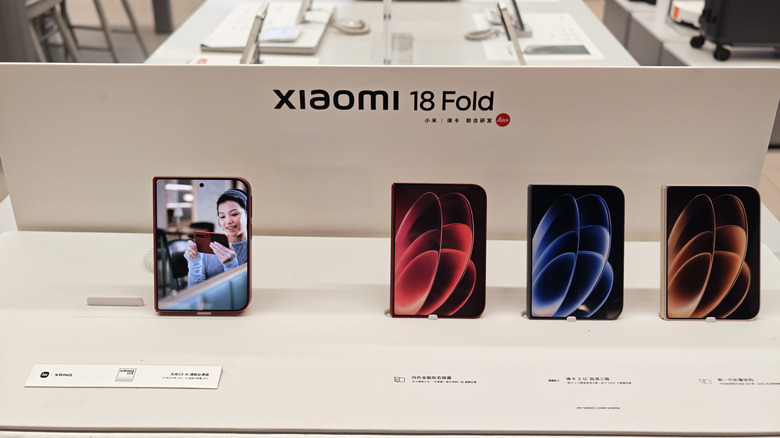
Cameras are what really sets these phones apart. Apple opted for a dual-camera setup with two 48-megapixel sensors — one wide and one ultra-wide. There's no optical zoom like on the iPhone Pro models, so users will need to rely on digital zoom. Xiaomi has delivered a more impressive camera setup with a 200-megapixel main sensor and two additional 50-megapixel sensors — an ultrawide and one for optical zoom. It's a shame that Apple isn't offering its best camera setup to those buying the most expensive iPhone yet.
When it comes to the battery, Xiaomi offers a large 6,000mAh silicon-carbon cell. Apple hasn't disclosed the specs for the iPhone Duo, and since it hasn't hit stores yet, we don't have that information. The Xiaomi 18 Fold also charges faster than the iPhone Duo, since it supports up to 67W wired and 50W wireless charging. The Duo is limited to 60W wired and 35W via wireless MagSafe.
Software is the Duo's strength, with iOS 27 adding Split View multitasking and Siri AI, and Apple Pencil support arriving later this year. There are also sleek animations and apps that really take advantage of the new form factor — something we have yet to see on the Android side. The real question is which one you can actually buy, since Xiaomi doesn't officially sell its phones in the US and local carriers don't certify them. But if you live in China, it's certainly a strong choice against the iPhone Duo.
KioskNews shows a cleaned-up reading view extracted from the publisher’s page — the original always lives on their site, not ours.