Benedict Okyere Yeboah: Ghana’s football problem goes beyond sacking a coach
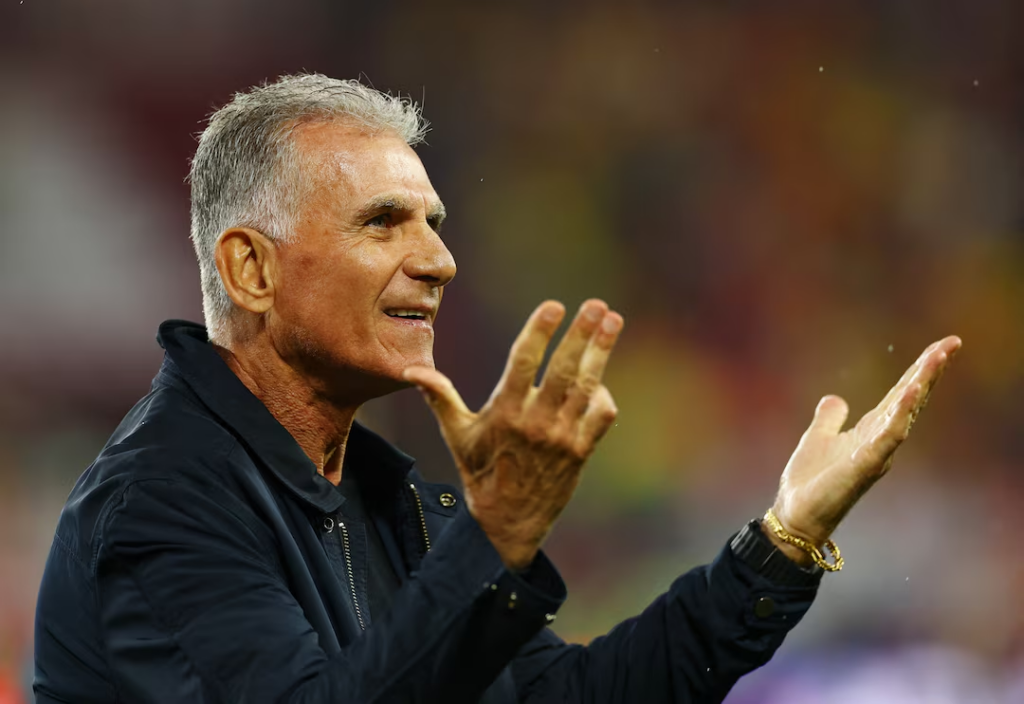
Sacking the coach is the easiest answer to Ghana’s football problems.
It is also unlikely to be the solution.
Carlos Queiroz has now left his position after Ghana opened the 2027 Africa Cup of Nations qualifying campaign with defeats to Côte d’Ivoire and The Gambia. His seven-match spell produced one win, one draw and five defeats.
Those numbers are poor. They justify serious questions about the coaching period.
But they should not end the conversation.
Because Ghana's decline did not begin with Queiroz.
The evidence points to a deeper problem.
Ghana failed to qualify for AFCON 2025 after a qualifying campaign in which the Black Stars recorded three draws and three defeats, scoring only three goals in six matches and conceding seven.
That was before Queiroz's second spell.
At AFCON 2023, Ghana managed only two points from three group matches, failed to win a game and conceded six goals.
The pattern therefore stretches across different competitions and coaching periods.
Changing the manager repeatedly may change the tactics. It does not automatically change the football ecosystem producing the players, developing the clubs or preparing the national teams.
How many coaches do we need to change before we change the system?
Ghana has increasingly treated the national team coach as the central explanation for every failure.
But if different coaches inherit similar structural problems, eventually the question has to move beyond the dugout.
The Black Stars have experienced repeated coaching changes in recent years, while the underlying concerns around player development, club sustainability, infrastructure and football administration have remained.
The GFA itself acknowledged the seriousness of the problem after the AFCON 2025 failure.
In November 2024, it dissolved the Black Stars Management Committee and announced a Ghana Football Retreat involving stakeholders from football, government, education, finance, economics, marketing, former players and other sectors. The stated objective was to develop a roadmap for improving Ghana football.
That is significant.
It means the problem was already being recognised as bigger than the head coach.
The local league is part of the national team equation.
A national team cannot permanently operate as an island.
The domestic football system is supposed to develop players, coaches, referees, administrators and clubs capable of feeding the national teams.
Yet in March 2026, the GFA's Club Licensing Manager said that among the 18 Ghana Premier League clubs, only seven owned their own facilities and only four owned their own stadia.
That is a structural issue.
If elite clubs lack adequate infrastructure and sustainable commercial foundations, the national team cannot simply be expected to produce a continuous pipeline of elite players.
The government’s 2026–2029 Medium-Term Development Plan also identifies inadequate sports infrastructure in schools as a problem for early talent identification and systematic athlete development.
So the question is not simply:
“Who should coach the Black Stars?”
It is also:
“Where are we developing the next generation of Black Stars?”
Ghana has talent — but talent is not a development system.
This is perhaps the most important distinction.
Ghana continues to produce talented footballers.
Mohammed Kudus, Thomas Partey, Antoine Semenyo and numerous other Ghanaian players demonstrate that the talent pool has not disappeared.
The problem is whether Ghana consistently converts that talent into a strong national football system.
Interestingly, the GFA announced in August 2026 that it had invested GH¢1.8 million to train 600 Colts coaches through its CAF Licence D programme over two seasons. It also announced continued investment in youth competitions, equipment and regional development.
Those investments matter.
But they also highlight the scale of the challenge.
If grassroots coaching, facilities, scouting, competitions and player pathways are weak or inconsistent, improving one national-team camp will not fix the entire production line.
Money alone is not enough either
The GFA announced that every Ghana Premier League club would receive at least GH¢1 million ahead of the 2025/26 season, alongside equipment and logistical support.
That raises another important question:
What does the money build?
Does it create better academies?
Better pitches?
Professional commercial departments?
Improved scouting?
Youth development programmes?
Medical and sports-science structures?
Or does it simply help clubs survive another season?
Ghana's Sports Minister Kofi Iddie Adams raised essentially this issue in August 2026, arguing that football requires rebuilding from grassroots to the national level and questioning whether financial interventions were producing lasting institutional improvements.
That is where the conversation needs to go.
The Black Stars are a symptom, not the entire disease.
Consider the numbers.
AFCON 2023:
3 matches — 0 wins — 2 draws — 1 defeat — 5 goals scored — 6 conceded.
AFCON 2025 qualifying:
6 matches — 0 wins — 3 draws — 3 defeats — 3 goals scored — 7 conceded.
Queiroz's 2026 spell:
7 matches — 1 win — 1 draw — 5 defeats.
These numbers cannot simply be explained by one tactical system.
They represent a longer period of instability.
And that is why Ghana's next coaching appointment should be viewed as one component of a much larger football reform programme.
What actually needs fixing?
Ghana needs to examine the entire football pyramid:
- Grassroots development
Identify talent earlier and create structured pathways from schools and Colts football into professional academies. - Club development
Clubs need stronger ownership models, academies, facilities, commercial departments and revenue streams. - Coaching development
The country needs more high-level coaches at youth and senior levels — not just a succession of expensive solutions for the Black Stars. - Scouting
Ghana must build a modern national scouting network capable of identifying talent domestically and across the diaspora. - Infrastructure
Training pitches, academies, medical facilities and performance centres cannot remain secondary issues. - National-team continuity
The Black Stars need a football philosophy that survives individual coaching changes. - Accountability
Success should be measured not only by whether Ghana qualifies for the next tournament, but by whether the football system is becoming stronger.
The uncomfortable truth
Ghana can sack Queiroz.
It can appoint another coach.
It can change the technical team.
It can even change the Black Stars management committee.
But if the same weaknesses remain underneath, the cycle simply starts again.
A new coach can improve a team.
A new football structure can improve a country.
That distinction matters.
The Black Stars' recent numbers are serious enough to demand action. But the statistics also tell us something else: the problem has lasted longer than any single coach.
Ghana therefore needs more than another coaching appointment.
It needs a football development strategy that connects schools, Colts football, academies, clubs, the Ghana Premier League, the diaspora and the national teams into one functioning pathway.
Because if Ghana only changes the man on the touchline, it may change the face of the problem without changing the system producing it.
The next coach should not be expected to rescue Ghanaian football alone.
That job belongs to the entire football system.
DISCLAIMER: The Views, Comments, Opinions, Contributions and Statements made by Readers and Contributors on this platform do not necessarily represent the views or policy of Multimedia Group Limited.
Tags:
DISCLAIMER: The Views, Comments, Opinions, Contributions and Statements made by Readers and Contributors on this platform do not necessarily represent the views or policy of Multimedia Group Limited.
KioskNews shows a cleaned-up reading view extracted from the publisher’s page — the original always lives on their site, not ours.