Berlin’s Left faces coalition crisis after candidate admits fear of pro-Hamas figures in own party
The controversy has placed additional pressure on plans for a coalition between Die Linke, the SPD, and the Greens, which together are seeking to form Berlin’s next government.
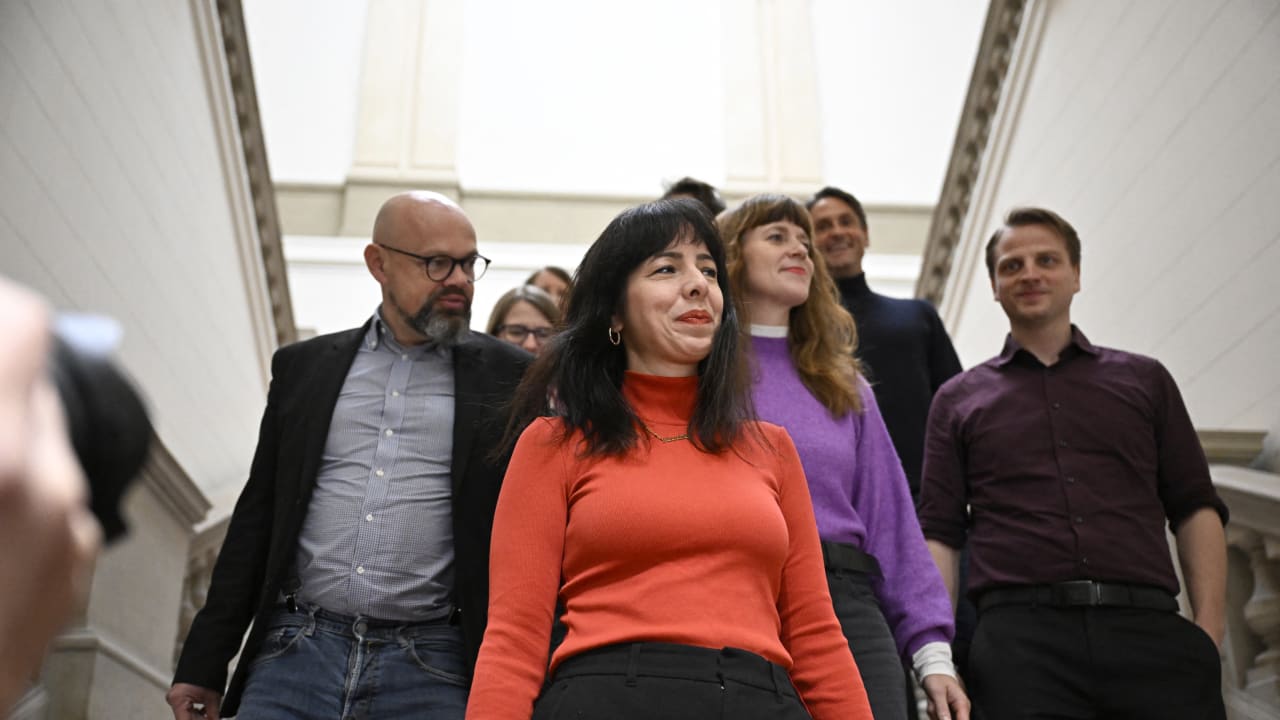
Berlin’s prospective left-wing government has been thrown into disarray after the city’s leading mayoral candidate inadvertently revealed that she and her husband feared for their safety because of individuals within her own party with purported links to Palestinian terrorist organizations.
Elif Eralp, the Left Party’s (Die Linke) candidate to become Berlin’s governing mayor, revealed her concerns in internal comments accidentally sent to German news magazine Der Spiegel during the post-editing of an interview.
Last Wednesday, the magazine received an authorized version of a document containing the interview conducted with Eralp on Monday morning but which had not been cleared of internal comments, deletions and annotations.
According to Der Spiegel’s account of the document, Eralp wrote that she was “afraid for herself and her family” and that she and her husband were “afraid of these people.”
“I can’t put myself and my family in danger for Spiegel,” she reportedly wrote.
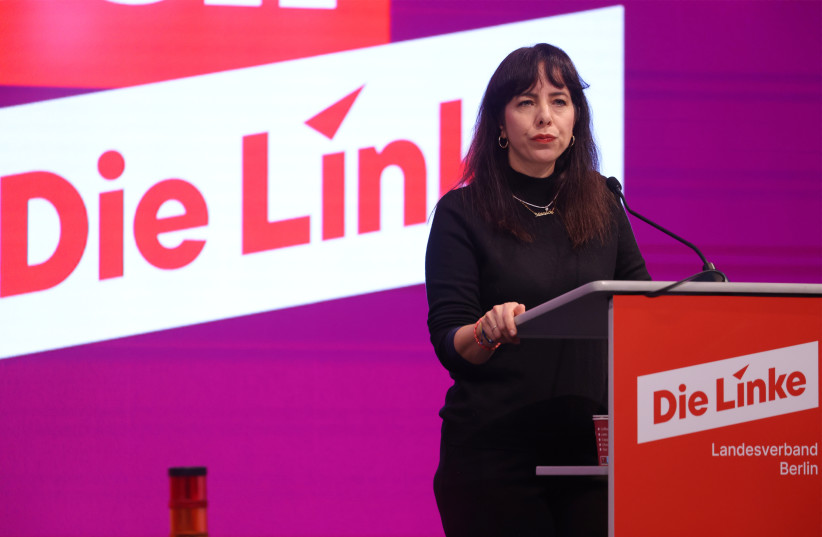
The comments concerned questions about Ibrahim Ibrahim, a prolific figure in Berlin’s radical pro-Palestinian activist circles who has described the chief planner of Hamas’s October 7, 2023, attack on Israel as a “martyr hero.”
Ibrahim attended a Die Linke election celebration in Berlin’s Neukölln district following the September state election.
He is considered a prominent propagandist within Germany’s radical pro-Palestinian scene and is associated with the United Palestinian National Committee (VPNK), an umbrella network bringing together supporters of Hamas and the Popular Front for the Liberation of Palestine (PFLP).
Berlin’s Office for the Protection of the Constitution has classified the VPNK as an extremist organization. The PFLP is classified by German authorities as a terrorist organization.
Eralp reportedly told Der Spiegel that she had not previously been aware of the full extent of the problem involving Ibrahim.
However, in the authorized version of the interview, both the question about Ibrahim and Eralp’s response had been removed.
In an internal note explaining the decision, she reportedly wrote: “There is a problem, [my husband] does not want to give specific names and neither do I; he is afraid of these people and so am I.”
Another annotation reportedly referred to advice from security authorities not to publicly name individuals in connection with organized crime or extremist networks.
The revelation has led multiple key figures to question the extent of the influence of pro-Palestinian extremist circles within Die Linke, as well as Eralp’s ability to distance herself from them.
Coalition partners face pressure to reconsider
The controversy has placed additional pressure on plans for a coalition between Die Linke, the Social Democratic Party (SPD) and the Greens, which together are seeking to form Berlin’s next government.
Representatives of the Christian Democratic Union (CDU) have called on the SPD and Greens to reconsider their willingness to govern alongside Die Linke, questioning how Eralp could guarantee the security of Berlin’s citizens if she herself is scared of individuals associated with extremist networks within her party.
The head of Berlin’s Neukölln district has also criticized the situation, arguing that it demonstrates how intensely supporters of antisemitic and terrorist organizations are connected to sections of Die Linke.
The controversy has also fuelled opposition within the SPD itself. Senior members of the party have publicly called into question the proposed alliance, with some calling for coalition negotiations to be abandoned.
On Sunday, German Defense Minister Boris Pistorius, an SPD politician, said he intended to use his influence within the party to try to prevent the Berlin coalition from going ahead.
According to reports, around 1,175 SPD members have also signed an appeal opposing a coalition with Die Linke “at any price.”
Nevertheless, the three parties have proceeded with their plans.
Die Linke has argued that its issues can be addressed through the coalition agreement and its proposed security policies.
The party also voted overwhelmingly at a party conference on Saturday, October 31, to proceed with coalition negotiations, despite the controversy.
The negotiations between the three parties officially began on Monday, November 2, with the aim of forming a new government for Berlin. The talks are expected to take several weeks.
Eralp receives police protection
Eralp has also faced threats and hostile messages amid the controversy, leading to a tightening of her security arrangements.
On Friday, German media reported that Berlin police had identified a concrete threat, and Eralp subsequently received police protection for the party conference on Saturday.
While Berlin’s authorities typically provide dedicated personal protection to the city’s governing mayor and interior senator, Eralp’s protection was arranged specifically for the party event following the reassessment.
Berlin Interior Senator Iris Spranger of the SPD also pledged protection for Eralp and her family.
Eralp has defended her conduct, saying she takes the advice of security authorities seriously and has to consider the safety of her family.
Speaking after the Spiegel report became public, she rejected suggestions that she would allow herself to be intimidated.
“I made it very clear. I will not let anyone intimidate me,” she said.
Eralp also pledged to act against organized crime, violence, and organizations that glorify terrorism, insisting that she would work to guarantee the safety of all Berliners.
KioskNews shows a cleaned-up reading view extracted from the publisher’s page — the original always lives on their site, not ours.