Mexican soccer league ends promotion and relegation, sparking protests
During the opening kickoff of the Expansión MX season, several teams decided not to play for the first minute of the game. Players passed the ball back and forth while opposing teams stood still. In one of the matches, a referee pleaded with players to resume play, to no avail.
The players, in effect, were protesting a change to the rules that have governed the Liga MX system for more than seven decades — a change they say permanently alters the spirit of the game.
The end of promotion and relegation
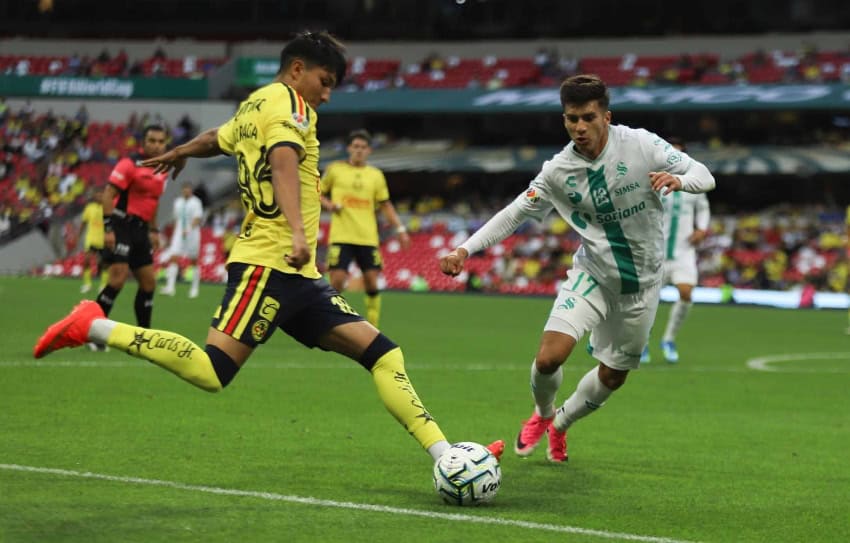
The Mexican Football Federation (FMF) announced July 16 that it is doing away with promotion and relegation, known in Mexico as “ascenso y descenso.”
Essentially, the promotion and relegation system paved the way for lesser-known teams from Mexico’s second-tier league, Expansión MX, to move up to Liga MX, creating a pipeline where more players could perform under a bigger and brighter spotlight.
Now, however, Liga MX teams are set in stone, diminishing the tension that came with relegation.
‘Mourning’ the loss of promotion
The news did not sit well with players or fans.
Following the Expansión MX protest on the pitch, the FMF and the Comisión Disciplinaria (Disciplinary Commission) threatened to fine teams more than US $11,000 for any further disruptions.

In response, players have been covering their mouths during team photos, signaling that they will not be silenced. Atlético Morelia went a step further, asking fans to wear black to games as a symbolic gesture mourning the loss of possible promotion.
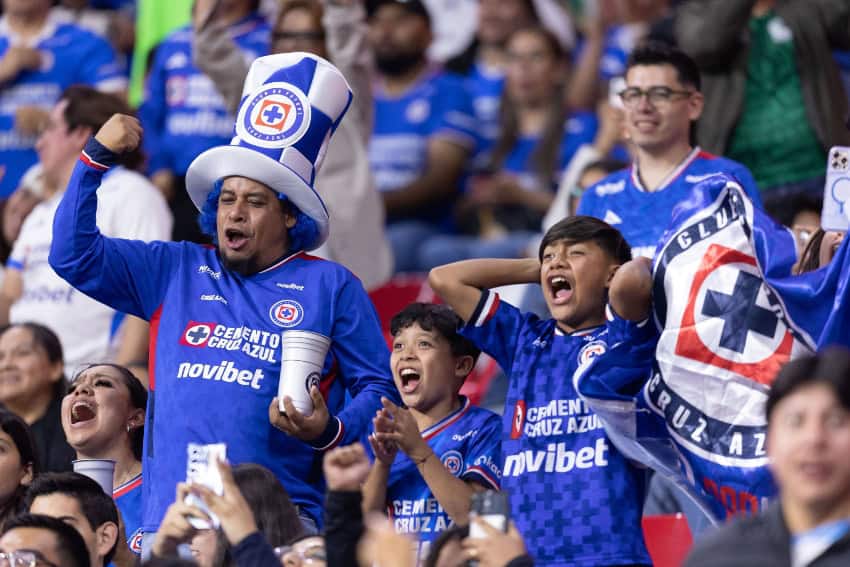
The controversy came to a head when, during his latest public appearance for the Concacaf U-20 final, FMF President Mikel Arriola was met with boos from the stands as chants of “ascenso” echoed throughout the stadium.
The end of a 75-year-old tradition
While promotion and relegation existed in the broader Mexican soccer system since the early 1930s, it was not until 1950 that a “Second Division” was created and “Liga Mayor” became “Primera,” or “First Division.” With that, a new rule was instituted allowing one team to be promoted to the top league. One team was also relegated to the lower league each year.
The change was a response to the growing popularity of the sport and more teams joining the fold, fostering a more competitive structure and opening a pathway for additional cities across the country to reach the primetime that is Liga MX.
The system held for the next seven decades.
But in April 2020, promotion and relegation were paused for Liga MX over ongoing financial issues that were expected to compound due to the Coronavirus pandemic. At the time, then-Liga MX President Enrique Bonilla said, “Given that the financial crisis expanded the problems for the division, several current projects (clubs) are close to bankruptcy and in danger of disappearing.”
The pause was only supposed to last six seasons, a decision supported by FIFA, which urged Liga MX to bring back the system. In a 2020 interview, then-FMF President Yon de Luisa said, “The comment that FIFA made to us is that promotion and relegation has to return.”
A permanent ‘pause’
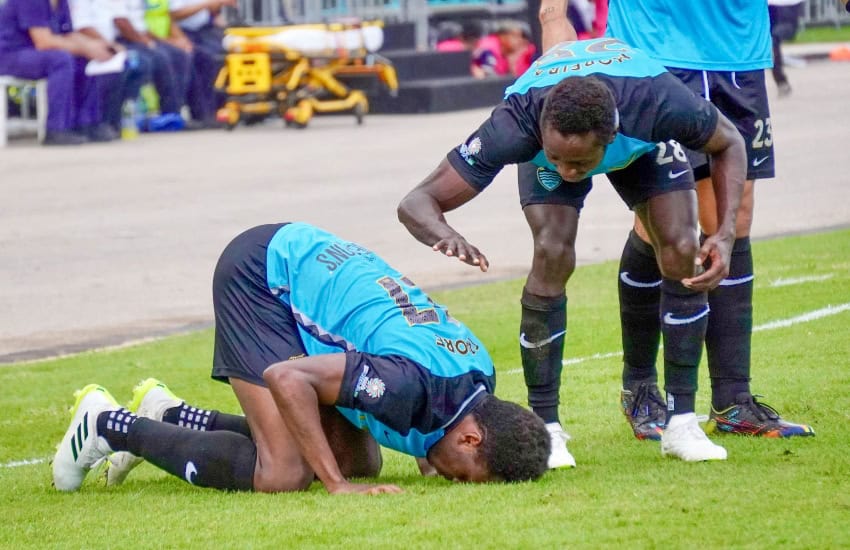
With FIFA applying this sort of pressure, it was assumed that the pause would be temporary. However, several decisions made in the intervening years suggested that the league had other plans in mind.
In February 2022, Liga MX released a statement detailing six certification requirements Expansión MX teams needed to meet before they could be promoted to Liga MX. That included new infrastructure and stadium standards, such as field of play, lighting, suites, dressing rooms and security. For many of the teams, the requirements were simply cost-prohibitive.
In response, nine Expansión MX teams released a statement in July 2022, arguing that “the ‘certification to ascend’ is nothing more than a legal simulation to disguise that there is no real commitment to return the promotion and relegation.”
An arbitration battle is lost
In their letter, the clubs stated that they took up their cause with the Court of Arbitration for Sport (CAS) because they are “tired of how Mexican football is managed.” They accused the league’s front office of turning the sport into a “business that favors only Liga MX clubs to the detriment of the entire national football ecosystem and where financial profits seem to carry more weight than passion for the sport.”
“The so-called certification process is not a quality filter,” the clubs added. “It is a padlock designed so that promotion to the First Division never opens.”
Another nail in the coffin came in September 2025, when the CAS handed down a ruling that denied the system’s return a year early.
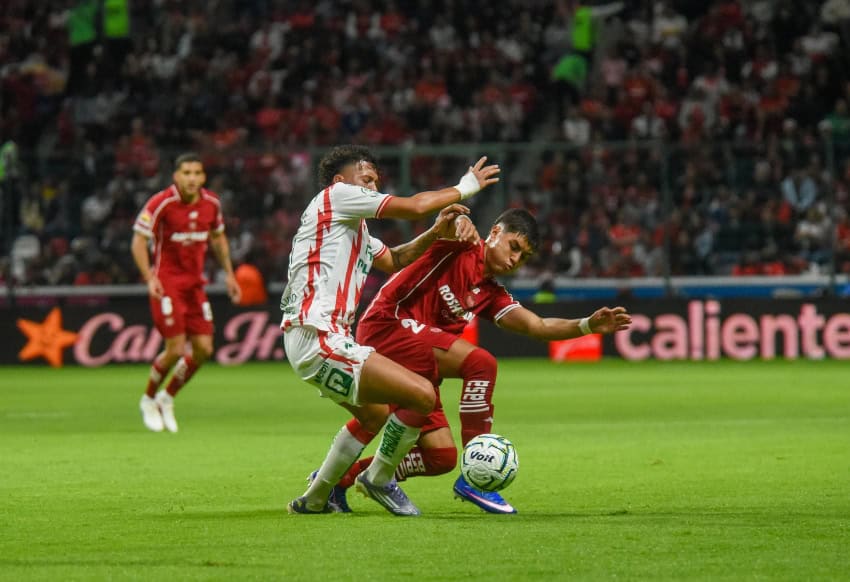
In its ruling, the CAS noted that “after examining the evidence, the CAS Panel concluded that the FMF had always determined to suspend the system until the conclusion of the 2025-2026 season, which was made clear to the clubs when the decision was taken.”
It was a shock to those who expected Liga MX to return to the model that had been in place since the creation of the Segunda División (Second Division) during the 1950-1951 season.
What does the end of promotion and relegation mean for the sport?
Under the previous system, the bottom three teams in Liga MX would face fines upwards of US $4 million for ranking last. That money would then be funneled down to the Expansión MX league. Under the new system, those fines are no longer applicable, leaving Expansión MX teams with even fewer resources.
The new model more closely follows Major League Soccer in the United States, which focuses on commercial investments. “We proved that we can build the most valuable commercial market in the world (for soccer),” MLS Commissioner Don Garber said in a July interview with Front Office Sports.
In the wake of the 2026 World Cup, this money-driven model caused controversy after FIFA President Gianni Infantino proposed a US $20 billion plan to sell the tournament’s commercial rights to private equity investors.
Infantino was forced to scrap the plan after all 55 member associations of UEFA (Union of European Football Associations) threatened to boycott the 2030 World Cup, while all 41 member associations of Concacaf (Confederation of North, Central America and Caribbean Association Football) unanimously rejected the idea.
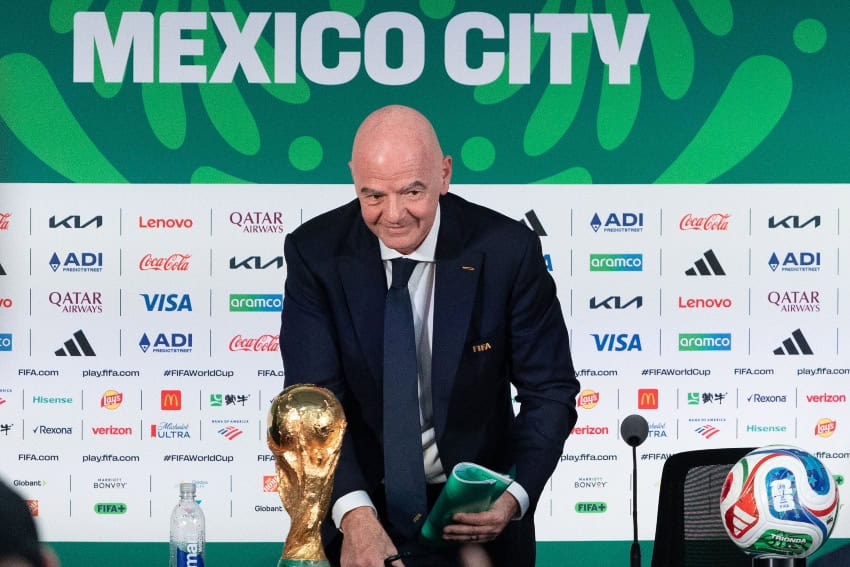
On a global scale, getting rid of the promotion and relegation model deviates from soccer tradition and culture, as the English Premier League, Spanish La Liga, German Bundesliga, Italian Serie A and the French Ligue 1 all use it.
‘Many fans have stopped believing’
The cloud currently hanging over Liga MX is a stark contrast to the 2026 World Cup, which saw the national Mexican team, El Tri, bring hope and optimism to the country at large.
Despite those hopes being dashed during a round of 16 defeat to England, Mexico had regained worldwide respect both on and off the pitch, as well as the faith of its loyal fanbase.
However, following the recent developments for Liga MX, that faith is now slowly fading away.
Mexican footballer Diego de Buen Juárez posted a statement to his X account highlighting some of the frustrations with the league’s decision.
“Without the chance to compete for a genuine sporting objective, many fans have stopped believing,” the statement reads. “And when that sense of hope vanishes, the bond connecting a city to its team is broken as well.”
Jesse Foley-Tapia is a writer and photographer living in the Yucatán Peninsula, where he has dedicated his time and energy to shedding light on issues affecting Indigenous communities. His biggest journalistic accomplishment is interviewing Kendrick Lamar in 2010. His work has appeared in The Sun Magazine and BreakThrough News.
KioskNews shows a cleaned-up reading view extracted from the publisher’s page — the original always lives on their site, not ours.