10 Miniseries To Watch Before Kicking the Bucket (#1 Is Flawless)


Ryan Heffernan is a Senior Writer at Collider. Storytelling has been one of his interests since an early age, with his appreciation for film and television becoming a particular interest of his during his teenage years.
This passion saw Ryan graduate from the University of Canberra in 2020 with an Honours Degree in Film Production. In the years since, he has found freelance work as a videographer and editor in the Canberra region while also becoming entrenched in the city's film-making community.
In addition to cinema and writing, Ryan's other major interest is sport, with him having a particular love for Australian Rules football, Formula 1, and cricket. He also has casual interests in reading, gaming, and history.
Sign in to your Collider account
Miniseries have become something of a cultural phenomenon. The miniseries' appeal is easy to see, with its episodic format allowing for stories to unfurl with an extended, measured, and detailed progression, yet its one-season immediacy gives a sense of instant closure and cohesiveness. It is no surprise that the limited series that have mastered this balance of scope and story, this juggling act of grandiosity and efficiency, have come to be heralded among the greatest achievements in television history.
Ranging from breathtaking historical epics to thematically loaded animations, searing examinations of human connection, and even some of the greatest war dramas to have ever graced screens, these 10 miniseries stand as truly essential viewing for all television lovers. They consist of some well-known modern sensations, but some underappreciated gems from decades past as well.
10 'When They See Us' (2019)
.jpg?q=49&fit=crop&w=825&dpr=2)
Brought to the screen with a brutal and unflinching sense of rage and precision, When They See Us uses a horrible real-world tragedy to illustrate the racism embedded in America’s judicial system, doing so with a palpable and provocative sense of injustice. When a jogger is assaulted and raped in Central Park in 1989, five teenagers from Harlem are wrongfully accused of the attack. Maintaining their innocence even when convicted and imprisoned, the series follows the terrible journey the boys must endure on their path to freedom.
As devastating as it is empathetic, When They See Us is an eye-opening saga that, while it places its focus on systemic injustice, hits at the core of the helpless disenfranchisement many people from the boys’ background feel towards the institutions that are supposed to aid society. It is a masterful balance of cinematic style and respectful reflection, an energized series of high stakes and a painfully raw immersion into the nightmare the ‘Central Park Five’ faced. It is a gripping call for awareness that stands as one of the most piercing and powerful miniseries of all time.
9 'Lost Ollie' (2022)

Using the innocence of animation and a stuffed toy’s journey to be reunited with his owner, Lost Ollie is a heartachingly beautiful gem of fantasy and family drama that is striking for its layered maturity as much as it is for the gorgeousness of its animation. Following Ollie’s (Jonathan Groff) voyage from a lost-and-found bin to his home, the series thrives as a profoundly powerful examination of loyalty, love, and memory.
With its willingness to tackle darker and more confronting elements, Lost Ollie is always as courageous and heartfelt as its titular character, especially with its emotionally intelligent and nuanced handling of such issues as trust, belonging, and determination. Its relatively snappy four-episode run is a mini miracle of divine creativity and astonishing technical craft, making for a must-see miniseries for viewers of all ages who feel in need of a touching tale of inspiration, charm, and the bravery of adventure.
8 'Scenes from a Marriage' (1973)

With renowned classics like The Seventh Seal, Persona, and Wild Strawberries to his name, Ingmar Bergman stands as one of the greatest directors of all time. It is little surprise that the Swedish filmmaker’s forays into small-screen entertainment are equally magnificent, with 1973’s Scenes from a Marriage proving to be an enduring masterpiece. The considered romantic drama explores a failing marriage over the course of 10 years, covering the initial disintegration of their love, the impact their divorce has on each of them, and the lingering connection they share even after they have separated.
True to Bergman’s penetrating style, the series is at times unruly and raw, imbued with an earnestness that makes it a pained facsimile of life and relationships. It flaunts a psychological might in the conflict between the two main characters that is explored in tremendous detail across the six 50-minute-long episodes. In 1974, it was cut down to a 162-minute feature, which also gained international acclaim.
7 'Roots' (1977)

Standing as one of the most influential titles in the history of television, one that hasn’t lost any of its visceral relevance or narrative might in the nearly 50 years since it premiered, Roots is a landmark of small-screen drama that is essential viewing for all lovers of the medium. Starting as an African warrior who was captured and sold into slavery, depicting the lives of his descendants throughout 18th-century America and the conditions they faced in the aftermath of the Civil War.
The series was an immediate sensation, illustrating the impact the miniseries format was capable of decades before it became commonplace, while also leading to a renewed interest in American history and sparking conversations about slavery and racism in the nation. While some elements of its presentation have dated, Roots’ generational story of pain, pride, and persistence has aged magnificently, not only as a seminal piece of American television, but as an enduring masterpiece of storytelling as well.
6 'The Queen’s Gambit' (2020)
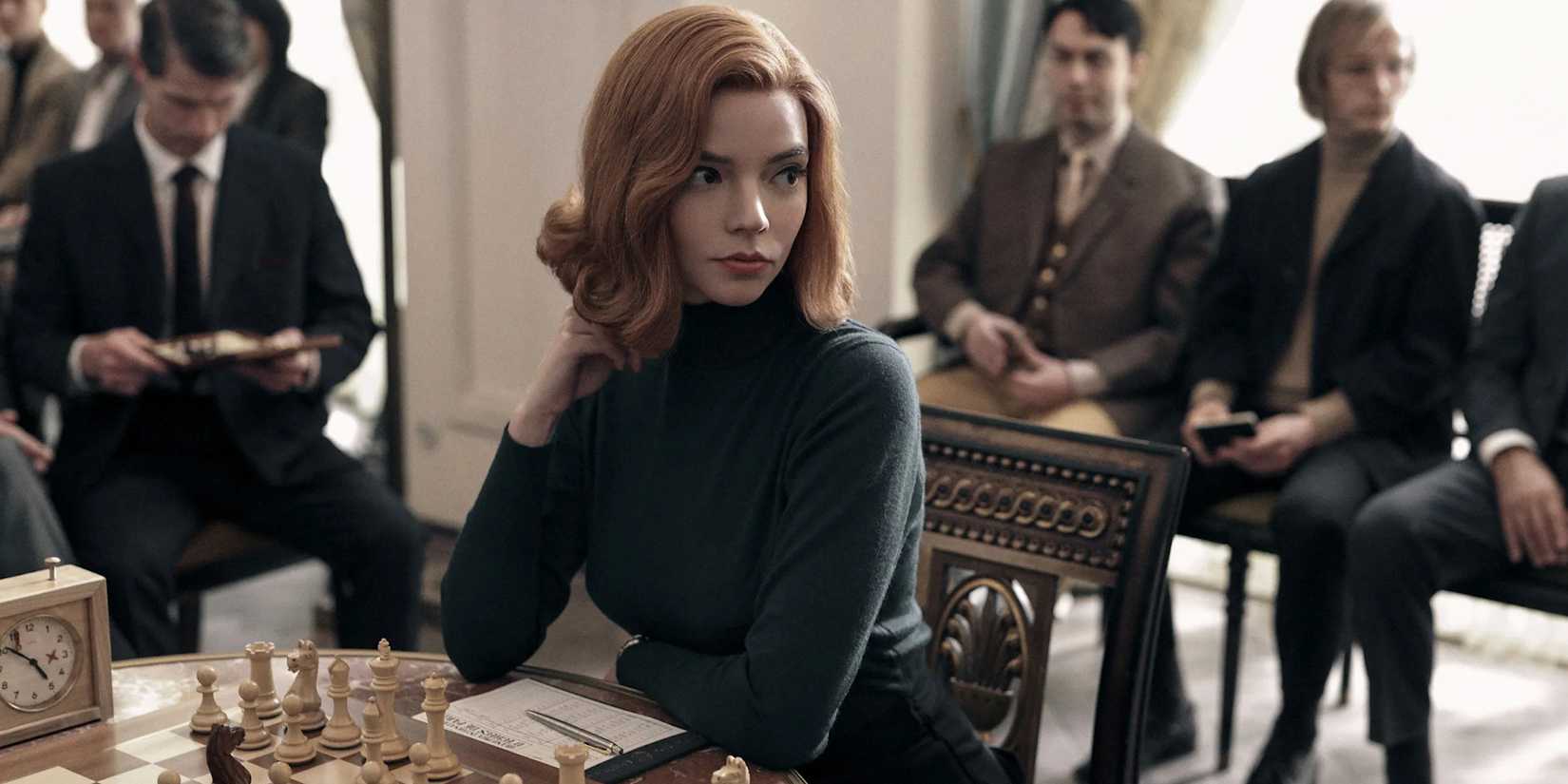
Boasting a career-defining turn from the ever-magnificent Anya Taylor-Joy as well as a razor-sharp script defined by its emotional intelligence, The Queen’s Gambit is simply an icon of modern entertainment. It focuses on the upbringing, tortured personal life, and strategic brilliance of Beth Harmon (Taylor-Joy), an American chess prodigy in the 1960s whose rapid rise up the ranks of the international chess scene is unbalanced by her ongoing issues with alcoholism and drug addiction.
There is hardly a detail of the series that isn’t realized with the utmost perfection, be it the meticulous craft of its period production design, the absorbing intensity of its chess duels, or even the nature of the character study that observes Beth’s talents and flaws with an ever-present sympathy and artfulness. Further enriched by its subtle yet significant display of femininity that doesn’t demand that women be vessels of perfection yet showcases how competitive Beth is in the male-dominated arena of international chess, The Queen’s Gambit is a true phenomenon of the miniseries format.
Collider Exclusive · 8 Questions · 2 Minutes Which Iconic Fandom Should You Join? Harry Potter · Lord of the Rings · Star Wars · Star Trek
Eight honest questions about how you actually are: what you put on when you need cheering up, how deep you go into the things you love, what you argue about, what you keep on your shelf. Answer them and we will tell you where you belong. Four of the biggest fandoms on earth are taking new members, and they could not be more different from one another.
⚡Harry Potter(Wizarding World)
💍Lord of the Rings(Middle-earth)
⚔️Star Wars(A Galaxy Far Away)
🖖Star Trek(The Final Frontier)
01
What do you put on when you need cheering up? Nobody is brave about this one.
02
How deep do you go into something you love? There is no shallow end here, only different deep ends.
03
What do you and your friends actually argue about? Every fandom has one argument it has been having for years.
04
How do you feel about a room full of strangers? Every one of these comes with a very big room.
05
Where would you rather spend a week? Pick on instinct rather than on budget.
06
What do you believe about people, mostly? All four of these stories have an answer, and they disagree.
07
What is actually on your shelf? Look over at it before you answer.
08
What do you actually want from a story? Eight questions in, this is the one that picks your fandom.
Membership Confirmed Your Fandom Is…
Four of the largest communities on the planet, and four completely different reasons to belong to one. Here is yours, what it would give you, and the argument you would be having within a week.
Harry Potter
You belong to the fandom that is really about comfort. Hogwarts works on people because it is a place rather than a plot, and the pull is not the wizard war so much as the corridors, the food, the weather and the sense that somebody is expecting you.
- You are drawn to belonging, which is why this fandom sorted itself into houses within about five minutes and has never stopped.
- This is the most social of the four, and the one most likely to know which type every single person in your life would be.
- The books are built to be reread rather than analysed, and rereading is exactly what you do with things you love.
- The new HBO series is bringing the whole thing back one book at a time, which means the arguments are about to start all over again.
Lord of the Rings
You belong to the deepest fandom on this list, the one where somebody has always read further than you and is quietly delighted to say so. Middle-earth rewards patience more than any other world in popular culture.
- You like the sense that the story you are reading is only the visible part of something enormous, which is precisely how Tolkien built it.
- This fandom takes adaptation seriously to a degree that other fandoms find slightly alarming, and it has good reasons for that.
- Your favourite thing about the books is probably the bit that is not action at all, which is the walking, the songs and the long goodbyes.
- Nobody here thinks heroism belongs to the powerful, and the whole story exists to make that argument.
Star Wars
You belong to the loudest and largest tent of the four, the one where three generations are all watching the same thing and none of them agree about any of it. That disagreement is not a flaw in this fandom, it is the main activity.
- You want something you can share with absolutely everybody, from a six year old to a grandparent, and this is the only one on the list that really does that.
- Nobody argues like Star Wars fans argue, and the argument has been running since roughly 1980 with no sign of resolution.
- The pull here is sensory before it is narrative, since it is the sound design, the score and the look of a used and dented galaxy.
- You would be first in the queue, in costume, with strong opinions and a genuinely good time.
Star Trek
You belong to the thinking fandom, the one that turns up for the argument rather than the explosion. Trek has always been a series of ethical problems in space, and the people who love it love being asked what they would have done.
- You are an optimist in a way that is currently unfashionable, and this is the only major franchise still willing to say the future might be better.
- The best episodes are the ones where nobody fires anything, which is a sentence that makes perfect sense to this fandom and to nobody else.
- Starfleet Academy brought the franchise back to a classroom in 2026, which is appropriate, because Trek has always been a bit of a seminar.
- You would want the conversation afterwards more than the episode itself, and here you will always find somebody willing to have it.
5 'The World at War' (1973)

It may not be a narrative story like so many other classics of the format, and its extensive 26-episode run may challenge the “mini” of “miniseries,” but The World at War still stands as one of the greatest feats the form has ever seen. Coming to be regarded as the definitive account of the Second World War, the British docuseries goes to great lengths to display the true scope of the conflict, incorporating first-hand accounts of battles, archival footage, and innovative storytelling techniques to great effect.
With its comprehensive scope, the series covers every single element of the war, from the rise of fascism in Germany to the many pivotal battlefields throughout not only Europe but Africa and Oceania as well, and to its aftermath and lingering effects. Not only incredibly educational about one of the most important chapters in modern history, but also a series of profound significance in the context of documentary television as well, The World at War is as much an essential masterpiece of television as it is a harrowing and awe-inspiring work of historical documentation that must not ever be forgotten.
4 'Pride and Prejudice' (1998)
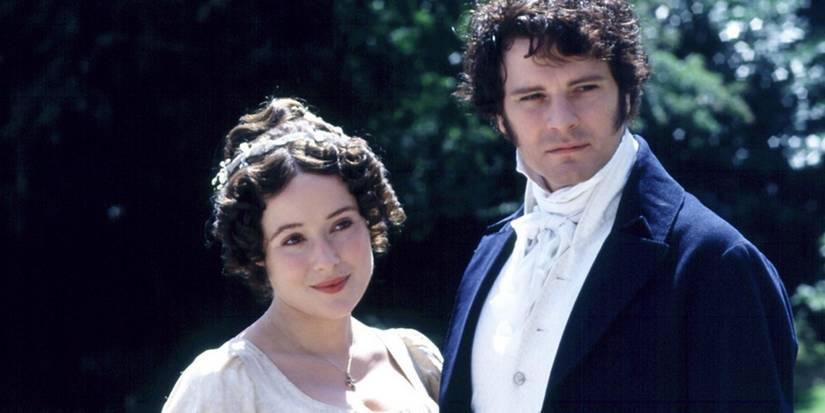
The 1990s saw a surge of period pieces either adapted from Jane Austen’s writings or clearly inspired by them. Perhaps the very best of these is the 1998 miniseries adaptation of the author’s esteemed novel, Pride and Prejudice. Armed with perfect casting and the ability to elegantly unfold over the course of six hour-long episodes, the series brings to life the social minutiae of Regency-era England, and the central romance between the strong-willed Elizabeth Bennet (Jennifer Ehle) and the enigmatic and aloof Mr. Darcy (Colin Firth), with sublime detail and devotion to Austen’s book.
Further bolstered by its brilliant production design, entrancing atmosphere, and its ability to make the anachronistic societal expectations that define the story seem significant rather than silly, Pride and Prejudice is truly a defining masterpiece of its genre and an essential, enduring highlight of limited series excellence. It is thematically rich without being preachy, romantic without delving into fluffiness, and wildly entertaining and addictive while working within its rigid narrative confines.
3 'Dekalog' (1989)

An approach to the miniseries format and its narrative possibilities that was decades ahead of its time, Dekalog is a contemplative and quietly powerful examination of human behavior. The show explores the lives of multiple tenants living in a housing project in 1980s Poland, with each of the miniseries' 10 episodes being thematically inspired by one of the 10 Commandments and focusing on characters whose moral dilemmas relate to the biblical doctrine that governs the episode.
With each episode running for around an hour, Dekalog is given plenty of time to plunge into the moral and psychological depths of its characters in order to extract complex yet compelling understandings of ideas like individualism, human connection, and the complicated nature of desire. Armed with razor-sharp storytelling prowess and a gorgeous cinematic display courtesy of creator Krzysztof Kieślowski’s impressionable style, Dekalog is a miniseries that remains achingly relevant even over 35 years after its release, one that stands as a landmark achievement in the context of international television.
2 'Chernobyl' (2019)
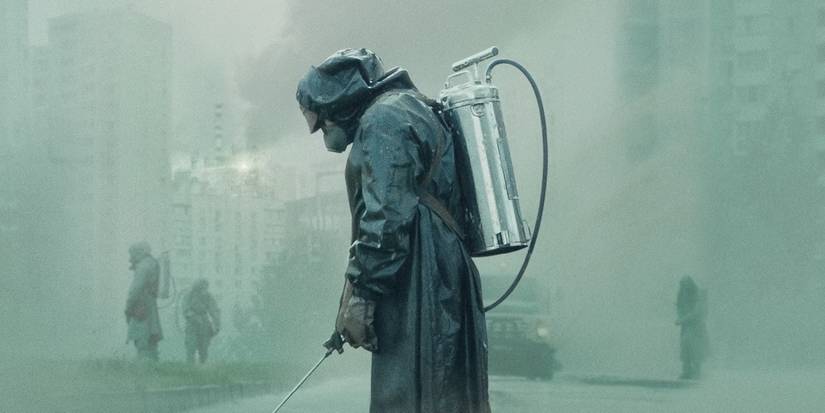
Perhaps the defining triumph of HBO throughout the 2010s, Chernobyl excels as a meticulously crafted and sickeningly intense dramatization of the Chernobyl nuclear plant disaster of 1986. Placing an emphasis on the aftermath, the series focuses on both the immediate efforts to contain the radiation pouring into the atmosphere, jeopardizing all of mainland Europe, and the damning results of all the political secrecy and manipulation surrounding the catastrophe.
Defined by its haunting sense of creeping dread and the sheer vastness of its scope, Chernobyl is a brilliant, all-encompassing analysis of the entire situation that thrives as both a tribute to the masses of people who sacrificed their lives in the clean-up effort and a biting dissection of political and institutional rot. Bolstered by three outstanding lead performances and an intent to make the integral issues it tackles ever-relevant, Chernobyl is a true modern masterpiece of television, one that had a real-world impact and will be remembered for decades to come as a story of profound importance.
1 'Band of Brothers' (2001)

A collaboration between Hollywood icons Steven Spielberg and Tom Hanks, Band of Brothers is a fiercely compelling, emotionally pointed, and technically astounding trek through the European Theater of WWII. Following the soldiers of Easy Company from their training program, through several of the conflict’s most brutal battlefields, and eventually to their presence in Germany following the country’s surrender, the series presents a completely arresting mosaic of war through its 10-episode run.
At its absolute best, the series balances visceral depictions of combat with compelling character depth to illustrate both the nerve-searing intensity and the tight-knit camaraderie of the battlefield. Complemented by touching sequences that open each episode in which the real veterans the series is based on reflect on their experiences, Band of Brothers stands as perhaps the finest bit of war media ever produced in America. It is certainly television’s most definitive miniseries, one that every fan of small-screen drama must watch at least once in their life.
KioskNews shows a cleaned-up reading view extracted from the publisher’s page — the original always lives on their site, not ours.