GREEN SHOOTS: One of SA’s most toxic mining legacies is getting cleaned up
When Mintails Mining and its sister companies collapsed in a heap and went into liquidation in 2018, there was a gaping hole where capital should have been ring-fenced to tackle the environmental liabilities of its rapacious attempt to spin cash from West Rand gold.
Mintails, whose parent was listed on the Australian stock exchange, had for years been accused of flouting environmental regulations as it embarked on a scramble to extract what it could from low-grade gold without bothering to make the required provision for the subsequent cleanup.
People in the surrounding communities long complained of radioactive dust and polluted water from its operations, but to no avail – one of many glaring examples of the then Department of Mineral Resources and Energy failing in its oversight role.
The pillage continued until Mintails sank under the weight of its mismanagement and greed, leaving behind an odious environmental legacy.
Mintails’ mess is now being mopped up, and this unfolding saga shows that a landscape scarred by irresponsible mining can be healed. It also underscores the roles that community activism and “green financing” options can play on this front – and that there is still money to be made in a responsible way from previously abandoned gold operations on the West Rand.
Mintails’ assets were as toxic as the surrounding environment, and few investors were tempted to go near them. But its collapse came as gold prices began slowly rising and the corporate embrace of ESGs – environmental, social and governance issues – was taking hold. A reflection of this latter trend has been the growth in “sustainable bonds” with specific environmental or social targets.
Willing buyer
It was against this backdrop that Pan African Resources acquired the Mogale Gold and Soweto cluster dumps from the liquidator in 2022.
“It was a big mess. We were really the only guys that were willing to take this on,” Pan African Resources CEO Cobus Loots said in an interview. “And there was a lot of scepticism even after we signed with the liquidator.”
This paved the way for the commissioning of the Mogale Tailings Retreatment (MTR) operation in October 2024, which is expected to produce 50,000 to 60,000 ounces of gold a year.
But the company also inherited the environmental liabilities, estimated at R485-million, that had rendered the asset toxic. To remedy the ecological damage bequeathed by Mintails, it raised finance through a sustainability bond – or a sustainability-linked instrument – arranged by Rand Merchant Bank.
Such instruments are complex but elegant. They set out key performance indicators that need to be achieved over specific timeframes, with financial penalties for falling short or incentives for meeting the targets.
“You’re aligning your financial commitments with your sustainability commitments. That’s the logic behind it,” Nigel Beck, the executive head of sustainable finance at Rand Merchant Bank, said in an interview.
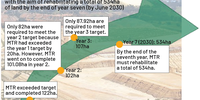
The rehabilitation of the fouled region began in July 2023. In the first year, the target was 102ha of land, and 122ha were rehabilitated, meaning only 82ha were required to be addressed in the second year. By the end of the seventh year in 2030, 534ha needs to be rehabilitated.
Slowly going green
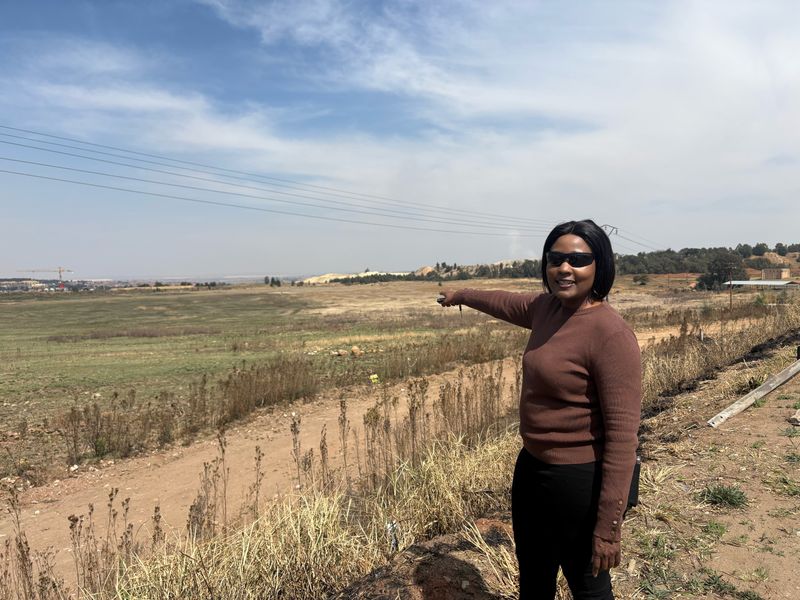
Pan African Resources took this correspondent on a tour of the area, and it is indeed getting a green sheen. Pointing to a barren landscape pockmarked by ochre and ivory soil, Mogale Tailings Retreatment’s environmental manager Faith Chademana said: “This dam has been problematic. It was highly contaminated. We have removed the tailings storage facility and dam wall and drained the water, and this will become a natural wetland.”
Seepage from it had threatened nearby water systems.
A wetland we visited has been restored and reseeded. Alien vegetation has been removed, and frogs and birds are reappearing – a clear indication of ecological renewal.
Mariette Liefferink, CEO of the Federation for a Sustainable Environment (FSE), was also present and said she had seen an improvement.
“This entire area was previously contaminated. The dust was significant,” she said.
Liefferink is an environmental warrior and community activist. She is like a bulldog when it comes to the mining industry, hounding the sector to do the right thing.
The Federation for a Sustainable Environment has arguably done more than any other organisation over the years to raise awareness about the Mintails catastrophe, which remains firmly in its sights.
“This… does not absolve Mintails, its former directors, the liquidators or the relevant authorities of any historical responsibilities that may legally remain with them. A successor’s willingness to remediate a legacy problem does not retrospectively erase the conduct that created that problem,” Liefferink noted.
“Mining companies must prevent pollution, undertake concurrent rehabilitation and carry the financial responsibility for their environmental impacts. Where a company fails or becomes insolvent, the state must use its statutory powers to protect communities and the environment and pursue those responsible.”
Distrust of the mining sector remains in the area. Community activists say that since Mogale Tailings Retreatment began operations two years ago, vibrations and cracks have appeared in their homes.
Pan African Resources says this is not true, and several mining experts who were asked about this state of affairs say illegal mining activity is the likely cause. Winning the trust of a community is an uphill climb for mining companies in the wake of such degradation.
Ultimately, this is a cautionary tale of the consequences of a regulator falling asleep at the wheel – or being corrupted – and wider state failure. South Africa is brimming with many a sordid example on this front. DM
This story first appeared in our weekly DM168 newspaper, available countrywide for R39. The e-edition of Daily Maverick’s weekly newspaper, DM168, is now free for readers who are signed into their Daily Maverick account. Click here to access the latest e-edition.
KioskNews shows a cleaned-up reading view extracted from the publisher’s page — the original always lives on their site, not ours.