Why Muslim-majority Azerbaijan is restricting hijabs in schools
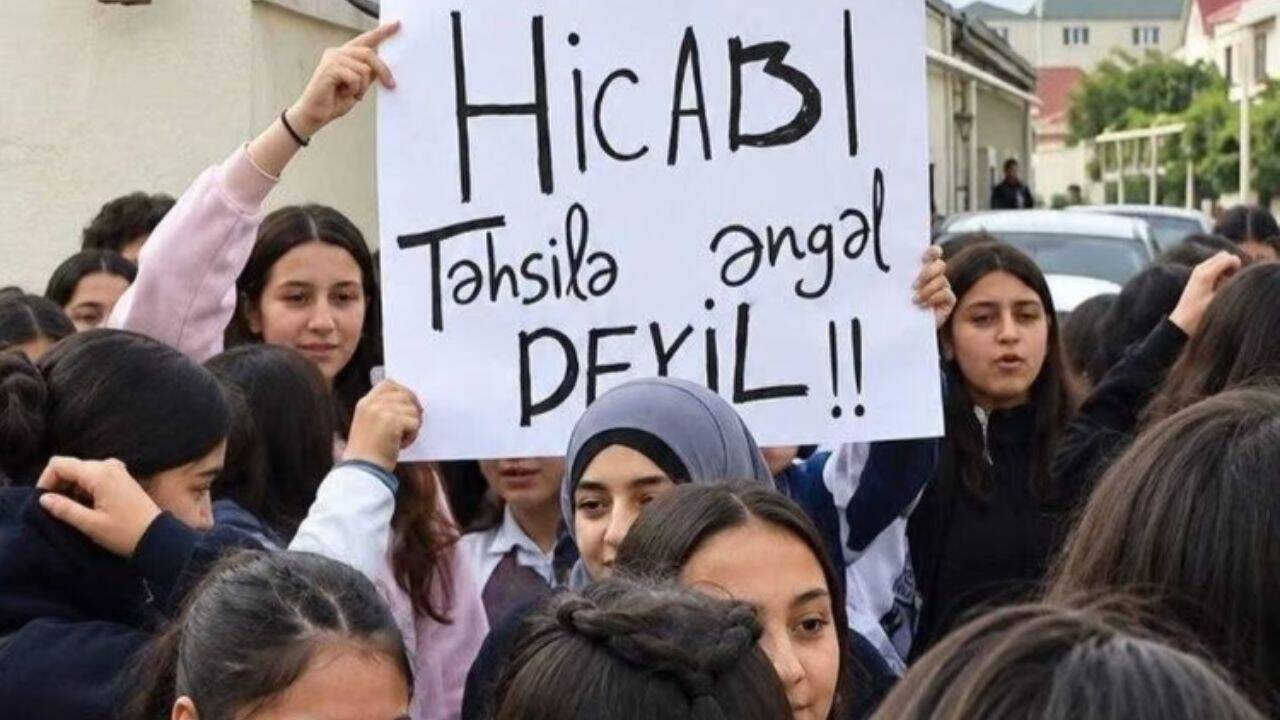
Protests are sweeping across Azerbaijan as students and teachers react to newly imposed restrictions on wearing the hijab in schools.
A country where around 96 percent of the population identifies as Muslim is witnessing protests after schools began turning away some girls and teachers for wearing the hijab, triggering a debate over religious freedom and secular education in Azerbaijan.The restrictions have raised questions about why a Muslim-majority country is enforcing rules that prevent some hijab-wearing students from attending classes.According to an Al Jazeera, Azerbaijan's Cabinet of Ministers amended school uniform rules on September 21, prohibiting clothing that violates the prescribed dress code or conflicts with the secular principle of general education.Although the regulation does not explicitly name the hijab, its enforcement has reportedly led to some hijab-wearing students and teachers being turned away from schools, prompting protests and class boycotts.Teacher Zahra Hasanova, who was reportedly told she could no longer wear the hijab at school, described the decision as deeply upsetting, while defending the right to choose whether to wear the headscarf.“To be honest, I am a little emotional. I am hurt,” Hasanova told Al Jazeera. “[The hijab] is a personal choice, and if one day I want to take it off, that should be my choice too.”Local media outlets reported that students at least two schools boycotted classes in protest against the restrictions.
Videos circulated online showed students crying and embracing teachers as they were turned away from schools.Why Azerbaijan is enforcing the hijab restrictionsAzerbaijan's government has justified the new restrictions on the grounds of secular education, a uniform school dress code and professional standards for teachers.According to the state-run Azerbaijani Press Agency (APA), the September 21 amendment to school uniform rules was intended to establish a common dress code consistent with the secular principle of general education.A separate decision on October 6 introduced clothing requirements for teachers, emphasising neatness, professionalism and suitability for the school environment.The legal basis for the government's position lies in Article 18 of Azerbaijan's Constitution, which separates religion from the state and requires the state education system to be secular. However, Article 48 also protects freedom of conscience and the right to practise a religion, while Article 42 guarantees the right to education.Although around 96 percent of Azerbaijan's population identifies as Muslim, the country is constitutionally secular. The government has presented the rules as an education policy rather than an explicitly anti-Islamic measure.
KioskNews shows a cleaned-up reading view extracted from the publisher’s page — the original always lives on their site, not ours.