‘Whatever we earn, the Ganga takes it away’: How Bihar floods are playing out on the ground
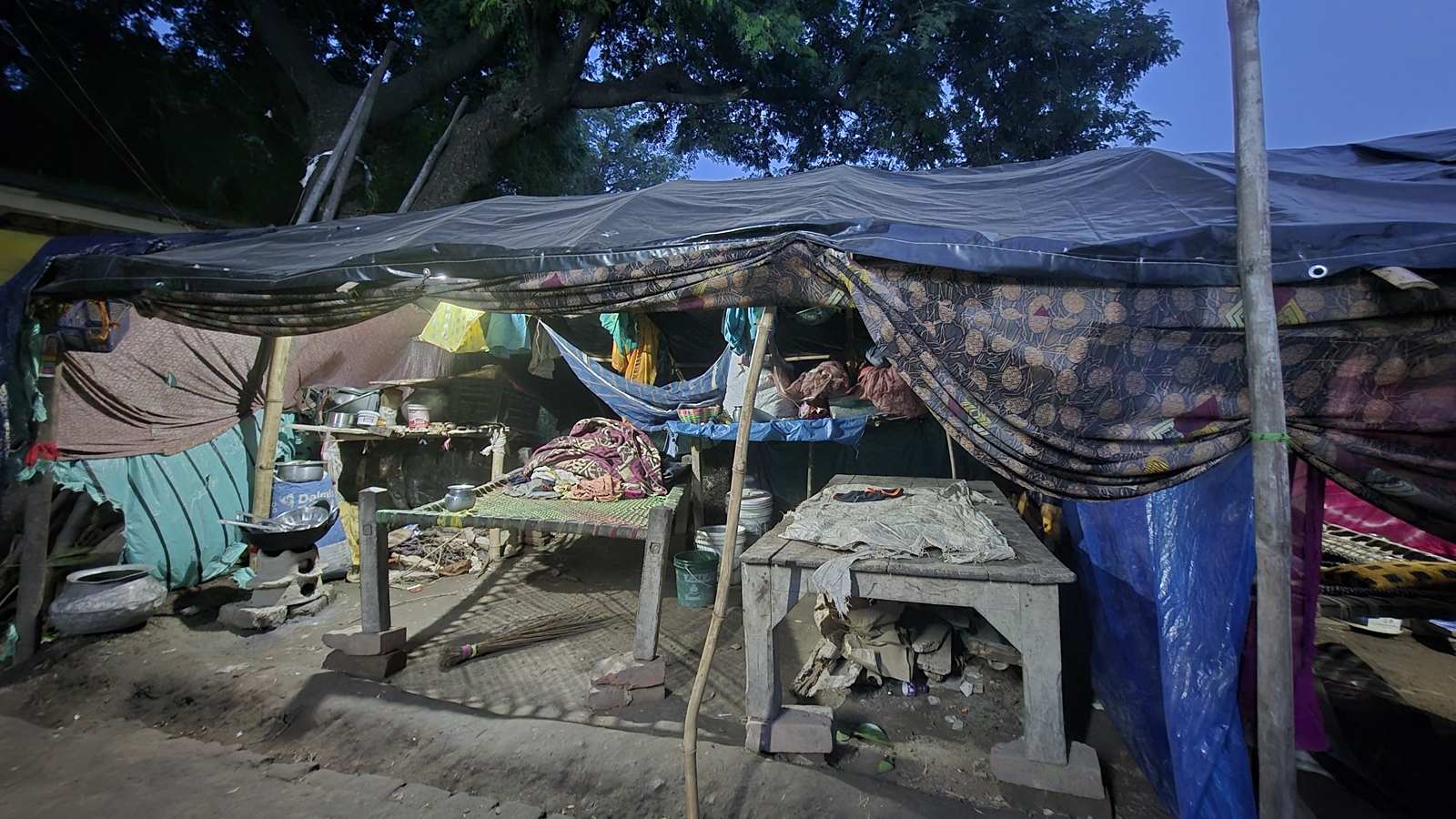
Outside a tent made up of black plastic sheets at Bhagalpur’s Tilha Kothi, Raj Kishore is lying on a cot — one thing his family managed to salvage from the floodwaters that entered their home nearly a month ago.
This cot is serving multiple purposes at the moment: As a bed, a chair, and a place to keep whatever remains of their belongings.
“Documents, cash, jewellery — everything was submerged,” says the 25-year-old.
Kishore was in Hyderabad when his phone rang. His family told him that water had entered their home in Didarpur Bind Tola. By the time he reached Bhagalpur, there was little left to return to.
“We had stored grain in a couple of drums. It has been under water all these days,” he says.
For Kishore, and hundreds of others like him in the district, who were displaced in the recent floods, this kothi inside the Tilka Manjhi Bhagalpur University campus has become a settlement of its own.
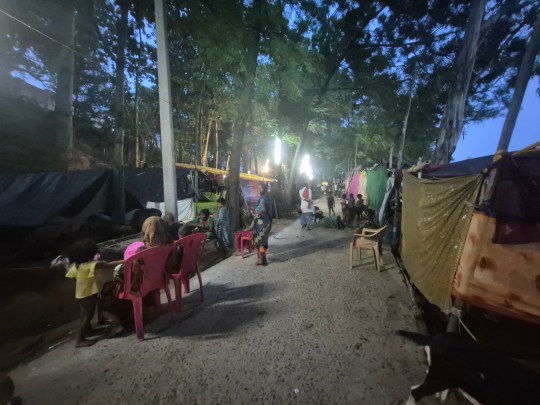 Even as the elders try to come to terms with their losses, the district administration has come up with a different routine for children in the camps. (Express photo)
Black plastic sheets stretch over bamboo poles, forming low shelters along narrow cemented pathways. Some structures are covered with colourful fabric used by decorators; others are wrapped in old saris or whatever pieces of cloth families could find.
Outside one tent, a group of women are talking. Children run along the pathways, weaving their way between tents. Goats wander through the lanes. Men sit outside their shelters, watching the day unfold around them.
Story continues below this ad
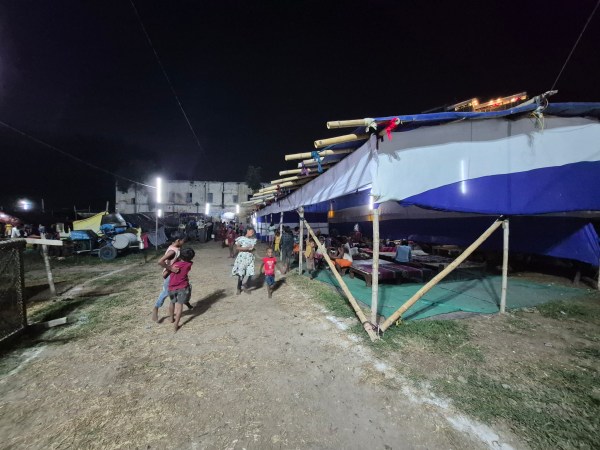 Even as the elders try to come to terms with their losses, the district administration has come up with a different routine for children in the camps. (Express photo)
A medical team is stationed near the entrance; there is also an anganwadi centre where around 30 children attend classes in two shifts.
It looks, from some angles, like a village compressed into a few hundred metres. Except, unlike a village, the families here have no place to call home for now.
Inside the settlement, two men are locked in an argument. A small crowd gathers around them. “Arguments like these happen quite often here,” says 23-year-old Suman Kumar. “Everyone here has lost most of their belongings. So, emotions run high. Small disagreements can quickly escalate.”
Suman was in Ludhiana when his father called him. “There is only one train connecting Ludhiana and Bhagalpur and it runs once a week,” he says. “There were no trains for the next four days…”
Story continues below this ad
Like Suman, many in the camp are migrant labourers who had left Bihar in search of work. As news of the floods came in, they rushed back. Some did not even have the chance to collect their wages.
One such youth is Karan Kumar who works at a construction site in Hyderabad. “When I heard the news, I had to rush back home. My salary had not even been paid,” he says.
Even as the elders try to come to terms with their losses, the district administration has come up with a different routine for children in the camps. (Express photo)
Kishore and his friend Ravi Kumar, too, have wages pending from employers in the Telangana capital. For people like them, losing a month’s work only compounds the misery of lost savings, destroyed belongings, and food stocks that have been sitting underwater for weeks.
A settlement under water
Even as he bides his time at the relief camp, Kishore keeps going back to check on his house that is still underwater. “The water is so dirty that you cannot see anything beneath it,” he says.
Story continues below this ad
Clearly, returning home is not an option for now but there are advantages to these visits.
“Many a times, things float to the surface. We bring back whatever we find and have managed to collect a few things that way,” says Kishore. “Otherwise, most of our belongings are gone…”
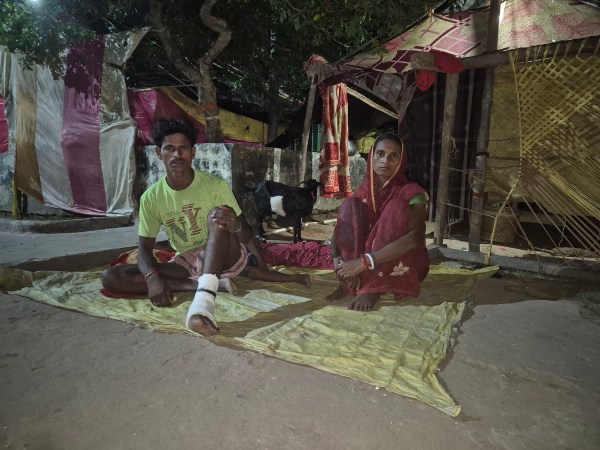 Even as the elders try to come to terms with their losses, the district administration has come up with a different routine for children in the camps. (Express photo)
Even as the elders try to come to terms with their losses, the district administration has come up with a different routine for children in the camps. For the last few days, Local artists have been teaching them Manjusha — the traditional art form associated with the Bhagalpur region. There are also storytelling sessions, cultural programmes and film screenings.
“We are trying to make the situation a little better for children through art therapy,” says Bhagalpur district art and culture officer Ankit Ranjan.
Story continues below this ad
The programme, organised by the state art and culture department in collaboration with the district administration, is held daily, he adds.
“Although they are meant for children, many women are also beginning to participate,” he says.
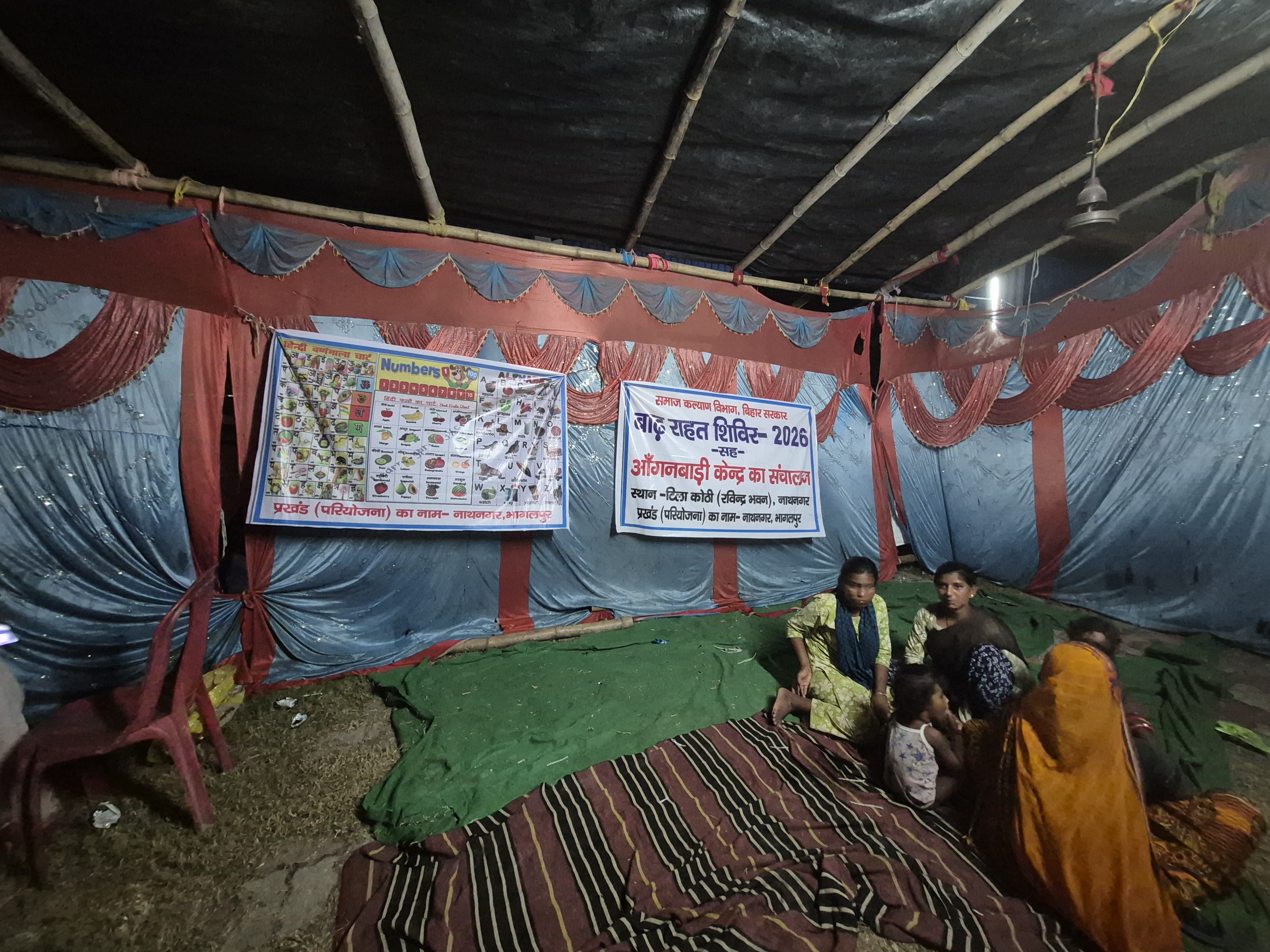 Even as the elders try to come to terms with their losses, the district administration has come up with a different routine for children in the camps. (Express photo)
Around noon, an announcement travels through the camp: Food is ready. At Rabindra Bhawan, one of the university buildings, meals are being prepared for the displaced families.
The building itself carries a historical memory. Rabindranath Tagore is known to have stayed here. Parts of Gitanjali, the work that later earned him the Nobel Prize in Literature, are associated with his time in Bhagalpur.
Story continues below this ad
Today, though, the building serves a different purpose. The control centre operating from Rabindra Bhawan monitors relief operations, including the feeding of around 250 families.
“We serve meals twice a day,” says Hanish Kumar, a teacher overseeing food preparation.
At the T N B Collegiate Ground Relief Camp, the scale of displacement is manifested in another way. Here, the expansive school grounds have been divided between people and animals.
A large rectangular common tent stands on one side. Elsewhere are rows of smaller shelters made from the same black plastic sheets seen at Tilha Kothi. Buffaloes and cows occupy portions of the open ground, tied wherever space permits.
Story continues below this ad
For many families, the animals are the most valuable assets they have been left with. “People can somehow find their way out of the flood but cattle cannot. Many people have lost their animals,” says Ram Mohan, who is living at the camp.
For the animals that survived, another worry remains. “They still need to be fed and watered. For now, they are getting that here. But we do not know how it will be managed in the future,” says Mohan.
Mrityunjay Kumar, a teacher posted at the relief camp, says that around 400 cattle are being kept on the campgrounds. Separate arrangements have been made for fodder and veterinary care, he adds.
The camp feeds around 650 people from the submerged areas of Dildarpur, Shankarpur and Bairariya. Not everyone eating the meals is living at the relief camp, though.
Story continues below this ad
“Some families have pucca houses that are still standing, even if surrounded by water. They eat at the camp and return to their homes,” says Mrityunjay. “They fear that someone may break into their homes and steal whatever little they have managed to salvage and keep on the roof.”
Rajesh Kumar, a resident of the camp, says that whatever grain had been stored at home was now submerged.
The loss couldn’t have come at a worse time.
The families say they had grown maize during the previous crop cycle and harvested it around April. Some of it was consumed at home, some was sold when money was needed.
The stored grain functioned almost like a household bank account, something that could be converted into cash when needed. Now that reserve has been sitting underwater for weeks.
Long road to normalcy
Usha Devi, who is staying at the camp, says even after the flood water recedes, it will take a lot of time for them to recover from its aftermath. It will take time to clean the houses, remove the mud and sludge, salvage whatever can be saved, and make the homes habitable again. “It may take until Chhath (in November),” she says. “How will people earn a living in the meantime? And after the relief camps close, we do not know what will happen.”
Back at the university campus, things look different by the evening. The sunlight disappears behind the horizon. Tube lights strung along wires and ropes begin illuminating the narrow paths between the shelters. People emerge from the darkness of their tents. Cooking fires glow outside some shelters. “Since we have been serving rice in all meals, those who prefer roti make it themselves,” says a volunteer.
Meanwhile, conversations continue. Kishore is still near his tent. So is 52-year-old Surya Narayan Mandal, adjusting the black plastic sheet over the shelter where 10 members of his family have spent the past month.
Most of what the family owned is gone. “Whatever we earn every year, the Ganga takes it away,” says Mandal. For someone who lives close to the riverbed, preparing in anticipation of a flood is not something new. Every year, they prepare: Moving perishable belongings higher up, hoping the water will stop before it reaches them. This year, it did not.
“The water rose even above the first floors of the houses,” says Mandal.
He is also worried about two loans, amounting to around Rs 70,000-80,000, he took from self-help groups earlier this year. The money had gone into crops and other household necessities, much of which is now gone.
Mandal looks around the settlement. “We are poor people. We have no resources or other means. We earn and eat on a daily basis.” Some people, he says, have managed to migrate elsewhere due to the yearly ordeal. “The rest of us face this every year.”
What Mandal wants is not another relief camp but a place where the river cannot reach the homes so easily. “The government should rehabilitate us somewhere on higher ground,” he says.
The lights continue to flicker over the camp. Inside the tents, families settle in for another night. The black plastic sheets rustle whenever the wind picks up. For now, they are roofs. For people like Raj Kishore and Mandal, they are also what separates their families from the unforgiving nights, which still witness clouds and, on some occasions, even rains.
KioskNews shows a cleaned-up reading view extracted from the publisher’s page — the original always lives on their site, not ours.