Fresh GJ-11 footage gives a glimpse of weapon bay on China’s next-gen drone
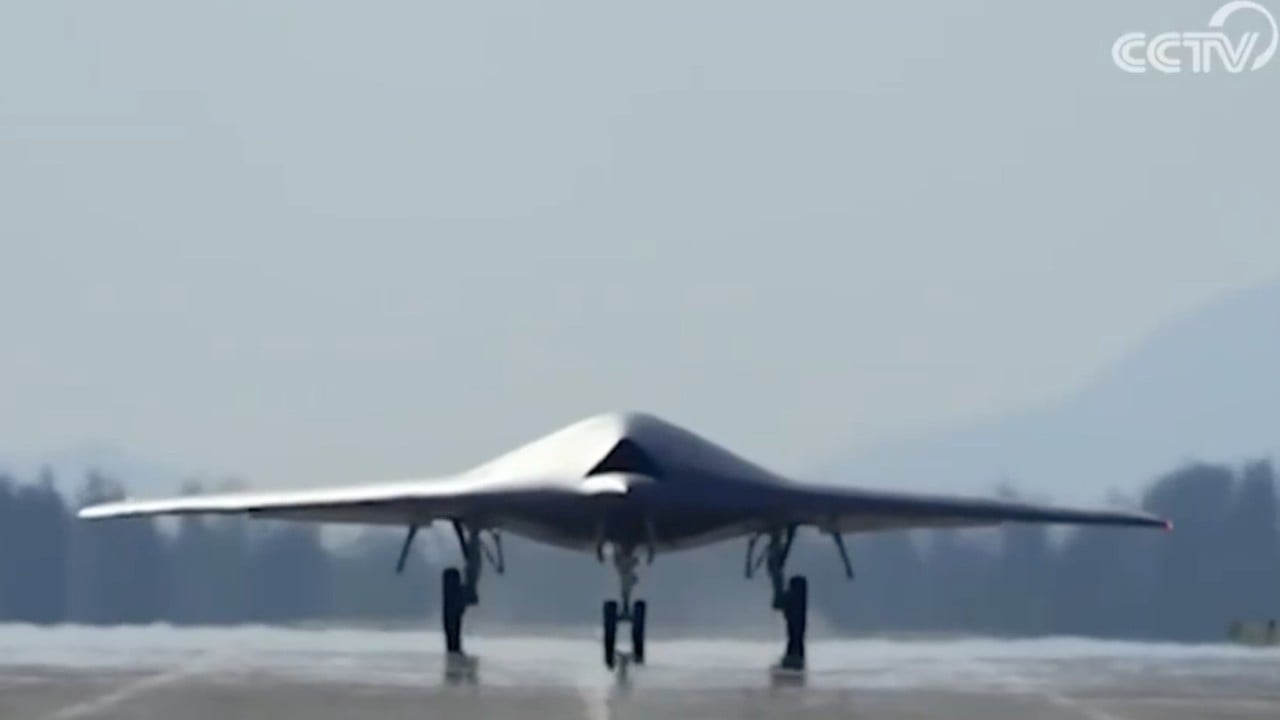
China has released new images of its GJ-11 stealth combat drone, offering a closer look at the advanced design and high-performance features of the next-generation uncrewed aircraft.
The images appeared on Monday in a report by state broadcaster CCTV counting down to the 77th anniversary of the PLA Air Force on Wednesday.
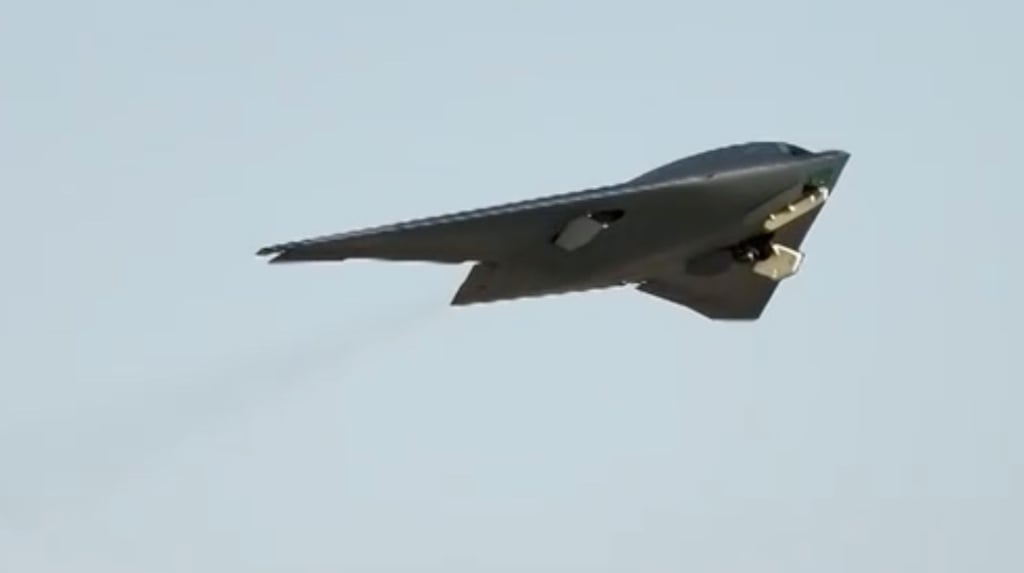
For the first time, viewers were given a close-up look at the GJ-11’s large internal weapon bay, highlighting its serrated edges. The design suggests that the drone can house relatively large missiles while helping maintain its stealth characteristics.
The footage also showed its shielded jet nozzle, low-visibility coating and a faceted optical window mounted beneath the drone’s nose, which appears similar to the advanced electro-optical targeting system on the J-20 stealth fighter.
The GJ-11 – Attack-11 – is shaped like a flying wing and also known as the Xuanlong, or Dark Dragon.
It is the air force’s first stealth combat and reconnaissance unmanned aerial vehicle and was unveiled in 2019 at a military parade marking the 70th anniversary of the founding of the People’s Republic of China.
It entered operational service no later than 2025.
According to Monday’s report, the GJ-11 has been operated in coordination with another drone, highlighting the platform’s high level of autonomy. It can also conduct coordinated operations with manned aircraft.
“[They] can serve as the eyes of crewed fighter jets, conducting forward reconnaissance to identify enemy air defence systems,” the CCTV report said.
“They can also act as decoys to draw enemy fire and expose hostile positions, or even function as airborne weapons platforms, launching guided munitions under the direction of manned aircraft.”
The integrated control station of the GJ-11 and its operators could be deployed flexibly and transported directly aboard military transport aircraft when needed, it said.
However, the report said that during its first live-fire test the drone nearly failed to locate its target due to thick cloud cover.
“Fortunately, after circling back for another pass, the drone managed to find the target, launch its weapon and hit the target successfully,” the report quoted the operator Shi Xiaoran as saying, without saying when the test was or what weapon was involved.
The report said the GJ-11 had undergone a series of tests at a desert facility in northwestern China.
The air force operates a base in Malan, Xinjiang Uygur autonomous region, where a number of new drones are believed to have been developed and tested.
The GJ-11’s carrier-based variant, the GJ-21, successfully conducted take-off and landing operations aboard the Sichuan, a Type 076 amphibious assault ship last week, the People’s Liberation Army said.
KioskNews shows a cleaned-up reading view extracted from the publisher’s page — the original always lives on their site, not ours.