7,000-year-old bones uncovered at construction site in startling find
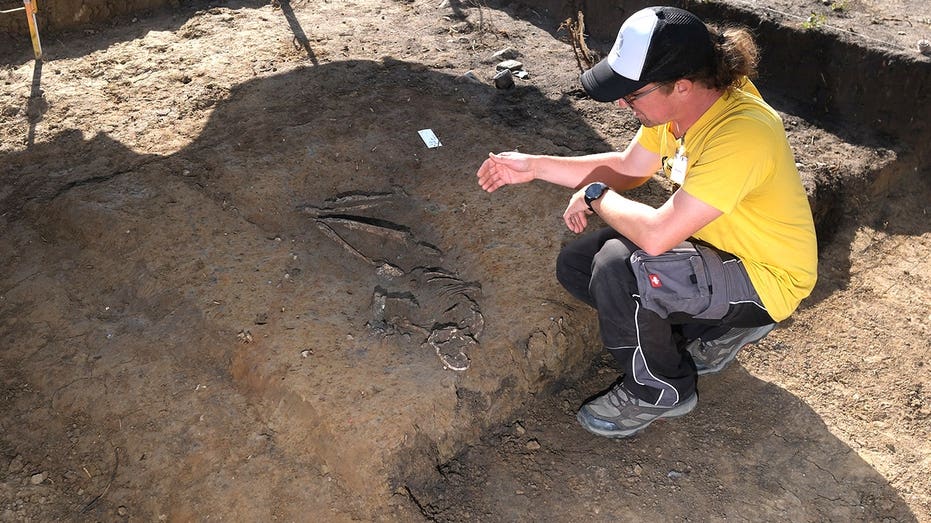
Archaeologists excavating the site of a planned elementary school in Germany have unearthed a roughly 7,000-year-old skeleton — the oldest known grave ever discovered in the city.
The discovery, made in the German city of Leipzig, was announced by the Saxony State Office for Archaeology in late September.
Archaeologists were brought in ahead of the school's construction because the site was near a previously known Bronze Age archaeological site, officials said in a statement.
ANCIENT 'SEATED' SKELETONS UNEARTHED BENEATH MODERN SCHOOL SITE, PUZZLING ARCHAEOLOGISTS
"Prehistoric finds were also to be expected simply because of the site's flood-free location near the White Elster River, within the fertile Leipzig Lowland Basin, an area exceptionally rich in archaeological finds," they added.
Instead of simple artifacts, the excavation uncovered the remains of an ancient Neolithic settlement, including the roughly 7,000-year-old grave.
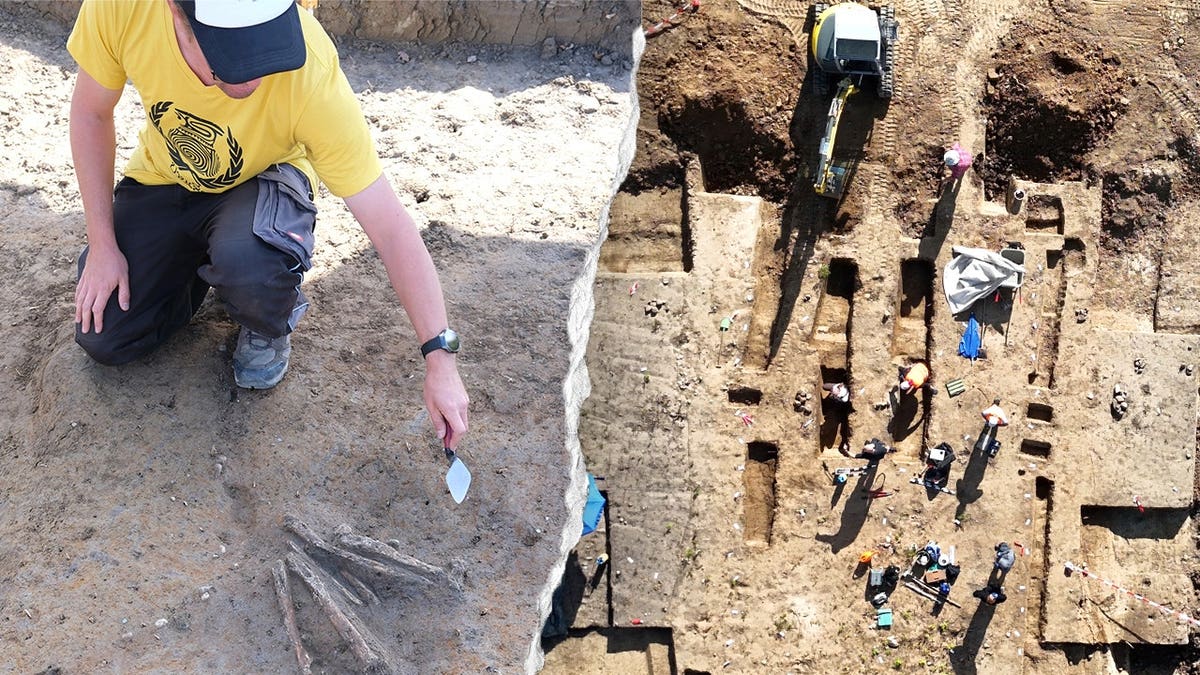
Archaeologists in Leipzig, Germany, uncovered a roughly 7,000-year-old skeleton while excavating the site of a planned elementary school. (Sebastian Willnow/picture alliance via Getty Images)
The grave dates to a period when people were transitioning from hunting and gathering to living in permanent settlements, farming and raising livestock, according to officials.
The person buried there is believed to have belonged to the Linear Pottery culture — named for the distinctive spiral and wavy patterns decorating its pottery.
SHOCKING DISCOVERY OF ANCIENT BONES TURNS COUPLE'S KITCHEN RENOVATION INTO 'CRIME SCENE'
Archaeologists also uncovered the remains of a 98-foot-long wooden house, along with evidence of at least two other houses.
"The discovery of a burial within the settlement came as a surprise."
The experts were taken aback by the unexpected discovery of the grave.
"The discovery of a burial within the settlement came as a surprise," officials said.
"This is a rare stroke of luck because, in large parts of Saxony, bone preservation is so poor that graves can only be identified by the objects placed in them and the shapes of the burial pits."
DISCOVERY BENEATH SOCCER FIELD REVEALS MASSIVE MEDIEVAL CONVENT LOST FOR CENTURIES
Although officials have not identified the person's sex or age at death, they said the skeleton was found lying on its left side, with its legs drawn up.
The grave contained no grave goods — objects buried alongside the dead — but archaeologists were able to estimate its age based on the skeleton's crouched position and the grave's relationship to the nearby settlement and one of its houses.
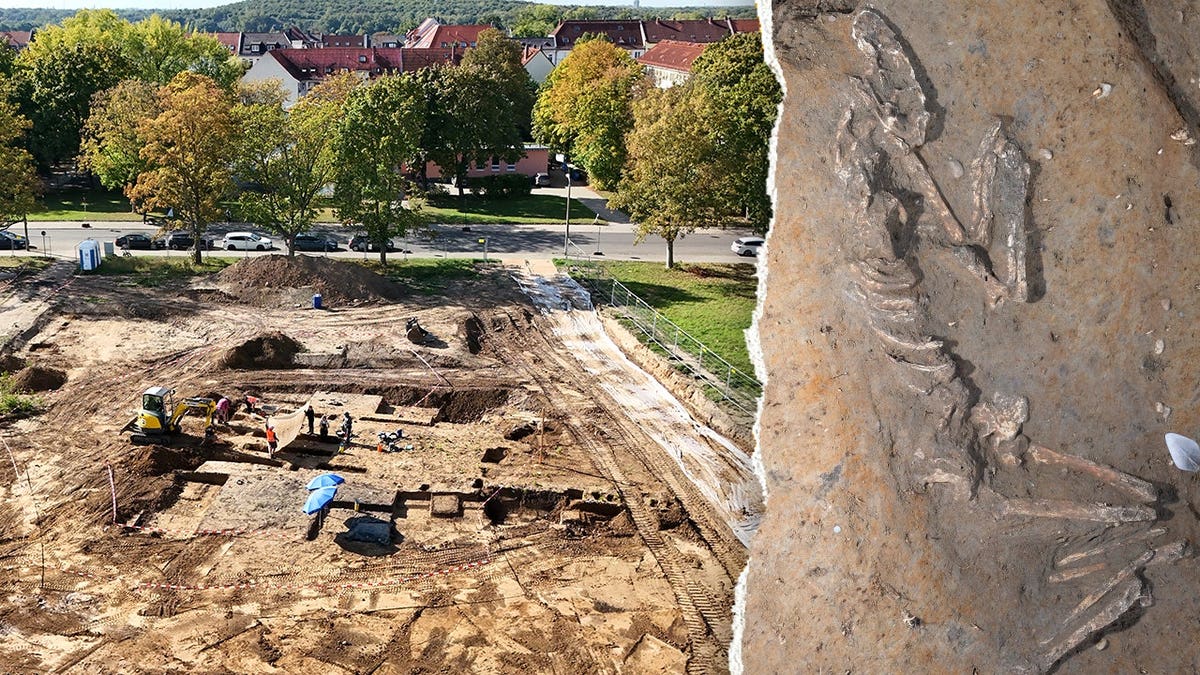
Archaeologists found no grave goods alongside the 7,000-year-old skeleton but used its burial position and surrounding evidence to estimate its age. (Sebastian Willnow/picture alliance via Getty Images)
"In this case, the crouched position of the body, together with the grave's direct stratigraphic relationship to the settlement and one of its houses, makes it possible to date the burial to the Neolithic Linear Pottery culture, even in the absence of grave goods," the statement said.
CLICK HERE TO SIGN UP FOR OUR LIFESTYLE NEWSLETTER
Officials added, "This means that the approximately 7,000-year-old burial is the oldest grave discovered to date within the city limits of Leipzig."
Archaeologists will continue excavating the site until the middle of this month, when the Saxony State Office for Archaeology is expected to begin its scientific analysis.
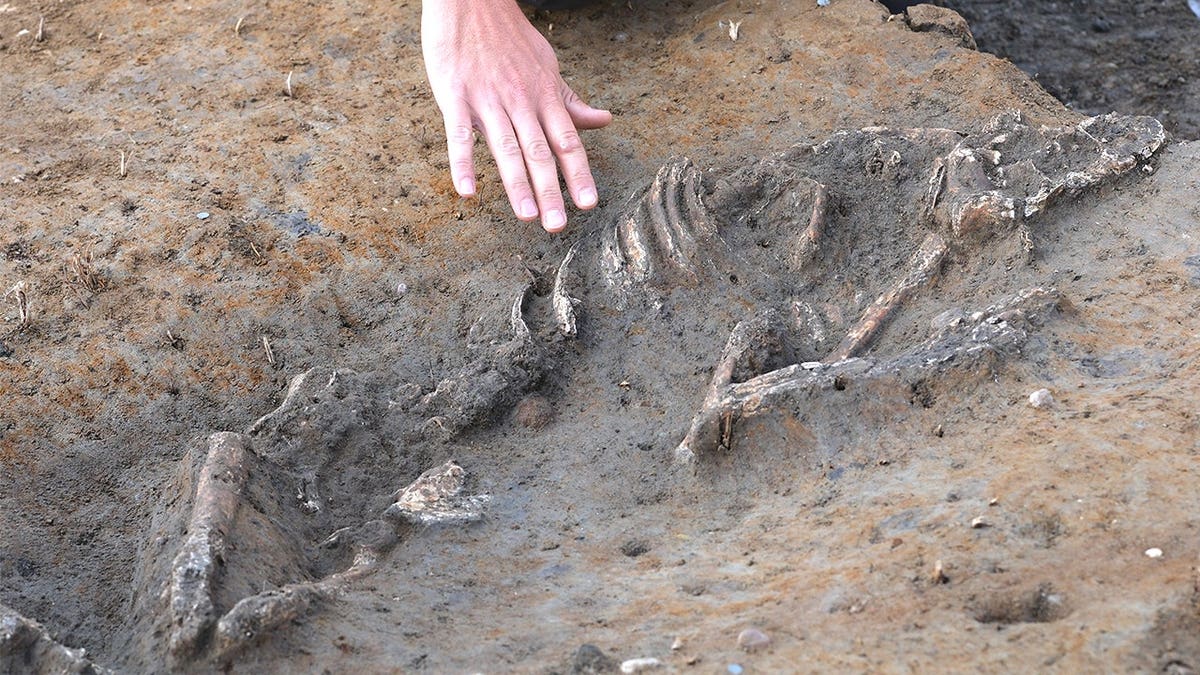
The ancient burial dates to a period when prehistoric communities were transitioning from hunting and gathering to farming and permanent settlements. (Sebastian Willnow/picture alliance via Getty Images)
State archaeologist Regina Smolnik emphasized the importance of conducting archaeological investigations even in heavily developed areas.
CLICK HERE FOR MORE LIFESTYLE NEWS
"Our investigations in Leipzig-Möckern demonstrate very clearly how important the involvement of archaeology is, even in urban areas," Smolnik said in a statement.
"Although such sites have long since become part of the urban landscape and have been built over for many years, important evidence of prehistoric and early historic settlement can still be documented there."
TEST YOURSELF WITH OUR LATEST LIFESTYLE QUIZ
Other ancient burial sites have also been uncovered across Europe.
The ancient grave was discovered in the fertile Leipzig Lowland Basin, an area officials described as exceptionally rich in archaeological finds. (Sebastian Willnow/picture alliance via Getty Images)
Last year, archaeologists in Poland uncovered an 11th-century grave that had been reopened more than 1,000 years ago, apparently by people living during the medieval period.
CLICK HERE TO DOWNLOAD THE FOX NEWS APP
This spring, archaeologists in Croatia announced the discovery of ancient Roman graves beneath the coastal city of Zadar — revealing a burial site used for nearly 500 years.
KioskNews shows a cleaned-up reading view extracted from the publisher’s page — the original always lives on their site, not ours.