Watchful mama bear Gemini wins 2026 Helicopter Mom Award
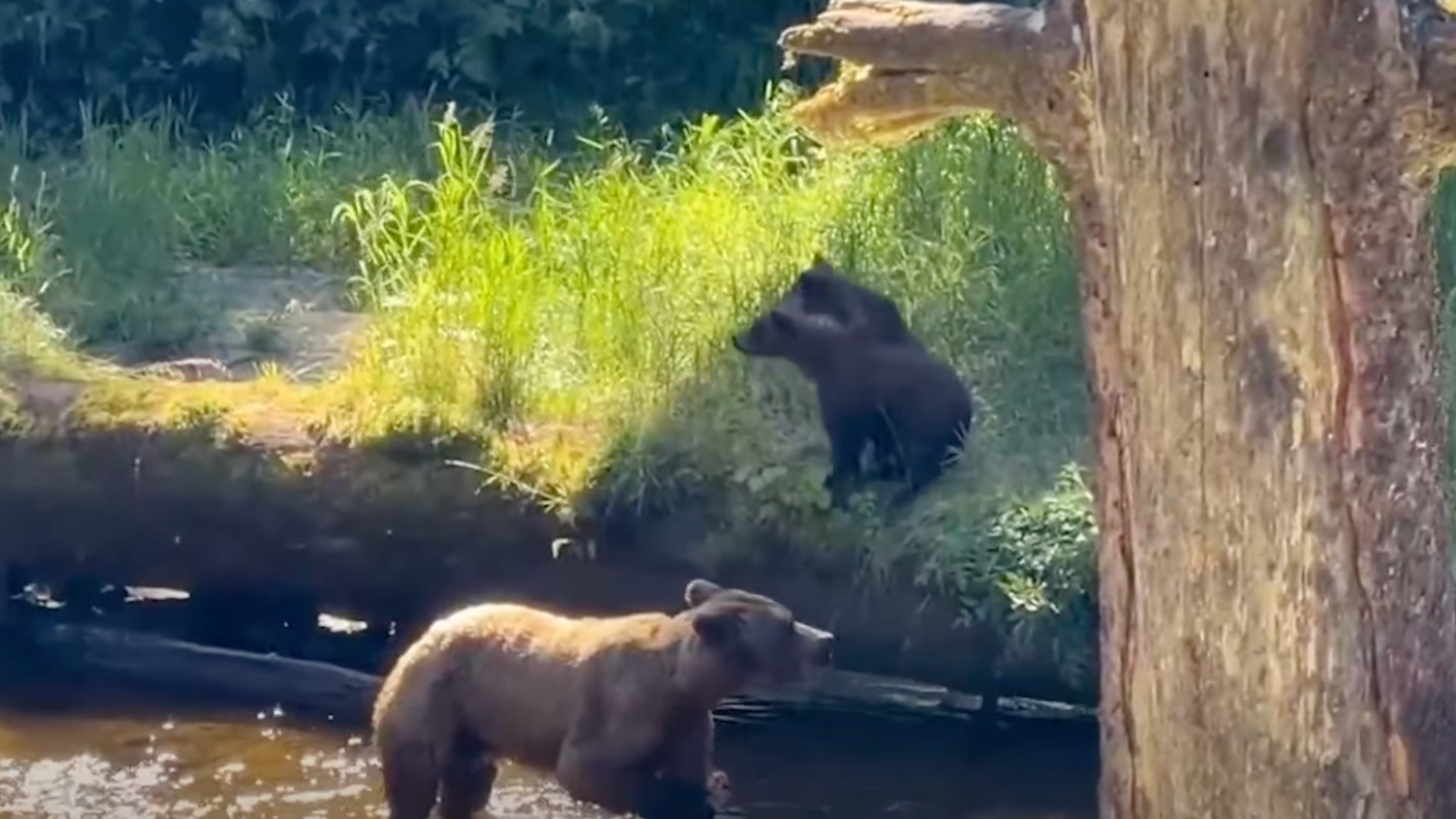
Even bears can be helicopter parents. The term coined in the 1990s by child development researchers Foster Cline and Jim Fay describes overly cautious parents who constantly monitor, control, and hover over (like a helicopter) their children’s activities out of fear.
For these watchful tendencies, the U.S. Forest Service team at Tongass National Forest in southeastern Alaska has awarded a brown bear (Ursus arctos) named Gemini with the 2026 Helicopter Mom Award.
“We understand her choice, weighing the dangers of being around other bears at a prime fishing location,” the rangers write. “Still, we hope we see a lot more of them next year.”
The numbers also back up Gemini and other mother bears’ watchfulness. Brown bear cubs in Alaska have a roughly 50 percent survival rate within their first year, while the black bear (Ursus americanus) cub survival rate can range from 51 to 88 percent depending on the location. Gemini has also had cubs in 2023 and 2024.
Meet Bears of Anan Creek
The Rangers at Tongass National Forest are currently awarding the Anan Bear Awards to the 39 bears spotted at the Anan Wildlife Observatory over the summer.
Tongass is the largest national forest in the United States, and covers most of Southeast Alaska, including the capital city of Juneau. The vast area includes Mendanhall Glacier (a popular destination for Alaskan cruises), numerous hiking trails, eagles, and plenty of bears. One of the hotspots is Anan Creek, home to one of the largest runs of pink salmon in Southeast Alaska.
According to Friends of Anan, 39 bears are known to feast on the salmon at Anan Creek. The population includes 31 black bears and eight brown bears. Like their beefy counterparts further north in Katmai National Park, the bears return annually each summer to eat salmon and teach their young how to fish and survive. And also like the fat bears of Katmai, every bear here exhibits their own habits and quirks.
The U.S. Forest Service tracks and documents every bear, while explore.org’s cameras broadcast live streams of their antics.

LIVE Anan Bear Cam: Lower Falls & Caves – Alaska | explore.org
KioskNews shows a cleaned-up reading view extracted from the publisher’s page — the original always lives on their site, not ours.