The little-known friendship between Nina Simone and Langston Hughes
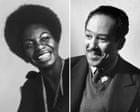
In 1949, the poet and writer Langston Hughes was already a towering figure – he toured the country reading his poems and lecturing, drawing crowds that filled auditoriums. That year, at a lecture in Asheville, North Carolina, Hughes met a 16-year-old girl, Eunice Waymon, who would go on to make history in her own right using her stage name, Nina Simone.
Hughes and Simone became friends and collaborators, working together on songs such as Backlash Blues, which soundtracked what was then a nascent Black Power movement. The song influenced Kwame Ture, the activist and Black revolutionary who was then known as Stokely Carmichael, who popularized the phrase “Black power”.
“Nina Simone refined the strategies of resistance Langston Hughes pioneered during the Harlem Renaissance to create the soundtrack to the civil rights movement and inaugurate the birth of Black Power,” writes W Jason Miller, author of Don’t Let Me Be Misunderstood: Nina Simone, Langston Hughes, and the Birth of Black Power, a new book that explores the previously underacknowledged relationship between Hughes and Simone.
Using new firsthand accounts and archives, Miller, a distinguished professor of English at North Carolina State University, writes a history of the friendship between two American heavyweights. The Guardian spoke to Miller about Langston Hughes, Nina Simone and their relationship.
This interview has been lightly edited for clarity.
How did you settle on writing about Langston Hughes and Nina Simone’s relationship?
I’ve been a Langston Hughes scholar for about 22 years. At a book event in Raleigh, I told the audience that Hughes was approached by a singer to write the liner notes for her album. And Langston Hughes’ response was, “Why, Nina, I’d be happy to.”
The audience gasped at the thought of their Nina Simone, North Carolina icon, being in connection with Langston Hughes. I knew immediately that I had to find out everything about these two. I found one single sentence that even mentioned Nina Simone in seven biographies about Hughes.
For the last six years, I tracked down every letter they exchanged, every time they were together and located one of Nina’s roommates, a woman who, at 91 years old, remembered the day that Langston Hughes came to their high school and first met Nina.
I don’t think that either Hughes or Simone receive as much credit as they should for their role in the Black Power movement. Can you talk a bit about that?
Langston Hughes is often introduced as a figure of the Harlem Renaissance of the 1920s, of which he was of course a leading figure. But Hughes died in May of 1967 – less than 11 months before Dr King’s assassination. He was active, involved and productive up until the very end.
In terms of Nina Simone, her oeuvre and her musical career were wide and far-reaching. When folks think about the civil rights movement and reduce it to nonviolence, they miss Nina’s key role. If Nina were a figure of the civil rights movement leadership, she’s more like [Kwame Ture] than she is like Malcolm X or Martin Luther King. She’s a fiery young figure that can get overlooked by people that don’t know, but the people that latch on to her know her iconic songs and her protest music. Their ability together created the soundtrack to the civil rights movement.
What was most surprising to you about their relationship?
Langston Hughes really wanted to have a hit song written. He’d been trying since 1949 to break through in music. He had this desire to have Nina Simone sing one of his songs. The last poem that Hughes ever sent out for publication was called Backlash Blues. It’s the poem he gave to Nina to sing that became her iconic song.
This book is a biography of their friendship, which involves strategies for how two figures go through the practice of mentoring, building a relationship and collaborating. Nina sat in the third row at the 1960 Newport Jazz Festival while Hughes led a blues session in which he was directing Muddy Waters and John Lee Hooker for two and a half hours. Nina saw Hughes not just as an important cultural icon, she recognized him as a music lover that she could trust.
Leonard Bernstein and Walt Disney are generally more associated with making classical music accessible to a wider audience. But you argue that Simone did something similar with her interpolation of Bach in Love Me Or Leave Me and a few other pieces.
Nina Simone grows up in Tryon, is educated in Asheville, North Carolina, with the goal of becoming a classical pianist. Her icon is Hazel Scott and her favorite musician of all time was Bach. What she was able to do in the very end of her career is combine popular music with classical music. She hides classical music inside of these popular songs. Unconsciously, audience members that listened to the vinyl or saw her in concert were being exposed to classical music.
For her first concert at Carnegie Hall, Andy Stroud, her manager husband, puts up a great deal of money, hires a big promoter, and they’re worried about being able to sell out. The first half of that entire concert is filled with classical instrumental music, not her singing. Langston Hughes had written promotional materials, so posters and newspaper ads had blurbs of support from Hughes.
What about their upbringing as Southerners influenced their relationship and their wider reputations?
Nina Simone’s education in western North Carolina shapes her a great deal. She starts playing in the church. That area of the country gives us the incredible song, Sinner Man, one she heard and performed. In late 1965, at the prompting of Langston Hughes, she records it, and it becomes a way to retell history. We’re not just thinking about God, the devil and the sinner. We’re thinking about student ambassadors who are trying to fight for change, white Klan members and the role of prayer in the civil rights movement.
Hughes’ grandmother spent time here in North Carolina with the Lumbee people. Right before he met Nina Simone, Langston Hughes gave a newspaper interview where he talked about his grandmother being part Lumbee and being part of the North Carolina tradition.
Hughes was condemned for his leftist politics and Simone faced similar condemnation. Do you think that their relationship informed their ability to use art to convey their political messages?
Langston Hughes not only recognized the talent that Nina Simone had, he not only had this desire to have his music performed, and he not only had a genuine interest in supporting the next generation, but he recognized that she could use the same strategies he had pioneered in the Harlem Renaissance. If you’re an academic, we call this signifying. If you’re a high school teacher, we call it allusion. But all people today know this as sampling.
Nina learned she could sample old music and update it. When she sang songs like Tomorrow Is My Turn, she turned a love song into a statement that tomorrow I’m going to get a chance. When she took songs like Go to Hell, Nina writes a new last verse. She says, we are in hell.
She brought this to her work in Sinner Man, especially. Nina activated those characters by thinking about Jimmy Lee Jackson and what started the March from Selma to Montgomery. When Nina used strategies to seem to be talking about something and slip it in, that’s when she was tuning her soul to the wavelength of Langston Hughes.
What made their relationship special?
It starts with Langston Hughes’ spirit. The list of people he welcomed into his orbit and deliberately mentored is unbelievable. It includes Gwendolyn Brooks, Margaret Walker and he was very supportive of Amiri Baraka. I met a woman in Oxford, North Carolina – Mary “Pee Wee” Lindsay. She talked about meeting Hughes in the early 1950s, walking up to him with a couple pages of poems. She said that Hughes sat down with her for 30 minutes and went through those poems, even though she had no international-level talent, never published a book.
Simone and Hughes connected because, in so many ways, they were moving in the same direction. When Langston Hughes dies in 1967, Nina has Backlash Blues ready, but she hasn’t recorded or released it. After he dies, she writes a new verse. She includes their relationship. That leads her to understand one of Hughes’ key lessons, which is how to incorporate great people into music and art. One year later, she recognizes Martin Luther King’s assassination. Nina composed and thought of the song To Be Young, Gifted and Black in 1969. Hughes’ relationship sent her on this course of making music like Backlash Blues, Why the King of Love Is Dead, To Be Young, Gifted and Black, that would stand as symbols of these great people.
KioskNews shows a cleaned-up reading view extracted from the publisher’s page — the original always lives on their site, not ours.