Opinion: Opinion | Facing Governance Heat, Bhagwant Mann Still Holds Sway On Campaign Stage
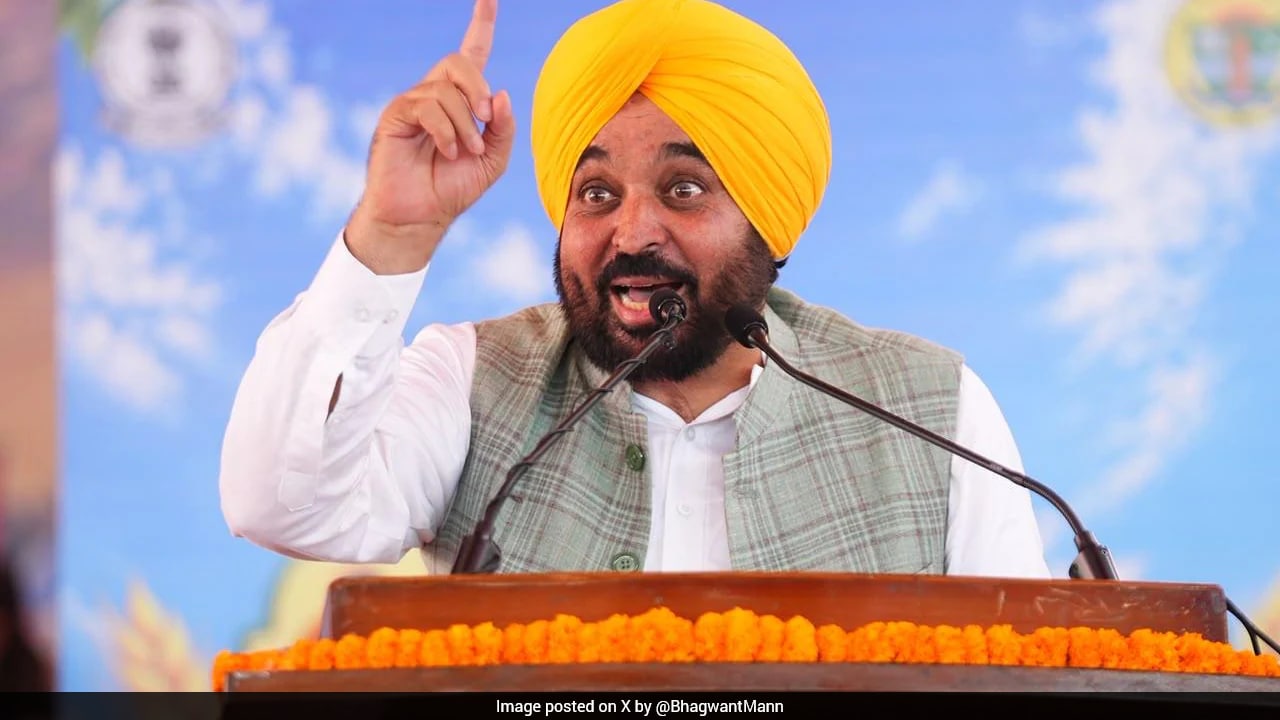
Punjab's election campaigns have never been short of loud voices. But as the state heads towards the 2027 assembly elections, few leaders seem able to command a crowd's attention quite like Bhagwant Mann. The former comedian, who now occupies the Chief Minister's chair, can make a political point sound like something said over tea in a village courtyard.
Despite being on the defensive over several issues, including drugs, law and order, dearness allowance, and pollution, Bhagwant Mann's oratorical flair remains undiminished on the campaign trail.
The 53-year-old AAP leader grew up on the stage, performing at college festivals before moving on to cassettes, television and The Great Indian Laughter Challenge. His comedy drew on the everyday speech of Punjab. He knew the shopkeeper's complaint, the farmer's irritation and the small absurdities of officialdom.
Politics gave that material a new address. By 2014, he was in parliament, turning satire towards those who governed the country. "Satire is not just fun, it is a commentary on society," he said that year.
His speeches show how naturally he still reaches for that instrument. At a Lok Milni event in Gurdaspur last month, he joked that Congress had "more CM candidates than workers".
Commenting on hockey legend Pargat Singh's elevation as Punjab Congress chief, Mann hoped the new captain's teammates would pass him the ball, since "pass ton bina goal nahin ho sakda (no goal can be scored without a pass)".
He has also lampooned the Congress and Akali political model as a five-point programme. "Me, my son, my nephew, my brother-in-law and my sister's husband."
His lines are sharp, local and easy to carry home. Mann often improvises around the audience in front of him. Farmers working in the fields can recognise the world he draws upon in his earthy jibes.
A comedian watches people closely. He notices the pause before a reply, the phrase that makes a room laugh and the vanity hidden inside a grand statement. He learns timing. A joke can puncture a politician's image in seconds. Mann's humour gives audiences a chance to laugh at the powerful and a sense that the speaker belongs to their world.
There are precedents across the world. Volodymyr Zelensky moved from comedy and television to Ukraine's presidency, winning more than 73 per cent of the vote in the 2019 run-off. His fictional role as a schoolteacher who becomes president had already made him familiar to millions.
Ronald Reagan came from Hollywood and used the camera, warmth and humour to become America's "Great Communicator". A 2024 study published in PLOS ONE examined how audience laughter influenced perceptions of Reagan's leadership.
Arnold Schwarzenegger, an actor and bodybuilder, became governor of California. Their political records vary greatly. Their careers show how entertainment can provide recognition, stagecraft and an instinct for public mood. Governing demands a different set of abilities. Fame may open the door, but political judgement determines what happens after entry.
Zelensky's wartime leadership cannot be explained by his comic past, just as Reagan's presidency cannot be reduced to his film career. The performer's advantage lies in communication and the ability to make distant institutions feel human.
At this stage, Punjab's Opposition has a microphone problem.
Navjot Singh Sidhu, currently on the political no-man's land, remains the most obvious comparison. The former cricketer and television performer can command a stage. His trademark swagger, couplets, cricketing metaphors and grand flourishes are familiar to audiences. Sidhu has always taken visible pleasure in poetry and bombast. His performance comes with its own drumroll.
Mann's wit is less predictable. A line can emerge halfway through a speech, drawn from a village anecdote, the day's headline or the rival standing before him. His comic timing is rooted in observation, and his best lines often sound as if they have just occurred to him.
Sidhu's political position has become uncertain. After a turbulent spell as Punjab Congress president and public battles with successive chief ministers, he has largely withdrawn from the political arena. No settled role for him in Congress has emerged, and his return to active politics remains speculative.
Congress has appointed Pargat Singh as its state president and kept its chief ministerial choice open. Former Chief Minister Charanjit Singh Channi remains an important leader and drew cheers at the recent Sangrur rally. The party, however, has opted for a collective campaign under Pargat.
The Akali leadership, including Sukhbir Singh Badal, has its own organisational ground to recover.
Amritpal Singh, the hardline Waris Punjab De leader, remains in jail, limiting his direct participation in the campaign. These circumstances give Mann a striking advantage in oratory.
A good line can win a rally. Roads, jobs and farmers' accounts require work beyond the microphone. Mann's comic gift may carry him through many evenings of campaigning, but voters will also weigh drugs, debt, employment, agriculture, law and order, and the record of his government. The performer has become the incumbent, and the audience now has the right to review the show.
For the moment, Punjab's political stage has a formidable centre. The opposition is still arranging its chairs.
Mann already has the mic. He knows when to make the room laugh. Whether he can turn that advantage into another electoral mandate will depend on what voters think of his government when the laughter subsides.
(The writer is NDTV's London-based expert columnist, currently serving as communications and advocacy director at UNITED SIKHS in the UK, a charity registered in England and Wales)
KioskNews shows a cleaned-up reading view extracted from the publisher’s page — the original always lives on their site, not ours.