14th to The Brutalist: the seven best films to watch on TV this week

Ava DuVernay, the first Black woman to direct a Best Picture Oscar nominee with 2014’s Selma, is a history-making filmmaker in many ways. A decade after her film 13th was also Oscar-nominated, she’s back with another, even more compelling documentary about democracy under threat. The 14th amendment was drafted in the civil war, but its provisions for due process, birthright citizenship and barring insurrectionists from holding office could hardly be more relevant to today’s America. It is dense material, but DuVernay’s use of music, animation and comedy clips – plus the hugely impressive contributors such as superstar politician AOC – make for galvanising viewing.
Friday 4 December, Netflix
The Brutalist
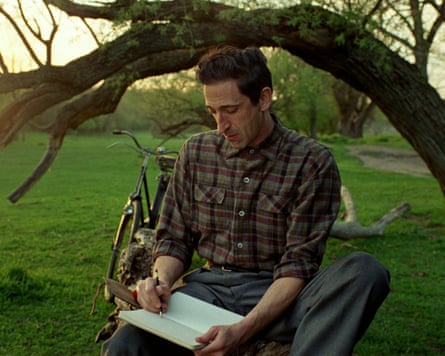
British cinematographer Lol Crawley won the Oscar for his work on this 2024 epic, which revives the VistaVision format for an authentic 1950s feel – and it really is a spectacular cinematic construction. Adrien Brody stars as László Tóth, a Bauhaus-trained Holocaust survivor who arrives in New York from Hungary in 1947. He goes into business with his already assimilated cousin, Attila (Alessandro Nivola), but the truly fated connection is with Harrison Lee Van Buren (Guy Pearce), a wealthy industrialist and “brutalist” of a different sort.
Saturday 28 November, Netflix
Hook
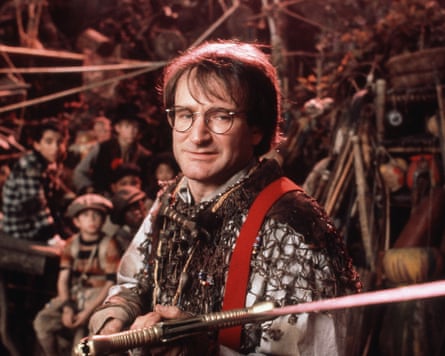
He was supposed to be the “boy who wouldn’t grow up”, but Peter Pan is now Peter Banning (Robin Williams), a workaholic lawyer who neglects his family. When his children are kidnapped by Captain Hook (Dustin Hoffman), Peter is forced to return to Neverland and reconnect with his childhood via the Lost Boys and his old (but ever-youthful) friend Tinkerbell (Julia Roberts). Director Steven Spielberg has said he considers Hook a failure, but all over the world, there are millions of kids – and grownup kids – who beg to differ.
Saturday 28 November, 11.25am, Sky Cinema Greats
This Happy Breed
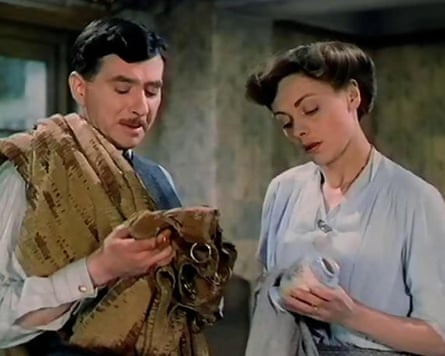
This 1944 Technicolour portrait of an ordinary south London family is as momentous, in its own way, as director David Lean’s more famous 1962 film, Lawrence of Arabia. It’s adapted from a play by Noël Coward, and follows the Gibbons clan from 1919 to 1939, against a backdrop of industrial unrest, the Charleston dance craze and the rise of fascism. Celia Johnson, best known for her Brief Encounter role, plays long-suffering matriarch Ethel, and a 36-year-old John Mills is slightly unconvincing as boy-next-door, Billy.
Monday 30 November, 4.15pm, Talking Pictures TV
Happiest Season
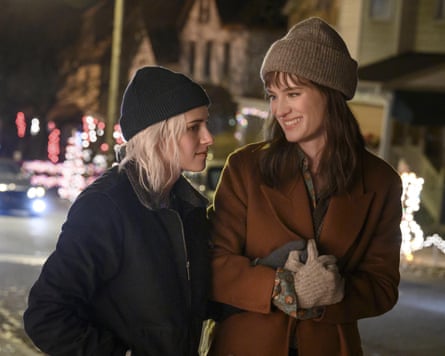
Most seasonal releases are like the plastic gifts in a Christmas cracker: fun and entirely disposable. But this 2020, Clea Duvall-directed treat is a happy exception. It stars Kristen Stewart as Abby, a young woman looking forward to visiting her girlfriend Harper’s (Mackenzie Davis) family for Christmas, until she discovers Harper is closeted at home. Fun support from Daniel Levy, Alison Brie and Aubrey Plaza add up to a (non) traditional tale of coming home – and coming out – for Christmas.
Tuesday 1 December, 6.55pm, Film4
Savage House
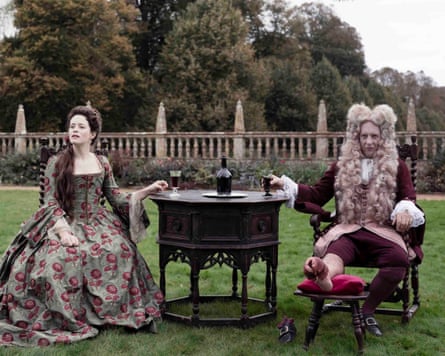
Richard E Grant and Claire Foy star as down-at-heel aristos in this gleefully grubby 18th-century farce. When the Duke of Devonshire announces he’s coming to stay at their crumbling country pile, the pair begin a desperate, scrabbling social climb in preparation, foiled at every turn by servants intent on sabotage. You might also accuse this film of vainly imitating its betters – namely Barry Lyndon and The Favourite – but it’s certainly putting the effort in. Every scene takes place at such a pace that Grant can barely keep his powdered wig on.
Wednesday 2 December, Paramount+
The Man With the Bag
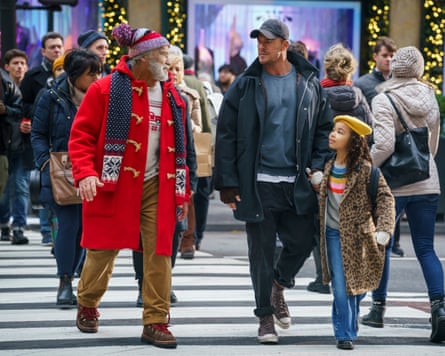
Finally a role for Arnold Schwarzenegger, in which his unchanging international accent makes a strange sort of sense. He’s a brawny Santa Claus whose magic sack of presents gets stolen by a rogue elf (Awkwafina), punningly named ‘Nadia Nyce’ – and that should give you a good indication of the general tone here. To recover the stolen sack and save Christmas, Santa must team up with someone naughty enough to pull off a daring heist, but also nice enough to help. Someone like recently released ex-con single dad, Vance (Alan Ritchson).
Wednesday 2 December, Prime Video
Year-end fundraiser
$0 of $2,000,000 goal
A moment full of possibility – and risk
We hope you appreciated this article. Before you close this tab, can we ask you to support the Guardian at this crucial time for democracy in the US? With Black Friday approaching, our most impactful monthly support option is just $7.50 a month for six months.
In the last two years alone, Donald Trump has eroded many of the pillars of US democracy – slashing funds for universities, undermining science, shutting down arts institutions, and attacking the free press as an “enemy of the American people” and “a threat to our national security”. While he and his allies have enriched themselves and spread lies, federal forces have harassed and imprisoned innocent people and violated the constitutional rights of many Americans.
Now, in a sweeping change election, the American people have spoken: Donald Trump, Pete Hegseth, RFK Jr, Elon Musk and the tech oligarchs may finally be held to account. A majority of American voters have demanded an end to the costly and immoral wars, the flagrant profiteering, and the corrosive attacks on communities and democratic institutions.
It’s a moment full of possibility, with more stories than we can possibly cover. New leaders are emerging from Texas and Michigan to Iowa and South Carolina – and heading to Washington to fight for affordability, against wealth inequality, and for human survival in the face of AI and the climate crisis.
These new leaders will be facing a cornered Trump and his hardline chief of staff, Stephen Miller, who have nothing left to lose. The next few years are critical for the future of the country. Journalism that covers the epic clash between these forces has a vital role to play right now.
Investigative journalism provides a fact-based paper trail for an emboldened Congress to follow. Members of Congress – and the American public – often rely on our in-depth reporting to inform the tough questions, to connect the dots and to pursue accountability for wrongdoing.
At the Guardian, our newsroom is devoted to uncovering the truth and conveying it to as many people as possible. We’re not alone in this mission, but this kind of journalism faces unprecedented hurdles: big tech threatening our financial stability and stealing our work for AI, billionaire owners telling journalists what to publish, and a hostile executive branch intent on suppressing our reporting.
The Guardian is free to dig deep without fear because we’re funded by our readers. Our readers hold us to account, and we hold the powerful to account.
However, this only works when enough of our readers contribute. Against the advice of most industry analysts, we’ve refused to put up a paywall – we believe good journalism should be freely available to all people, regardless of ability to pay. If you’re counting on our reporting, and you can’t afford to pay, please stop reading this message and go back to our articles.
If you can afford to contribute, please know that your support is not only helping yourself – from voters in Kansas to immigrants in Minnesota and families in Gaza, your generosity is bringing factual news to people around the globe.
Today is among our most important fundraising days of the year. To sustain our unique financial model, our goal is to raise $2,000,000 before the new Congress is seated on 3 January. More than 19,000 people have contributed already. All gifts are gratefully received, but for the next several days only, our most impactful monthly support option is $7.50 a month for the first six months. If you can afford 37 seconds, please join our ranks – and show your support for the rekindling of democracy in the US and around the world.
KioskNews shows a cleaned-up reading view extracted from the publisher’s page — the original always lives on their site, not ours.