Ghana must move beyond enforcement to tackle road deaths – Appiah Kusi Adomako
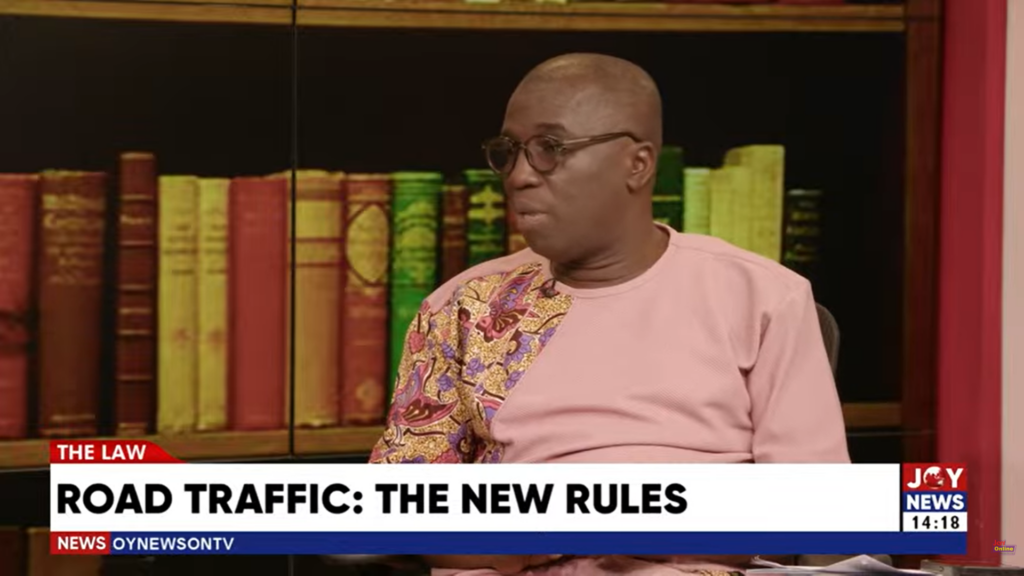
Director of the West Africa Regional Centre of CUTS International, Appiah Kusi Adomako, has called for a broader national response to Ghana’s persistent road fatalities beyond the work of traffic police and road safety agencies.
Mr Adomako noted the country’s approach to road safety must change significantly, arguing that the scale of deaths recorded annually on Ghanaian roads demands greater investment, stronger enforcement and collective responsibility.
Speaking on JoyNews’ The Law on Sunday, he said road crashes had become such a serious threat to public safety that government should consider declaring them a public health emergency.
His comments were based on the number of lives lost through road crashes, which he said exceeded 2,500 last year.
Mr Adomako said the daily fatalities amounted to roughly eight people losing their lives on Ghanaian roads each day, a situation he believes should attract a level of national urgency comparable to other major public emergencies.
He contrasted the response to road crashes with Ghana’s handling of the COVID-19 pandemic, noting that the government mobilised considerable financial and institutional resources to contain the pandemic even though the number of deaths was lower.
“When COVID came, Ghana had less than 1,000 people dying from COVID within the period of 2020 and 2022, when we stopped the protocols,” he said.
He argued that the comparison exposed what he considers a major imbalance in the country’s allocation of resources towards public safety.
While COVID-19 prompted extensive government spending on public education, restrictions and enforcement measures, Mr Adomako said road safety had not received a comparable level of investment despite the continuous loss of lives.
He therefore believes Ghana needs to rethink road safety as a long-term national priority rather than treating road crashes largely as isolated incidents requiring intervention after they occur.
A key part of that change, he said, should be a more visible police presence on the country’s roads.
Mr Adomako argued that effective enforcement is necessary to influence driver behaviour and discourage violations that can lead to serious crashes.
“If we want to enhance road safety, we need to see the police presence on the road,” he said.
He nevertheless welcomed the introduction of automated traffic offences under the new law, describing the use of technology as an important development in strengthening enforcement.
Automated enforcement, he suggested, could help authorities detect and address traffic violations more consistently while reducing the extent to which enforcement depends on officers physically being present at every location.
However, Mr Adomako stressed that new technology should complement, rather than replace, effective policing and other preventive measures.
The CUTS International director also challenged the notion that responsibility for road safety rests primarily with specialised government institutions.
He said motorists and the wider public must also play an active role in reducing road crashes.
“Road safety should be everyone’s responsibility, not only the police, not only NRSA, not only DVLA,” he said.
He believes government must provide the resources and systems necessary for prevention, while road users must also take responsibility for their conduct.
DISCLAIMER: The Views, Comments, Opinions, Contributions and Statements made by Readers and Contributors on this platform do not necessarily represent the views or policy of Multimedia Group Limited.
Tags:
DISCLAIMER: The Views, Comments, Opinions, Contributions and Statements made by Readers and Contributors on this platform do not necessarily represent the views or policy of Multimedia Group Limited.
KioskNews shows a cleaned-up reading view extracted from the publisher’s page — the original always lives on their site, not ours.