The 6 Best Sci-Fi Books Released Since 2010, Ranked
The modern science fiction stories themselves don't care much about shiny rockets or invading aliens. But here's the thing. Authors today seem far more obsessed with mapping human consciousness to please the readers. And at the same time they want to explore exactly what happens when the edges of the self become negotiable or erased entirely.
That is exactly why these six books capture the genre at its restless, weird peak. They span a massive spectrum, ranging from the tightest survival thriller ever written to a quiet story making you mourn the universe's heat death as a personal tragedy, but they're just the right amount of rich in substance. These six sci-fi books on this list were released post-2010 and are more than just solid recommendations.
6 'The Martian' (2011)
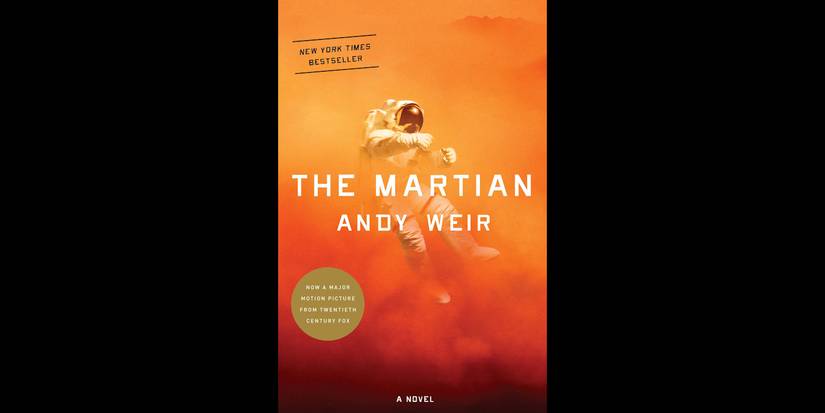
The Martian takes the dry stuff of engineering manuals and somehow turns it into one of the most addictive survival stories of the century. Mark Watney should be dead. A dust storm hits, an antenna impales him, his crew evacuates, and Mars becomes less like a setting than a locked room with no rescue button. The habitat’s oxygen hiss, the dead terminal console, the red dirt outside the airlock, and those limited food packets suddenly feel more dramatic than any alien invasion.
Andy Weir’s genius is keeping everything brutally practical. Watney calculates calories, grows potatoes in sterilized dirt mixed with human waste, tears equipment apart, and manufactures water with the kind of reckless confidence only desperation can create. His cracked hands and sarcastic log entries carry the whole thing. The book is genuinely thrilling because every joke is sitting beside a math problem that could kill him.
5 'Annihilation' (2014)

Jeff VanderMeer's Annihilation approaches the unknown with quiet restraint by sending a team of nameless, emotionally sealed women into Area X and letting the place quietly begin changing the rules around them. The crazy part is that the Biologist crosses the border into salt marshes, strange growth, and silence so thick it feels alive. Then comes the Tower descending into the earth with walls covered in living fungal words. It actually breathes.
The spores enter the Biologist, the brightness spreads behind her eyes, and the expedition’s purpose starts dissolving before anyone can fully explain what they are seeing. The true horror here is the absolute calmness of the mutation. Believe it or not, Area X feels alien and serene at once, as if nature has stopped caring whether humans understand it. We just don't. That specific blend is the book’s unreproducible magic. It fuses ecological weird fiction, grief, and psychological horror into something instantly unsettling.
4 'Children of Time' (2015)

Children of Time starts with a familiar science fiction image, humanity drifting through space in search of a home, then gleefully gives the better half of the story to spiders. The human survivors aboard the Gilgamesh are desperate, thawing painfully from cryosleep inside a failing ark ship. Below them, a green world has become the stage for an evolutionary accident, as an uplift virus transforms jumping spiders into a civilization with memory, science, faith, and social structure.
The spider chapters are astonishing because Adrian Tchaikovsky commits completely. Silk becomes architecture, communication, philosophy, and history. Vibrations carry meaning. Generations rise and vanish while the humans keep deteriorating above them. The expected clash of species keeps the pages turning, but the deeper reward is watching intelligence develop in a form that feels genuinely non-human. What you eventually realize is that the book has outgrown war. It becomes a blueprint for empathy built from biology, terror, and awe.
3 'A Memory Called Empire' (2019)

The Teixcalaanli Empire is beautiful. That's the trap. Mahit Dzmare arrives from her small mining station to represent her people at the most sophisticated court in the known universe, and A Memory Called Empire makes you feel the seductive pull of a civilization so aesthetically overwhelming it rewrites your brain simply by being in it. Truth is, you understand immediately why Mahit's predecessor was consumed by it. You understand why she might be too.
But her predecessor was also murdered. The neurological imago chip in Mahit's spine, the memory of the man she replaced, her only guide, is sabotaged on arrival, leaving her simply alone in a palace where a missed syllable in a formal greeting can double as a death sentence. Basically, what follows is space opera executed as forensic political thriller, diplomatic dinners as interrogations, classical poetry as coded intelligence, claustrophobic paranoia in jewel-toned rooms. Arkady Martine walks the line between high-stakes intrigue and crushing human vulnerability so precisely it never feels like a tightrope walk at all.
2 'Exhalation' (2019)

Exhalation feels like science fiction written by someone who can turn a thought experiment into a quiet heartbreak. The title story alone is almost impossibly elegant. A metal being in a clockwork universe notices time behaving strangely, then follows that tiny anomaly toward the end of everything. The world runs on air canisters, pressure, valves, bronze mechanisms, and careful measurement, yet it never feels cold. It feels tender.
The self-dissection is the kind of image that stays lodged in the mind. Mirrors arranged with terrifying precision. Metal fingers trembling over brass instruments. Gas hissing softly while consciousness examines itself from the inside. In Ted Chiang's hands, entropy becomes a tool to write about mortality without begging for tears. That restraint is exactly what makes it so devastating. The universe is equalizing. Thought is temporary. Life is a brief pressure difference. And somehow, instead of despair, the story finds grace. This blend of logic and emotional clarity is undeniably singular.
1 'Ancillary Justice' (2013)

Ancillary Justice opens in the cold with Breq, an armed wanderer moving through a backwater planet to buy an antique gun. The wild part is, that sounds small until the book reveals what she used to be. She was the Justice of Toren, a massive starship intelligence spread across bodies, rooms, sensors, soldiers, and thousands of simultaneous perceptions. Now she is trapped in one human body, moving through snow with one skull’s worth of silence where an entire chorus used to live. That grief gives the novel its force. The genderless language and imperial machinery are fascinating, but Breq’s loss is the blade under the skin. It cuts deep.
She finds Seivarden half-dead in the snow, and the past comes roaring back through addiction, command, loyalty, and betrayal. No joke, the way Ann Leckie structures this makes revenge feel completely alien and intensely human at the exact same time. Breq tracks rooms like she still has more eyes than the body allows, plotting against an immortal ruler while mourning a self that was violently stripped away. The book resolutely reset what modern space opera could sound like.
KioskNews shows a cleaned-up reading view extracted from the publisher’s page — the original always lives on their site, not ours.