6 Stephen King Books You Can Finish in a Weekend

William likes watching movies and writing about those movies. Anything else is minutae.
Sign in to your Collider account
It's officially spooky season, even if Spirit Halloween has been open since August, and that means everyone will be enjoying their favorite horror media. For many, that means cracking open a book by esteemed author Stephen King. Whatever your personal feelings about King are, there's no denying he's the most influential horror author of the modern age, and he's got the bibliography to prove it.
One thing King isn't necessarily known for is his brevity. Novels like The Stand or It have page counts in the quadruple digits and can be challenging reads for anyone with a busy work week. There are, however, several works by King that can be comfortably finished in a weekend. Shorter novels, novellas, and even a book that started as a calendar, there are all kinds of King to enjoy between the bounds of Friday night and Monday morning. These are Stephen King books you can finish in a weekend.
'The Mist' (1980)

The Mist was originally published as part of an anthology and later collected with several of King's other shorter works in the compendium Skeleton Crew. The novella came to new prominence thanks to the cult success of Frank Darabont's nihilistic film adaptation, which ends on a much darker note than the book. The Mist is a much smaller and more contained story by King, but still features many of his favorite themes, with its characters and setting a microcosm of the author’s greater literary interests.
In another small town in Maine, a severe thunderstorm brings a strange mist that envelops the entire town. The mist contains supernatural creatures that attempt to devour the townsfolk, leading a group to take shelter in the local supermarket, where things devolve even further as hysteria sets in and a religious fanatic seizes power. The Mist is a suitably atmospheric read that shares many similarities with other foggy horror stories, but still maintains King's distinct brand of dread and paranoia.
'Cycle of the Werewolf' (1983)

A more unconventional King novella, Cycle of the Werewolf started as an idea for a horror calendar. Legendary comic book artist Bernie Wrightson would provide illustrations for each month while King would write short vignettes for them. King being King, his vignettes became too long and unwieldy for the calendar format, and were instead printed as a novella with the illustrations by Wrightson included. That gives the book an episodic quality, and it remains one of King's more obscure works and one of his shortest at 127 pages.
Comprised of twelve chapters, each of them covers a different month of the year and the werewolf attacks that occur on the full moon cycle. Each chapter is also told from a different perspective, spread amongst the citizens of Tarker's Mills, the small town in Maine where the attacks are occurring. While not one of King's most highly regarded works, Cycle of the Werewolf still offers plenty of atmosphere and the author's ability to craft detailed characters. The novella inspired the cheesy '80s movie Silver Bullet, which featured a more focused narrative, and between King's words and Wrightson's art, has a lot to offer for a full moon weekend.
'Nightmares in the Sky' (1988)

Another obscure and unusual book featuring King's writing, Nightmares in the Sky is a coffee table book comprised of photographs by f-stop Fitzgerald of various gargoyles and grotesques. Accompanying these images is an essay written by King which includes everything from his own musings on the horrific nature of the gargoyles to a review of the '70s CBS television movie Gargoyles.
The emphasis is all on the imagery of the book, and all the photographs are a very stark collection, mostly from major cities in the U.S. and a small selection from Europe. Nightmares in the Sky is a very different reading experience than any of King’s fiction, but the striking architectural images make it a perfectly ghoulish book to relax with on the weekend.
Collider Exclusive · Horror Survival Quiz Which Horror Villain Do You Have the Best Chance of Surviving? Jason Voorhees · Michael Myers · Freddy Krueger · Pennywise · Chucky
Five killers. Five completely different ways to die — if you're not smart enough, fast enough, or self-aware enough to avoid it. Only one of them is the villain your particular set of instincts gives you a fighting chance against. Eight questions will figure out which one.
🏕️Jason
🔪Michael
💤Freddy
🎈Pennywise
🪆Chucky
01
Something feels wrong. You can't explain it — you just know. What do you do? First instincts are the difference between the survivor and the first act casualty.
02
Where are you most likely to find yourself when things go wrong? Setting is everything in horror. Where you are determines which rules apply.
03
What is your most reliable survival asset? Every survivor has a quality the villain didn't account for. What's yours?
04
What kind of fear is hardest for you to fight through? Knowing your weakness is the first step to not dying because of it.
05
You're with a group when things start going wrong. What's your role? Horror movies are brutally clear about who survives group situations and who doesn't.
06
What's the horror movie mistake you're most likely to make? Honest self-assessment is a survival skill. Denial is not.
07
What's your best weapon against something that can't be stopped by conventional means? Every horror villain has a weakness. The survivors are always the ones who find it.
08
It's the final scene. You're the last one standing. How did you make it? The final survivor always has a reason. What's yours?
Your Survival Odds Have Been Calculated Your Best Chance Is Against…
Your instincts, your strengths, and your particular way of thinking under pressure point to one villain you actually have a fighting chance against. Everyone else — good luck.
Jason Voorhees
Jason is relentless, but he is also predictable — and that is the gap you would exploit.
- He moves in straight lines toward his target. He doesn't strategise, doesn't adapt, doesn't outsmart. He simply pursues.
- Your ability to keep moving, use the environment, and resist the panic that freezes most victims gives you a genuine edge.
- The Crystal Lake survivors were always the ones who stopped running in circles and started thinking about terrain, water, and distance.
- You think like that. Which means Jason, for all his indestructibility, would face someone who simply refused to be where he expected.
Michael Myers
Michael watches before he moves. He is patient, methodical, and almost impossible to detect — until it's too late for anyone who isn't paying close enough attention.
- But you are paying attention. You notice the shape in the window, the car parked slightly wrong, the silence where there should be sound.
- Michael's power lies in the invisibility of ordinary suburbia — the fact that nothing ever looks wrong until it already is.
- Your spatial awareness and instinct to map every room, every exit, and every shadow before you need them is precisely the quality Laurie Strode had.
- You are not a victim waiting to happen. You are someone who already suspects something is wrong — and acts on it.
Freddy Krueger
Freddy wins by getting inside your head — using your own fears, your own memories, your own subconscious as weapons against you. That strategy requires a target who can be destabilised.
- You are harder to destabilise than most. You've faced uncomfortable truths about yourself and you haven't looked away.
- The survivors on Elm Street were always the ones who understood what was happening and chose to face it rather than flee from it.
- Freddy's greatest weakness is that his power evaporates in the presence of someone who refuses to give him the fear he feeds on.
- Your psychological resilience — the ability to stay grounded when reality itself becomes unreliable — is exactly the quality that keeps you alive here.
Pennywise
Pennywise is ancient, shapeshifting, and feeds on terror — but it has one critical vulnerability: it cannot function against someone who genuinely stops being afraid of it.
- The Losers Club didn't survive because they were braver than everyone else. They survived because they faced their fears together, and faced them honestly.
- You ask the questions others avoid. You look directly at what frightens you rather than turning away.
- That directness — the refusal to let fear fester in the dark — is Pennywise's worst nightmare.
- It chose the wrong target when it chose you. You are exactly the kind of person whose fear tastes like nothing at all.
Chucky
Chucky's greatest advantage is that nobody takes him seriously until it's already too late. He exploits the gap between how something looks and what it actually is.
- You don't have that gap. You take threats seriously regardless of how they present — and you never make the mistake of underestimating something because of its size or appearance.
- Chucky relies on surprise, on the delay between recognition and response. You close that delay faster than almost anyone.
- Your instinct to treat every unfamiliar thing with appropriate scepticism — rather than dismissing it because it seems absurd — is the exact quality that keeps you breathing.
- Against Chucky, not laughing is already winning. You are very good at not laughing.
'The Girl Who Loved Tom Gordon' (1999)
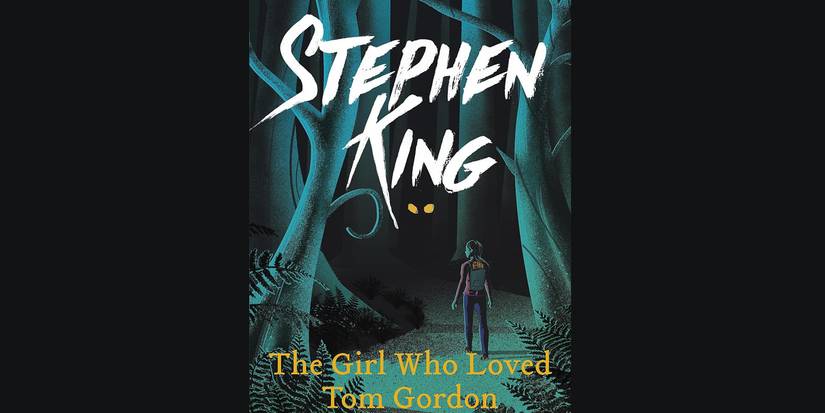
At 224 pages, The Girl Who Loved Tom Gordon is the longest book on this list but still a fairly manageable read for a weekend. It’s a fast-paced survival story about a young girl lost in the woods that's made compelling by the vividness of King's writing. It's more psychological horror that relies on tension rather than through any true supernatural force or human antagonist, which is another line that can divide fans of King. There's no denying the propulsive quality of the writing, and how quickly the book can become a page turner that you'll have finished before the weekend ends.
The Girl Who Loved Tom Gordon is nine-year-old Trisha, who gets separated from her family while on a nature hike. As she ventures further into nature trying to find her way back to civilization, she begins to hallucinate an evil entity tracking her, in addition to others who inspire her, including the titular baseball player. The Girl Who Loved Tom Gordon is a specific kind of King book for a specific kind of King reader, but for many it hits the exact sweet spot of mounting dread with a quickening pace.
'The Colorado Kid' (2005)

For a slight change of pace, The Colorado Kid is a mystery novel published by King that involves an unsolved death. There's nothing inherently horrific or anything remotely supernatural in the book, which was published under the Hard Case Crime imprint. It's simply a story about the human need for resolution and how that need is often denied by strange occurrences that have no logical explanation. The Colorado Kid divides a lot of King fans in their appreciation of it, particularly due to its lack of any answers to its mystery, but it's a quick and intriguing read for a weekend.
The mystery of the novel surrounds the titular character, a man found dead on an island off the coast of Maine with no clear clues as to how he got there or why. Every bit of information about the man only raises bigger questions about his demise, and the novel ends with only one suggested possibility. As told by two lifelong islanders to a young transplant, the book explores aspects of local folklore and how it can bind a community together. It's a different pace for King, and a much more relaxing read for those who might not enjoy his more graphic works.
'Carrie' (1974)
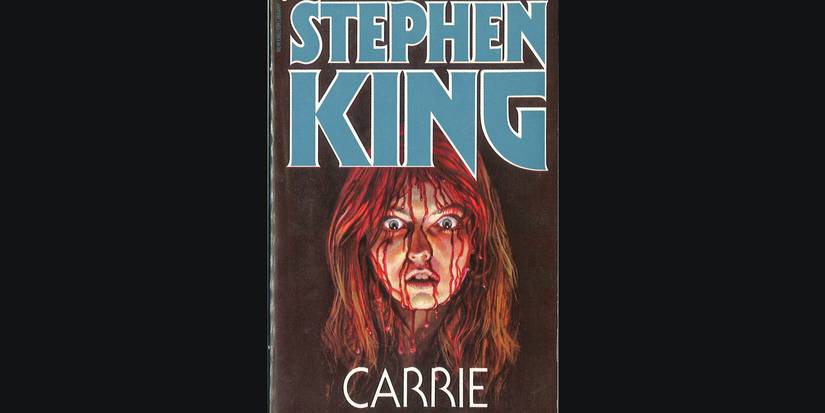
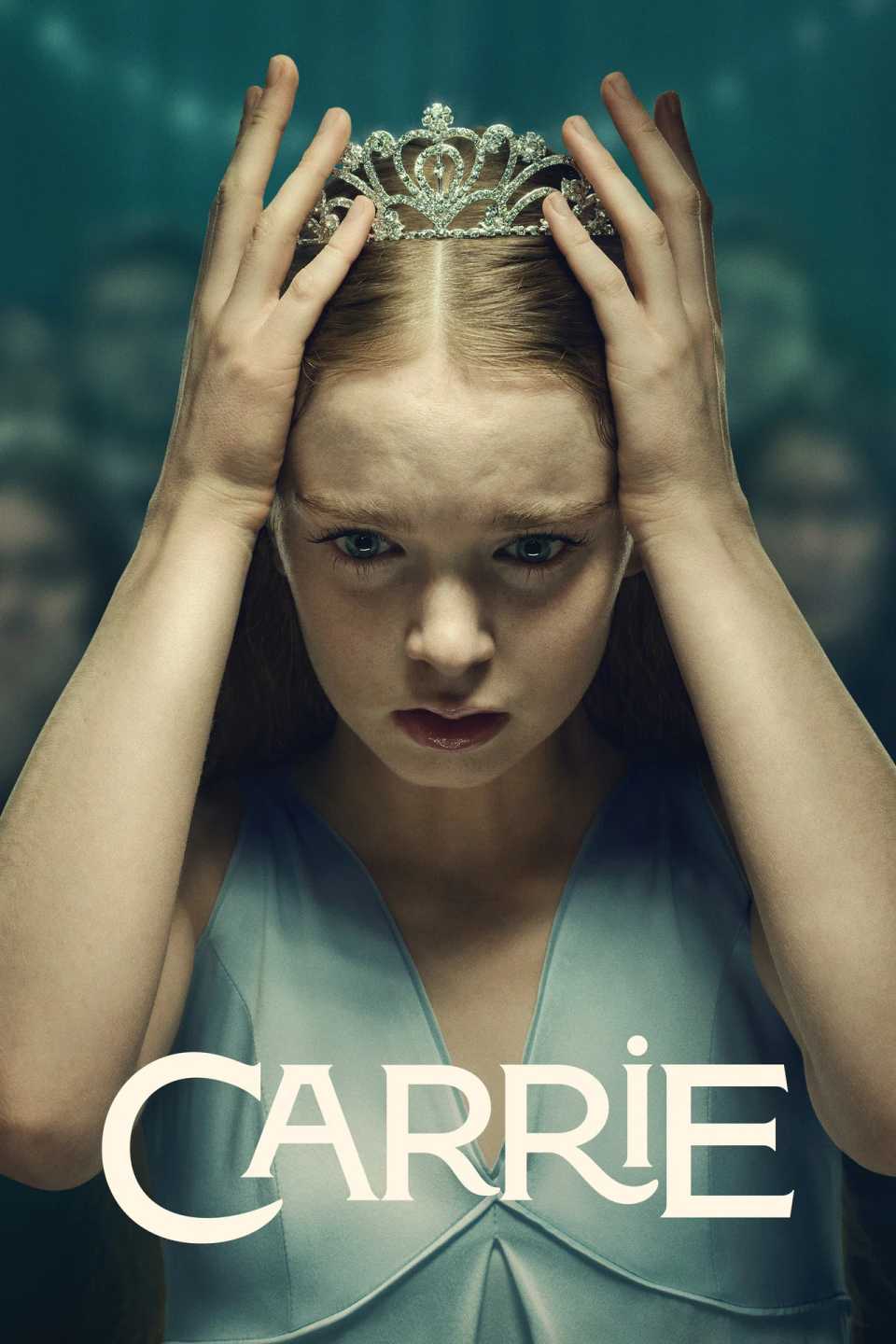
King's first novel, Carrie, is also one of his relatively shortest, with the original edition coming in just under 200 pages. It's the perfect entry point for anyone interested in getting into King or curious about how the printed story about a telekinetic teenager differs from the multiple adaptations of it. The most recent adaptation, a limited series by Mike Flanagan, just dropped on Prime Video, so it's prime time that you picked up this book and spend some time with it over the weekend.
Originally intended as a short story, abandoned and then expanded into a novel at the urging of King's wife, Carrie is set in a small town in Maine. It follows the titular teen, whose abuse at the hands of her hyper-religious mother and school bullies awakens her latent psychic abilities, which she eventually uses to exact revenge. A lot of the themes that would come to dominate King's work are established in Carrie, and it's still a massively influential contemporary horror novel that helped generate an incredible amount of mainstream interest and excitement in the genre.
Carrie
7 10
- Release Date
- 2026 - 2026-00-00
- Network
- Prime Video
- Showrunner
- Mike Flanagan
- Directors
- Mike Flanagan, Axelle Carolyn, Hiromi Kamata, Kate Siegel, Kyra Sedgwick
-

Summer H. Howell
Carrie White
-

Samantha Sloyan
Margaret White
Carrie White struggles through school life after her father's passing in this new adaptation of Stephen King's classic novel. The challenges she faces include bullying, a domineering mother, and the the development of her telekinetic abilities.
- Writers
- Mike Flanagan, Alexandra Magistro, Justina Ireland, Jamie Flanagan, Elan Gale, Rebecca Klingel, Elizabeth Padden, Dani Parker
- Main Genre
- Horror
- Seasons
- 1
- Producers
- Justin Wagman, Rebecca Klingel, Dani Parker
- Creator(s)
- Mike Flanagan
- Release Window
- 2026
- Executive Producer(s)
- Mike Flanagan, Stephen King, Trevor Macy
KioskNews shows a cleaned-up reading view extracted from the publisher’s page — the original always lives on their site, not ours.