US defence experts to work inside Taiwan military HQ under reported pact
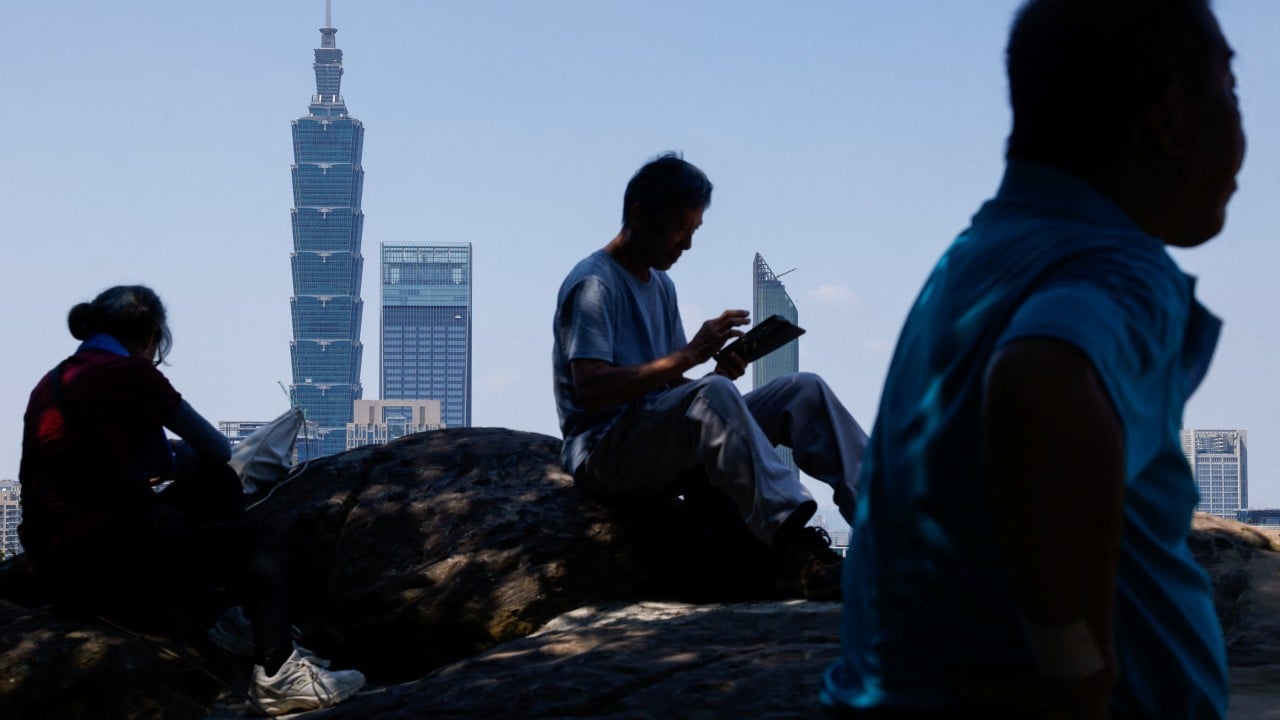
A reported plan to station US defence personnel inside Taiwan’s military headquarters would take cooperation from external help into the heart of defence planning, potentially angering Beijing while raising questions over Taipei’s policymaking autonomy and military secrecy.
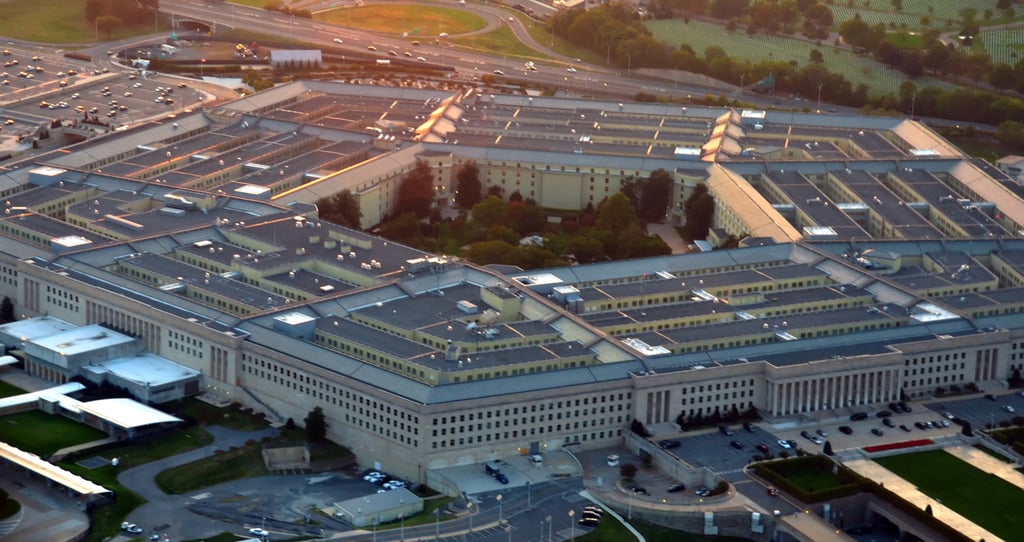
According to Taiwanese media reports at the weekend, the Pentagon plans to send one official from the Office of the Under Secretary of Defence for Policy and one expert from the Institute for Defence Analyses (IDA) to work on a long-term basis at the defence ministry’s headquarters in Taipei.
The two would aid policy coordination and combat capability assessments under an expanded “Taiwan-US Defence Ministry Joint Cooperation Assessment” programme that would run from this year to 2028, according to the reports.
02:55
Taiwan concludes annual war games, including preparing for PLA sea blockade
The programme has a total budget of more than NT$471 million (US$14.8 million), including NT$152.5 million this year for expenses such as US personnel and consultancy costs, travel, research equipment and data collection, and interpreting for classified-level meetings.
If confirmed, the arrangement would mark a significant change from the existing US military presence in Taiwan, where American personnel have generally worked as trainers or through the American Institute in Taiwan, Washington’s de facto embassy on the island.
The reports said the US representatives could provide on-site advice on overall defence planning, war games for Taiwan’s annual Han Kuang exercises and assessments of major weapons procurement programmes.
Taiwan’s defence ministry did not confirm details of the reported arrangement. On Sunday it said only that Taipei and Washington continued to deepen military exchanges to strengthen the armed forces’ overall defence capabilities and resilience.
It declined to elaborate on how the cooperation would be implemented.
The US Department of Defence had not responded to a request for comment by the time of publication.
Wang Ting-yu, a legislator from the ruling Democratic Progressive Party in Taiwan, on Monday described the reported arrangement as a “major upgrade” in military cooperation.
He said that in addition to hundreds of US military instructors – sometimes referred to in Taiwan as “American English-language teachers” – helping train Taiwanese forces, US representatives would now work directly inside the defence ministry.
“This means US personnel will directly enter the core of Taiwan’s defence policymaking establishment, assisting with policy coordination and assessments of combat capabilities,” Wang said, describing it as an upgrade of direct military cooperation “to the highest level”.
But Ma Wen-chun, a legislator of the main opposition Kuomintang party, questioned the sharp increase in spending on the cooperation programme, saying its annual budget had risen more than twelvefold compared with earlier years.
“Supporting Taiwan-US military exchanges and cooperation, and supporting national defence, does not mean the budget can be allowed to grow without restraint,” Ma said.
She questioned how many US personnel would come to Taiwan, how many meetings would be held and what concrete benefits the programme would deliver. The defence ministry had yet to provide specific answers, she said.
Zivon Wang, a military analyst at the Chinese Council of Advanced Policy Studies in Taipei, said it had long been an “open secret” that serving and retired US military personnel were in Taiwan to provide training and advice and had taken part in Han Kuang exercises.
But stationing personnel directly inside the defence ministry would be considerably more sensitive.
“Beijing is certain to protest and could respond with measures such as expanded military exercises and intimidation,” he said, adding that this could explain Taipei’s reluctance to publicly confirm the arrangement.
He said he did not expect the US personnel to wear uniforms because that could be interpreted as a more formalised US-Taiwan military relationship and might further provoke Beijing.
Beijing regards Taiwan as part of China to be reunited by force if necessary. Most countries, including the United States, do not recognise Taiwan as an independent state, but Washington is opposed to any unilateral change to the cross-strait status quo by force and has been committed to supplying it with weapons.
Despite the closer cooperation, Zivon Wang said he did not believe US representatives would dictate Taiwan’s defence strategy.
“Many aspects of Taiwan’s military strategy are already closely linked with those of the United States,” he said. “Their main purpose in Taiwan would be communication and coordination rather than directly controlling Taiwan’s defence policy or strategy. Taiwan would retain the leading role.”
He acknowledged that US representatives were likely to gain access to at least some classified information, noting that the two sides already shared intelligence on People’s Liberation Army exercises and other activities.
However, he said it was less clear how sensitive the information available to them would be and could depend partly on the broader US-China relationship.
James Yifan Chen, a Taipei-based international relations and strategic studies scholar, was more cautious, saying that embedding US personnel in the defence establishment could gradually increase Washington’s influence over Taiwanese decision making.
While the arrangement would represent “a significant upgrade in security ties”, Taiwan’s defence decisions could become increasingly influenced by US strategic planning and priorities, he said.
“If US national interests were ever to diverge from Taiwan’s interests, Taiwan could find itself facing an uncomfortable strategic dilemma, with limited flexibility to pursue an independent defence posture,” Chen said.
He argued that the asymmetrical nature of the relationship left Taipei with relatively little leverage and could make it difficult for the island to resist US policies that did not fully coincide with its interests.
02:22
US defence chief Hegseth says Trump seeks ‘peace through strength’ in Shangri-La speech
Ho Jeng-sheng, vice-chairman of the Taiwan External Relations Research and Development Association, on Monday drew a distinction between benefiting from US expertise and becoming strategically dependent on Washington.
“The question is how far that cooperation should go before defence autonomy turns into outsourcing Taiwan’s defence,” he said.
US intelligence, technology, war-gaming models and strategic advice could help Taiwan improve its capabilities, Ho said, but decisions on defence policy, military command and force deployment ultimately had to remain in Taiwanese hands.
“The United States can have a seat at Taiwan’s defence conference table, but it cannot occupy the head of that table,” Ho said.
“Military cooperation between the two sides can be upgraded, but Taiwan’s defence autonomy cannot be downgraded.”
KioskNews shows a cleaned-up reading view extracted from the publisher’s page — the original always lives on their site, not ours.