No stay on MDR but SC asks under what law was it imposed
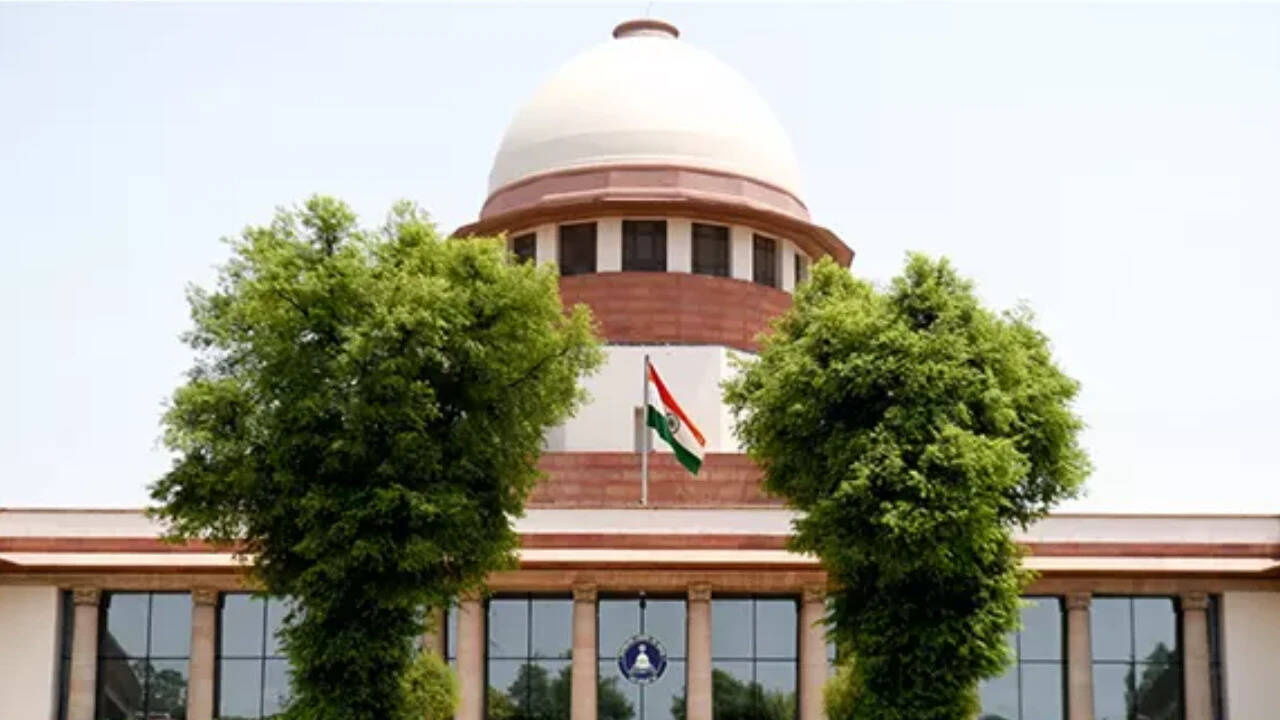
Supreme Court questions UPI MDR, asks Centre, RBI to explain legal basis
NEW DELHI: Supreme Court Monday asked the Centre, RBI and National Payments Corporation of India (NPCI) to explain under which provision of law the merchant discount rate (MDR) on UPI transactions was imposed, even though it refused to stay its implementation from Oct 15."Is it a tax or a fee? If it is not a tax or a fee, then what is the executive scope of making this expropriation on transactions? What is the character of this expropriation?" asked a bench of CJI Surya Kant and Justices Joymalya Bagchi and V Mohana while hearing a PIL that argued that MDR charges on UPI transactions would make people revert to cash dealings, which would encourage accumulation of black money.Additional solicitor general N Venkataraman (ASG) said MDR is not a tax or a fee, nor an expropriation as govt will not get even a paisa from it.
It is akin to service charges levied by banks on transactions done earlier through credit and debit cards, though MDR's scope is much more restricted. He said that 96% of the transactions are exempted from MDR, while from within the balance 4%, essential services will attract a flat charge of Rs 5.
For the rest, transactions above Rs 75,000 will attract a maximum MDR of Rs 300. Justice Bagchi asked, "What is this service charge? Please file an affidavit and explain.
It cannot be through executive fiat."Explaining the operation of credit and debit cards, the predecessors of the UPI mode of transferring money, and the service charge attached to such transactions because of the involvement of banks and the aggregator, Venkatraman said there is no difference between UPI and the previous system, and it involves a service charge payable to banks and aggregator NPCI, which facilitates the transactions.
"Govt does not take a rupee from it," he said.Justice Bagchi said, "When it is a charge in terms of provisions of the Income Tax Act, on whose hand is it an income?" Venkatraman said the provision of the Income Tax Act cited by the court is an enabling provision which recognises UPI money transfers as a valid transaction, nothing more, nothing less.
When the bench asked who takes the MDR amount, the Centre said it will be the banks and the aggregator, like for credit or debit cards.
It has nothing to do with law as it is purely an administrative mechanism, the ASG said.CJI Kant said, "It appears more technical than law. It would be better if the govt, RBI and NPCI file their affidavits explaining the entire issue." Referring to full-page advertisements in Monday newspapers explaining the MDR, the CJI said, "We have read your advance arguments in the newspapers. Yet, you file a detailed affidavit." The petitioner's counsel sought a stay on the imposition of MDR, a plea Venkatraman opposed, saying it will come into force on Oct 15.
The bench brushed aside the plea for a stay and asked the Centre, RBI and NPCI to file affidavits in four weeks.
KioskNews shows a cleaned-up reading view extracted from the publisher’s page — the original always lives on their site, not ours.