The 8 Best Miniseries in HBO History

Sign in to your Collider account
HBO has spent decades convincing me to care about people I would probably find exhausting in real life. Terrible parents, impossible spouses, frightened soldiers, detectives who make spectacularly bad decisions. One specific dwarf who knows things. Give me enough time with them, though, and I'll start defending their behavior to anyone unfortunate enough to be watching beside me.
That's the dangerous thing about great television. It makes understanding somebody feel almost as important as liking them. And there's something particularly satisfying about a story that knows how much time it needs. No characters wandering around because another season has been ordered. No mystery kept alive after its emotional purpose has disappeared. Just a handful of hours that leave you thinking about one conversation, one mistake, or one person who deserved a little more kindness. HBO has made an extraordinary amount of television, but these eight have stayed with me in ways I find difficult to explain without immediately wanting to watch them again.
8 'Olive Kitteridge' (2014)

Olive Kitteridge (Frances McDormand) is a mathematics teacher in a small Maine town whose sharp tongue and impatient disposition make her an exceptionally difficult person to love. Her husband Henry (Richard Jenkins) is gentle and affectionate, while their son Christopher (John Gallagher Jr.) grows increasingly resentful of his mother's behavior. Olive Kitteridge follows their family across decades, allowing ordinary disappointments and unspoken grievances to accumulate.
I sometimes want to shake Olive for the things she says to Henry. He's offering kindness, and she responds as though kindness is an accusation. Yet McDormand makes it painfully clear that Olive's cruelty often conceals emotions she has no idea how to express. Lisa Cholodenko directed all four episodes, giving the performances enough room to make silence uncomfortable. Olive's later encounters with Jack Kennison (Bill Murray) are especially lovely. Two lonely, difficult people discover that companionship might still be possible. After everything we've witnessed, even a little tenderness feels enormous.
7 'Sharp Objects' (2018)
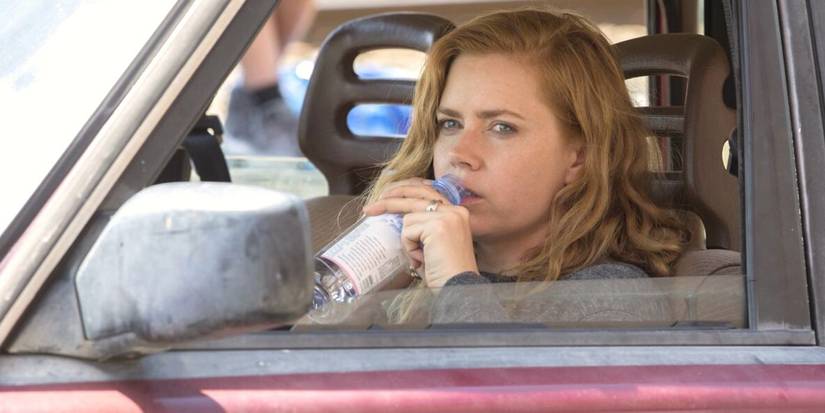
Camille Preaker (Amy Adams) returns to Wind Gap, Missouri, to investigate the murders of two young girls, only to find herself trapped among the memories and family relationships she fled years earlier. Her mother Adora (Patricia Clarkson) exercises an almost suffocating influence over the household, while teenage half-sister Amma (Eliza Scanlen) seems to possess a different personality depending on who's watching. Sharp Objects gradually makes Camille's investigation inseparable from the abuse and grief buried in her past.
Adora absolutely terrifies me. She can turn the simple act of caring for somebody into a demonstration of ownership, and Clarkson never needs to raise her voice to make that frightening. I particularly admire director Jean-Marc Vallée's treatment of Camille's memories. Fragments of her childhood intrude during conversations, suggesting how little distance she's managed to put between herself and what happened. Meanwhile, Amma glides around town on roller skates, performing a version of teenage freedom that feels increasingly sinister. The murder mystery is gripping, but watching Camille struggle to escape her family's emotional grip is what genuinely hurts.
6 'The Night Of' (2016)
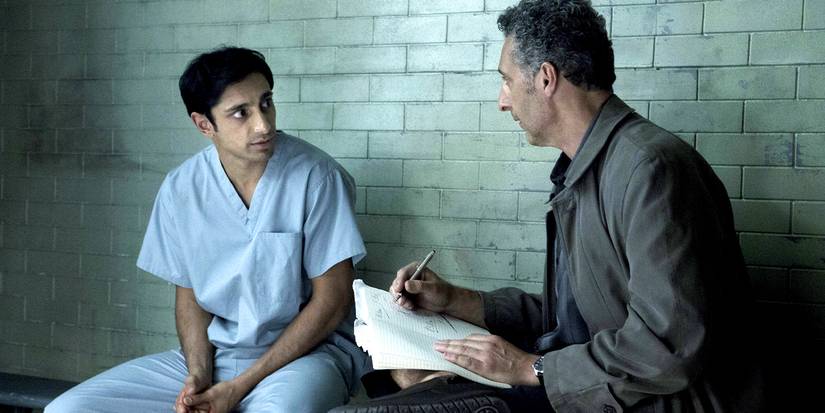
Naz Khan (Riz Ahmed) borrows his father's taxi, meets a young woman, and spends a night with her that ends in catastrophe. When he wakes to discover she's been murdered, the evidence quickly places him at the center of a criminal investigation. The Night Of follows his imprisonment and legal defense, with struggling attorney John Stone (John Turturro) attempting to navigate a justice system that seems to have decided Naz's identity long before determining his guilt.
The awful thing is watching Naz learn how to survive prison. He enters frightened and desperately confused, then gradually adapts to an environment where vulnerability attracts danger. His relationship with influential inmate Freddy Knight (Michael K. Williams) offers protection at a cost Naz barely understands. Steven Zaillian and Richard Price, who created the series, refuse to make his transformation reassuring. And Turturro's exhausted, eczema-afflicted lawyer is magnificent. Stone is hardly anybody's idea of a heroic defender, yet he keeps showing up. I've rarely seen a crime drama so interested in what an accusation can do to a person before a verdict is even reached.
5 'Angels in America' (2003)

During the AIDS crisis of the 1980s, Prior Walter (Justin Kirk) is diagnosed with the disease, and his terrified boyfriend Louis (Ben Shenkman) begins pulling away from him. Their lives intersect with closeted Mormon lawyer Joe Pitt (Patrick Wilson), his struggling wife Harper (Mary-Louise Parker), and powerful attorney Roy Cohn (Al Pacino), who refuses to acknowledge the truth about his own illness. Angels in America turns these relationships into an extraordinary exploration of love, politics, sexuality, mortality, and the desperate human need for connection.
I adore Prior. He's sarcastic, frightened, stubborn, and somehow funny when his circumstances are almost unbearably cruel. His conversations with Belize (Jeffrey Wright) possess a warmth that makes the surrounding suffering even more affecting. And Pacino's Roy Cohn is a monstrous contradiction, a man who can manipulate powerful institutions yet cannot bear acknowledging his own vulnerability. Mike Nichols directed Tony Kushner's adaptation of his play, embracing the theatricality rather than trying to disguise it. Angels appear, ghosts speak, and reality becomes wonderfully unstable. But Prior's insistence upon continuing to live is the thing that absolutely destroys me.
Collider Exclusive · 8 Questions · 2 Minutes Which Game of Thrones House Do You Belong To? Stark · Lannister · Targaryen · Tyrell
Your drink, your weapon, your seat at the table, what you do to somebody who wrongs you. Eight quick calls and we will tell you whose banner you should actually be standing under. Four houses are still in this: the cold one, the rich one, the one with the dragons, and the one that has never needed a sword to get its way.
🐺Stark(Game of Thrones)
🦁Lannister(Game of Thrones)
🐉Targaryen(House of the Dragon)
🌹Tyrell(Game of Thrones)
01
What is your go-to at the feast? Everybody has one, and everybody's says something.
02
Pick a weapon off the wall. You get one. Choose quickly.
03
Where do you end up sitting? The seating plan is the politics.
04
What do people get wrong about you? Reputation arrives about a week before you do.
05
One free evening in King's Landing. Where do you go? Nobody plots every single night.
06
Somebody wrongs you. What happens next? This is the real personality test in Westeros.
07
Your people are in trouble. What is your first move? No time to think about this one.
08
Be honest. What do you actually want? Eight questions in, this is the one that decides your house.
The Banner Is Raised Your House Is…
Four houses, four completely different theories about how you survive a world like this one. Here is where your banner belongs, what the name would cost you, and what it would buy.
House Stark
You belong in the North, where the weather does most of the arguing and nobody is impressed by a title. The Starks are the only great house on this list who genuinely believe that being right matters more than winning, which is exactly why the show spent eight years punishing them for it.
- Your loyalty runs to people rather than to crowns, and you would rather lose a war honestly than win one by doing something you would have to hide.
- The Stark tragedy is a simple one, since a family raised to keep its word ended up surrounded by people who treat a promise as an opening bid.
- You are the one who thinks about the winter while everybody else is still enjoying the summer, and the realm never thanks anybody for that.
- What saves the Starks in the end is not swords. It is the fact that the children grew up and became four completely different kinds of dangerous.
House Lannister
You belong to the house that worked out early on that gold moves faster than armies. Casterly Rock runs on leverage, reputation and the certainty that everybody at the table owes you something, and you are perfectly comfortable with all three.
- You play a longer game than the people around you, and you would rather own the outcome quietly than be seen winning in public.
- Family is the thing you would burn the realm for, which is both the best and the very worst quality this house has.
- Tyrion, Jaime and Cersei are three of the most compelling characters on television precisely because they were raised with everything except the ability to be simple about it.
- You are not the villain of your own story. You are simply the one who read the rules properly and decided to use them.
House Targaryen
You belong to the house that conquered a continent and never quite got over it. Targaryens do not ask for a seat at the table, because in their version of events the table was theirs to begin with, and that certainty is either magnificent or catastrophic depending on the week.
- You feel things at full volume, and nobody who has ever met a Targaryen has described one as measured.
- House of the Dragon made the family far more interesting than the original show could, because here the enemy is not some other house. It is the rest of the bloodline.
- Season 3 landed on HBO in June 2026 and pushed the civil war into the part everybody who read the book has been dreading for years.
- Your great strength and your great problem are the same thing, which is that you genuinely believe the story was always going to end with you.
House Tyrell
You belong to Highgarden, where nobody raises their voice and everybody gets exactly what they came for. The Tyrells feed the realm, charm the realm and quietly steer the realm, and they have never once needed to win a battle to get their way.
- You understand that being liked is a weapon, and you are genuinely better at it than the people who spend their lives trying to be feared.
- Olenna is the most quietly ruthless character in the entire series, and she does all of it from a chair with a bowl of fruit in front of her.
- Your house wins by being useful, since a kingdom that cannot eat without you will forgive you almost anything.
- The risk of being a Tyrell is simple enough. Charm works beautifully on everybody except the one person who has stopped caring what anyone thinks.
4 'Watchmen' (2019)

Angela Abar (Regina King) is a Tulsa detective who operates under the masked identity Sister Night in a society where superheroes have left a deeply complicated legacy. When her police chief is murdered, Watchmen draws Angela into a conspiracy involving white supremacists, masked vigilantes, and secrets surrounding her own family. Damon Lindelof's continuation of the famous graphic novel gradually connects its extraordinary mythology to America's history of racial violence.
I still think about the episode “This Extraordinary Being” more than almost any other hour of superhero television. Angela experiences her grandfather's memories, and suddenly the origins of masked vigilantism become inseparable from the violence he endured. Stephen Williams directed that episode with extraordinary imagination, particularly in the way the past seems to swallow Angela's present. Yet the series also finds room for a surprisingly tender relationship between Angela and Doctor Manhattan (Yahya Abdul-Mateen II). Their conversations about love and time become heartbreaking as we understand their circumstances. That's what makes this adaptation remarkable. Beneath the enormous mythology are people desperate to protect their families from histories they cannot escape.
3 'Mare of Easttown' (2021)
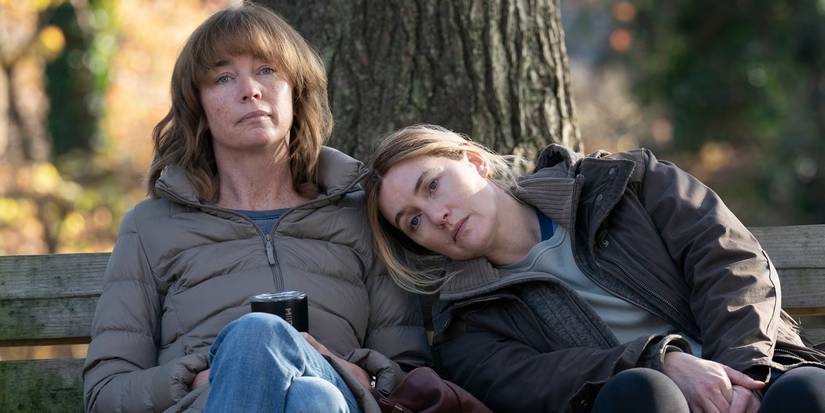
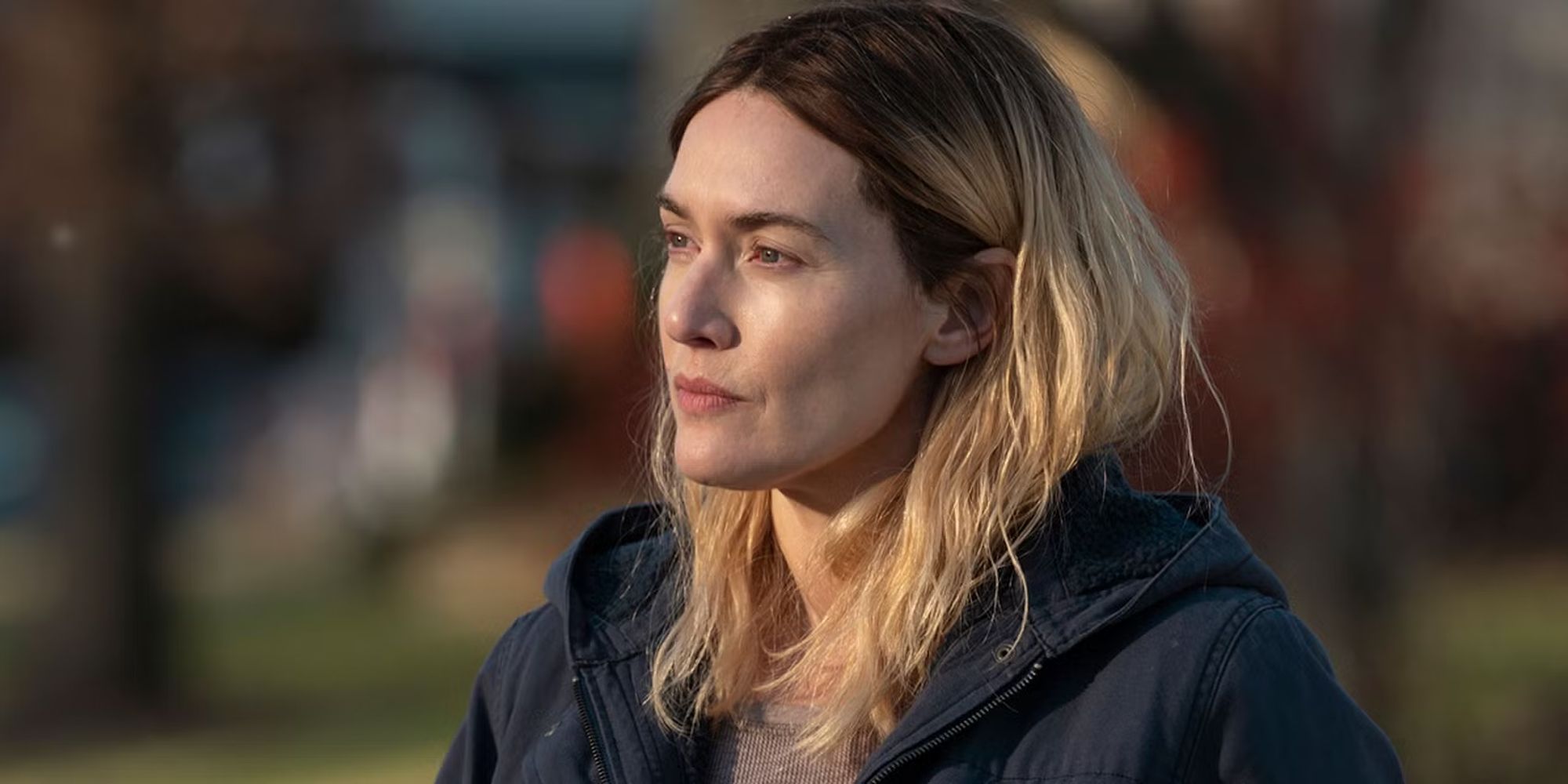
Mare Sheehan (Kate Winslet) is investigating a young mother's murder in a Pennsylvania community where practically everybody knows everybody else's secrets. Her professional responsibilities are complicated by the disappearance of another young woman, the death of her son, and a bitter custody dispute involving her grandson. Mare of Easttown gives its detective a deeply convincing life beyond the investigation, populated by relatives and friends who know exactly how difficult she can be.
Mare does some things I find almost impossible to defend. At one point, she plants drugs to sabotage her former daughter-in-law's attempt to regain custody of her child. Her grief explains the desperation, but it doesn't excuse what she's done. I love that Brad Ingelsby, who wrote the series, allows her to be so painfully flawed. And Winslet's chemistry with Jean Smart, who portrays Mare's mother Helen, is magnificent. Their household arguments can be hilarious one moment and quietly devastating the next. There is a terrible amount of sadness inside this family, and watching Mare finally confront some of it affected me even more than the mystery's resolution.
2 'Chernobyl' (2019)
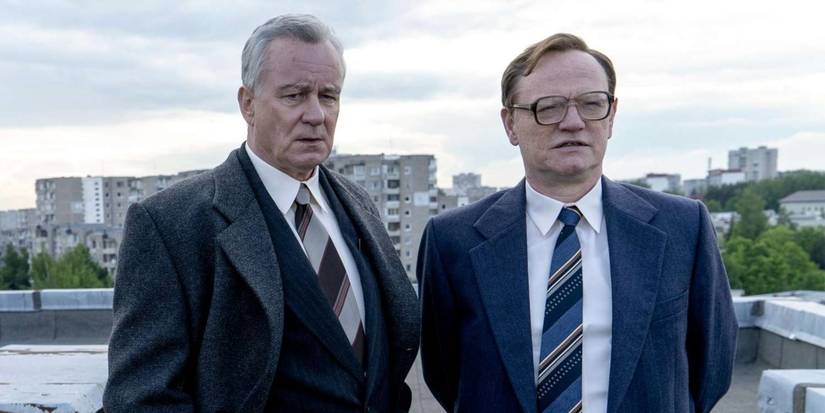
An explosion at a Soviet nuclear power plant in 1986 exposes workers and nearby communities to catastrophic radiation while officials struggle to acknowledge what has happened. Chernobyl follows scientist Valery Legasov (Jared Harris) and government official Boris Shcherbina (Stellan Skarsgård) as they attempt to contain a disaster made considerably worse by secrecy, institutional arrogance, and the terrifying consequences of misinformation.
The firefighters arriving at the plant have no understanding of what they're walking into. They're doing their jobs, approaching what appears to be another terrible industrial fire, while the audience gradually understands the danger surrounding them. That contrast makes the opening horrifying. Craig Mazin wrote the series, and Johan Renck directed all five episodes, allowing scientific details to become emotionally devastating rather than confusing. I particularly love watching Legasov and Shcherbina develop mutual respect as they realize how much depends upon confronting uncomfortable facts. Every worker sent into danger has a life beyond the catastrophe. Remembering that makes their courage extraordinary, and the decisions that endangered them absolutely infuriating.
1 'Band of Brothers' (2001)
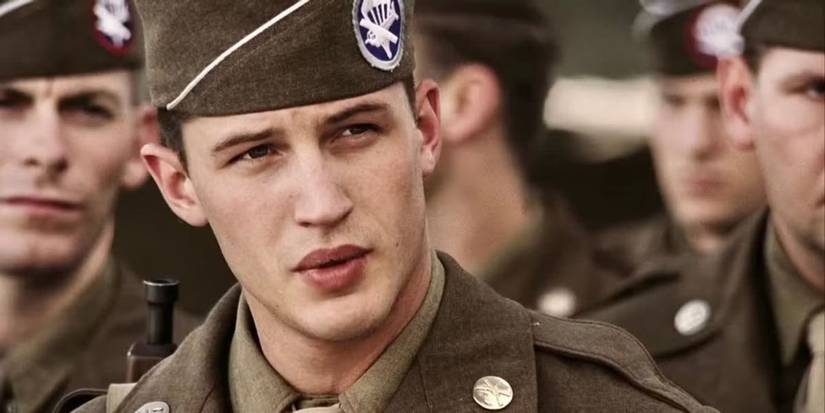
Tom Hanks and Steven Spielberg executive-produced this miniseries. Easy Company of the 101st Airborne Division begins as a group of young American soldiers undergoing brutal training before being deployed into the European theater of World War II. Band of Brothers follows them from Normandy through some of the conflict's most punishing battles, including the freezing forests surrounding Bastogne. Their officers, particularly Richard Winters (Damian Lewis), must lead men whose growing experience of war comes at an increasingly terrible personal cost.
There's a moment during the Battle of Foy when Lieutenant Ronald Speirs (Matthew Settle) runs straight through German-held territory to communicate with another American unit, then somehow makes the journey back. It's extraordinary, but I keep thinking about Carwood Lipton (Donnie Wahlberg), who has been quietly holding the exhausted company together while leadership falters. These men survive partly because somebody continues looking after them when everything is falling apart.
KioskNews shows a cleaned-up reading view extracted from the publisher’s page — the original always lives on their site, not ours.