Could Man City lose 2023 UCL crown as they await appeal and potential PL punishments? Here's why it's unlikely
The Citizens will play their first home game since the charges as potentially massive punishments could come their way

• 6 min read
Manchester City will face PSG on Wednesday at the Etihad Stadium for the second matchday of their Champions League campaign and the game against the French giants is a really ironic coincidence. Wednesday's clash will be the first home game played by the team led by Enzo Maresca after an independent commission upheld 114 of 115 charges brought by the Premier League in relation to City's violations of the competition's financial rules, and it will take place against PSG, another big European team that had to face similar issues in the past. The Citizens are dealing with the most challenging moment of their recent history, as the club are appealing and have maintained their innocence as they and the rest of the league await news of a sanction that could deepen the crisis for the eight-time English champions and the English game as a whole.
The match at the Etihad follows the heated away game against Liverpool that took place on Sunday, when the home crowd protested Maresca's team before and during the game. However, Erling Haaland and his teammates reacted on the field and delivered a strong performance, winning 3-0 at Anfield. The home fans are expected to support the club and the ownership, as they also did it when traveling on Sunday at Liverpool and will also be joined by former team manager Pep Guardiola, who will make his first comeback at the Etihad for the first time since he left the club in the summer, when he was replaced by Maresca.
Earlier this month, Guardiola wrote in a social media post, "I want every single Manchester City fan across the world to know I am here; more than ever. I am, always have been, always will, be behind my club, my owner, my chairman, Ferran [Soriano], the players, staff, [manager] Enzo [Maresca] and you, our unique supporters. Let me be clear: we will get through this together. I love you all."
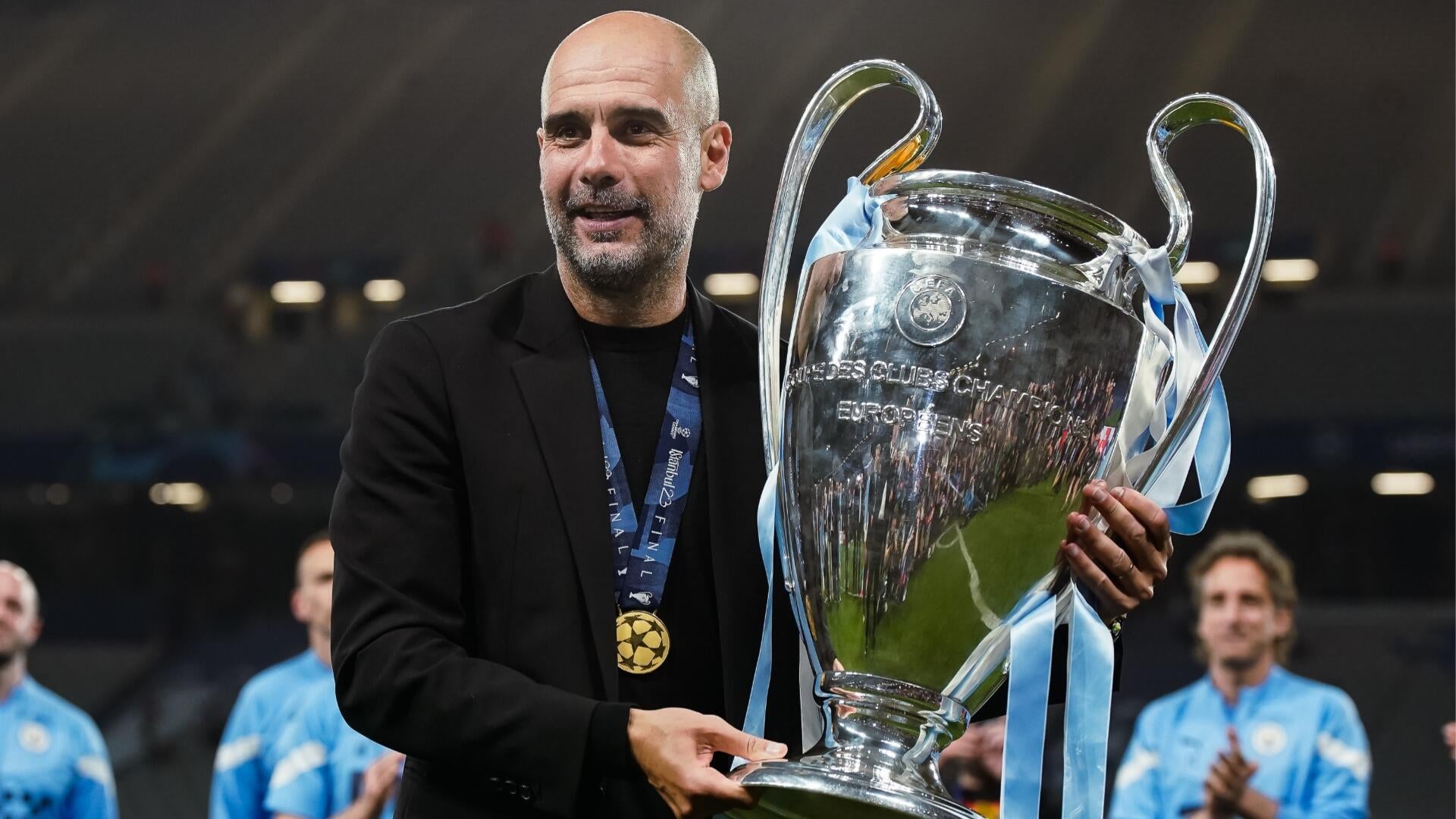
Guardiola was the manager of Manchester City from 2016 to 2026, winning also the 2023 edition of the UEFA Champions League, the first one won by the club. In recent days, following the publication of the independent commission's verdict, questions have emerged over whether Manchester City could be stripped of their Champions League title. Speculation has also mounted over the possibility of the club losing domestic honors, including Premier League titles. However, as things stand, there is no indication that City's 2023 European crown is under threat.
Here's why.
What happens to the 2023 title?
Manchester City are appealing against the decision of the Premier League's independent commission investigation which determined that between the 2009-10 season and the 2017-18 season, City breached spending limits, had "sham" contracts, misstated their accounts, and did other things to make it seem as if their revenue was in line with Premier League spending limits. UEFA, the European governing body, didn't open a new procedure against Manchester City following the recent events, but sources told Sky Sport UK that "UEFA is monitoring developments and will wait until the end of the Premier League's disciplinary process before deciding whether to take any potential action against Manchester City."
From 2009 to 2018, Manchester City were found to have broken the Premier League's financial rules, including five charges of failing to comply with UEFA's Financial Fair Play rules (FFP). At the time of the breaches, FFP rules required clubs to operate within set break-even limits, meaning their spending had to be broadly in line with their football-related revenues.
UEFA have previously sanctioned Manchester City for breaking the FFP rules. In 2014, the English club entered into a settlement agreement with the European body which included a $60 million fine, but were told they would get €40 million back if they stuck to the terms of their settlement. In 2020, City were again found guilty of breaking the FFP rules, and were fined $30 million and banned from playing European tournaments for two years. However, the club appealed to the CAS (Court of Arbitration for Sports) which ruled that UEFA didn't establish that City owners had "disguised equity funding as sponsorship contributions," and CAS reduced the fine from $30 million to $10 million for failing to co-operate with the UEFA investigation and wrote in a statement that the alleged breaches "were either not established or time-barred". City were not ultimately banned from European tournaments.
UEFA has a statute of limitations of five years for financial rule breaches, while the Premier League does not and this is why it's too early to say if there will be sanctions imposed on the club by UEFA in the future, and this is why their 2023 Champions League title shouldn't be considered in doubt, at least for now.
The surreal scenario
Technically, Manchester City could play in both the second division and in Champions League next season, in case they are relegated from the Premier League. According to the BBC, Manchester City's current situation should not affect their UEFA licence, which is required for clubs to compete in European competitions. UEFA could still launch disciplinary proceedings in the future, but that alone would not necessarily put the club's licence at risk. Speaking to the BBC, one source said that City's licence "had been raised" and that a solution "would require the sort of joined-up thinking that's been a bit lacking so far."
Licenses are issued by the Football Association while the process is delegated to the Premier League and they are based on current financial books but don't consider sanctions or breaches from the past. This is why, in case of a relegation, Manchester City would potentially be able to play European soccer.
Why can't City appeal to CAS now?
CAS, the legal body that settles sports disputes, can't handle the Manchester City case at this stage. They cover 900 cases per year, covering more than 50 sports, and they is based in Switzerland. As mentioned above, Manchester City already appealed to CAS in 2020 and partially won the case, as CAS overturned the decision of UEFA to ban the English club for two years. In accordance with English law, the agreement made by the Premier League teams states that all the cases involving English clubs are conducted in England and Wales, meaning the Swiss legal body can't operate in such territory.
How PSG handled it
PSG, the rivals of Manchester City on Wednesday, also had to face similar issues with UEFA in the past. It all started in 2018 when the German magazine Der Spiegel published the "Football Leaks" scandal claimed that between them Qatar and Abu Dhabi have injected $5.1 billion to increase the budgets of the clubs they own. According to the information at the time, PSG agreed on a five-year deal with the Qatar Tourism Authority (QTA), worth €1.075 billion, or €215 million a year and the "overestimated" sponsorship deals of Manchester City with the Abu Dhabi owners. Both clubs have signed settlement agreements with UEFA and PSG were fined €10 million by UEFA in 2022 for not complying with financial rules since 2018, with another €50 million fine suspended.
According to the "Football Leaks" documents in 2018, current FIFA president Gianni Infantino, who was the UEFA general secretary back at the time, had a key role in avoiding serious sanctions in 2014 and personally met with officials of both clubs for "secret talks, even supplying them with confidential materials that involved suggested compromises that he was unauthorized to propose."
Nasser Al-Khelaifi, president of Qatar-owned Paris Saint-Germain since 2011, currently heads the European Club Association (ECA). He took over the role in 2021, following the departure of former president Andrea Agnelli, then Juventus chairman, who stepped down amid the fallout from the European Super League project, which he had helped launch earlier that year. PSG are now in a different position from Manchester City, also because the French Ligue 1 didn't have the same approach as the Premier League. The two sides meet at the Etihad on Wednesday in what promises to be one of the best fixtures of the week. Yet beyond the action on the pitch, the political battles and behind-the-scenes power struggles that have shaped European soccer over the past decade remain an equally important part of the story that shouldn't be forgotten.
KioskNews shows a cleaned-up reading view extracted from the publisher’s page — the original always lives on their site, not ours.