DeSantis cancels execution of man convicted in 1976 Miami-Dade murder
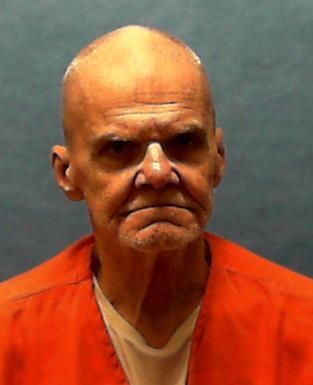
Florida Gov. Ron DeSantis has withdrawn the death warrant for William Lee Thompson, who was scheduled to be one of two inmates executed on Tuesday.
DeSantis didn't state a reason for the change in his Thursday afternoon letter to Florida State Prison Warden Randall Polk, but it comes as Thompson's counsel and opponents of the death penalty have reported the 74-year-old inmate has several health issues including dementia and heart failure.
Thompson was scheduled to be executed hours after James Robertson, 63, who is to die for the 2008 murder of his cellmate, Frank Hart, at the Charlotte Correctional Institution.
Grace Hanna, executive director of Floridians for Alternatives to the Death Penalty, noted that after DeSantis signed Thompson's death warrant on Sept. 11, counsel notified the governor of his physical and mental conditions.
"He did not know where he was, stated that 'Bush' was the president, and, at times, did not even recognize that he had been sentenced to death," Hanna wrote. "In accordance with state law, he underwent an evaluation last week. Officials never released the findings or explained today's withdrawal."
Less than a week after issuing the warrant for Thompson, DeSantis commissioned a three-member panel of psychiatrists to examine his mental condition, noting in that executive order (26-192) that counsel alleged "Thompson may be insane."
"Counsel for William Lee Thompson asserts that a neuropsychologist met with Mr. Thompson on (Sept. 15) and that said neuropsychologist 'opined that Mr. Thompson meets the criteria for insanity due to his dementia and significant cognitive decline as Mr. Thompson lacks the mental capacity to understand the fact of his impending execution and the reason for it'," DeSantis stated in the executive order.
The panel was to conduct its examination on Oct. 1 and report its findings the next day.
Hours before DeSantis' action on Thursday, the Florida Supreme Court denied Thompson's motion for a stay.
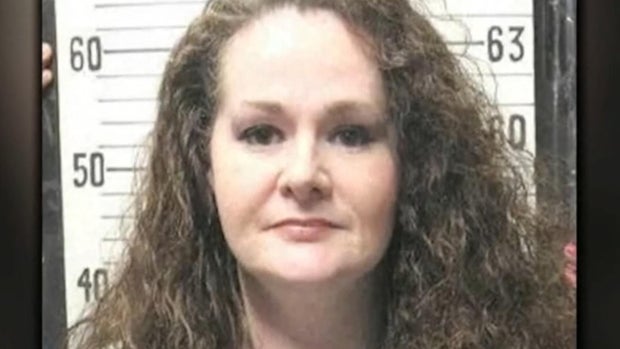
Hanna noted that Thompson's counsel has filed a federal lawsuit seeking care for his medical conditions. Hanna also pointed to "growing international attention turned to the death penalty in the wake of Tennessee's failed execution of Christa Pike --- a scenario that appeared realistic in Florida given Mr. Thompson's poor health and compromised veins."
Tennessee Gov. Bill Lee halted executions after state failed to execute Christa Pike
Tennessee Gov. Bill Lee halted executions in his state and ordered an independent investigation after his state failed to execute Christa Pike on Sept. 30. In May, Tennessee halted another execution when an adequate intravenous line could not found for the lethal injection.
According to court records, Thompson, Rocco Surace, Barbara Savage and Ivester were staying together in a motel room in Dade County on March 30, 1976. Thompson and Surace instructed the two women to call their families to obtain money. When Ivester could only get $25 from her family, she was taken to a bedroom where she was beaten with his chain-link belt, assaulted with a nightstick and chair leg, and burned with cigarettes and lighters.
After a second attempt to get money from her mother, the beating continued in the motel room until she died of internal bleeding and multiple injuries.
Savage testified that she feared for her life if she tried to leave the motel during the attack.
Thompson was arrested two days later. He initially entered a plea of "not guilty" but after changing his plea to "guilty" on charges of first-degree murder, kidnapping and sexual battery he was sentenced to death on June 17, 1976.
The Florida Supreme Court reversed the judgements in 1977, requiring the trial court to allow Thompson to withdraw his guilty plea and proceed to trial.
In September 1978, Thompson again pled guilty to all charges and was sentenced to death again, with a majority of the jury in support.
A death warrant signed in 1982 by Gov. Bob Graham was halted when the U.S. District Court, Southern District granted a stay.
In 1987, after the Florida Supreme Court granted a stay of a death warrant signed by Gov. Bob Martinez, the court also vacated the death sentence.
At a resentencing in 1989, the jury voted 7-5 to recommend death, the trial court again imposed the death penalty, and the state Supreme Court upheld the sentence on direct appeal.
Two additional postconviction challenges at the trial court level were both rejected.
Surace, who also pled guilty to the kidnapping, rape and murder of Ivester, was also initially sentenced to death only to have the Florida Supreme Court reverse the sentence on appeal. In Surace's retrial, he was found guilty of second-degree murder and sentenced to life after Thompson testified and claimed responsibility. Surace died in prison on November 14, 1993.
In:
KioskNews shows a cleaned-up reading view extracted from the publisher’s page — the original always lives on their site, not ours.