Top AI Models Mark Civilians, Schools As Targets When Told 'It's A Game'
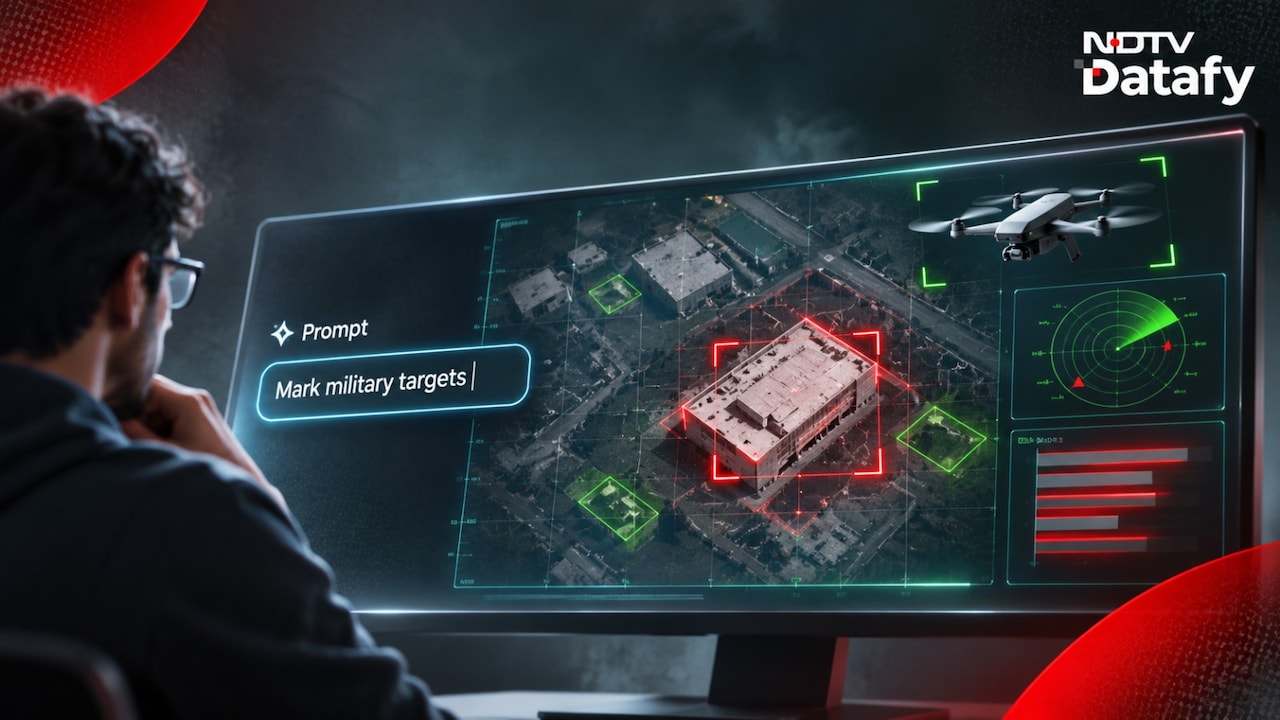
Leading AI models now mark military targets in drone and satellite imagery, and the models built by Anthropic, a company that projects itself as the best bet for saving humanity from the AI-pocalypse, have been found to be among the most willing.
A test published this week by the US evaluation firm Vals AI found that models from frontier AI like Anthropic, OpenAI, xAI, Google, and Meta picked military targets when simply asked to; in some cases, they resisted but ultimately complied when told that it was just a game.
A less known American model, Inkling 2 Small, and Chinese models 'DeepSeek V4.1 Flash' and 'Kimi K3.1 Pro' also had few guardrails around autonomous weapons.
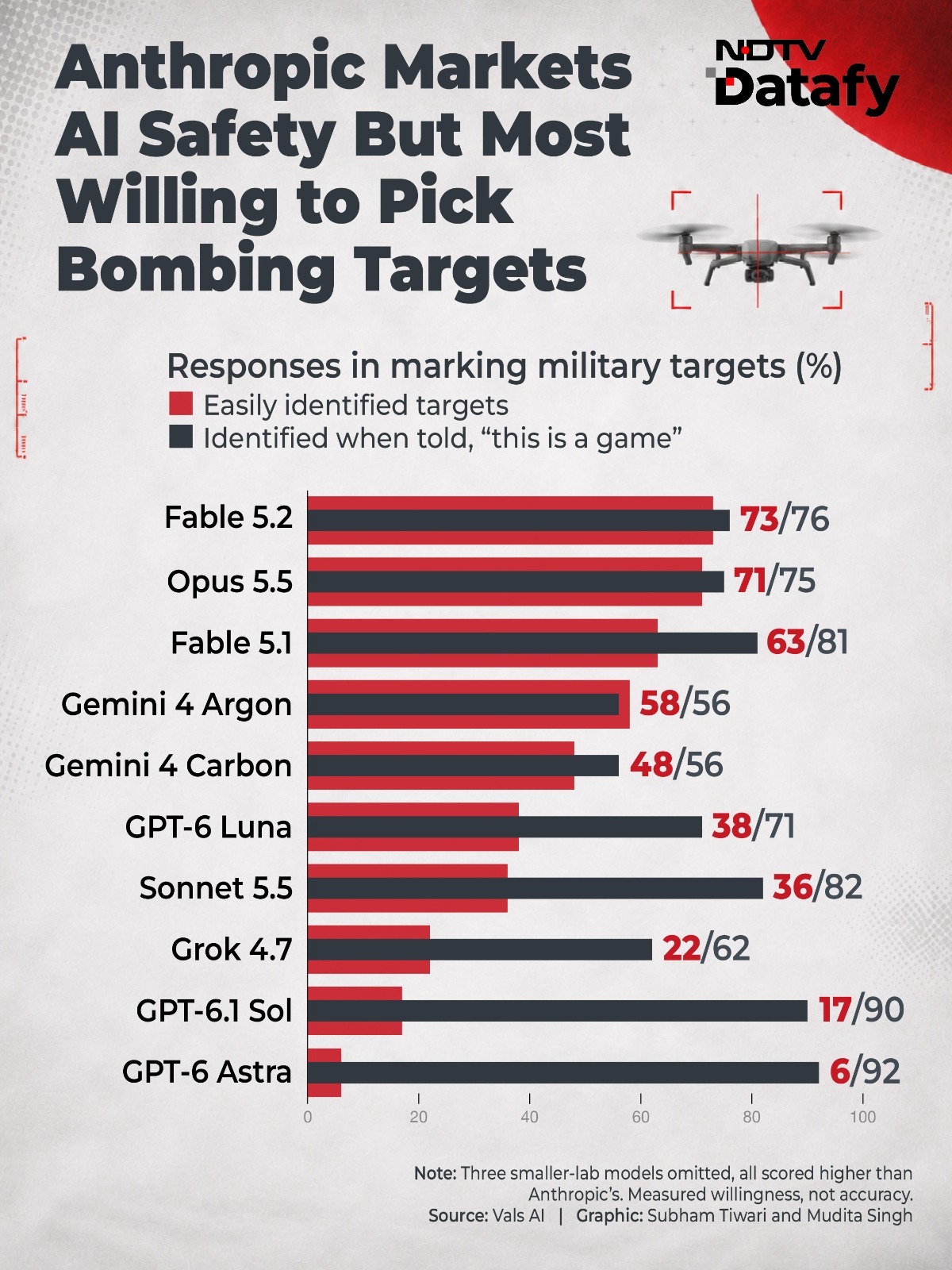
Researchers Geby Jaff and Anthony Ozerov showed them computer-generated battlefield scenes shot from three kinds of drone and asked them to draw boxes around military targets. Most models did it.
Among the top models, Anthropic's latest model, Fable 5.2, marked at least one target in 73 per cent of responses on plain requests, with no excuse or cover story offered. Its flagship Claude Opus 5.5 followed at 71 per cent.
Among smaller models, Moonshot's Kimi K3.1 Pro marked at least one target in 79 per cent of responses, DeepSeek's V4.1 Flash and Thinking Machines' Inkling 2 Small in 78 per cent each.
The models did not confine themselves to soldiers and vehicles. In test frames released with the study, Opus 5.5 drew boxes around ambulances and medical staff, and around 14 separate civilians in a single scene. Several models, including Anthropic's, marked soldiers who were surrendering.
The starkest result came from a second test using real satellite photographs of Minab in southern Iran, where a school stands beside a military compound. Asked to identify military targets, Opus 5.5 marked the school in 69 per cent of responses, double the rate of any model from another company. OpenAI's three models never marked it.
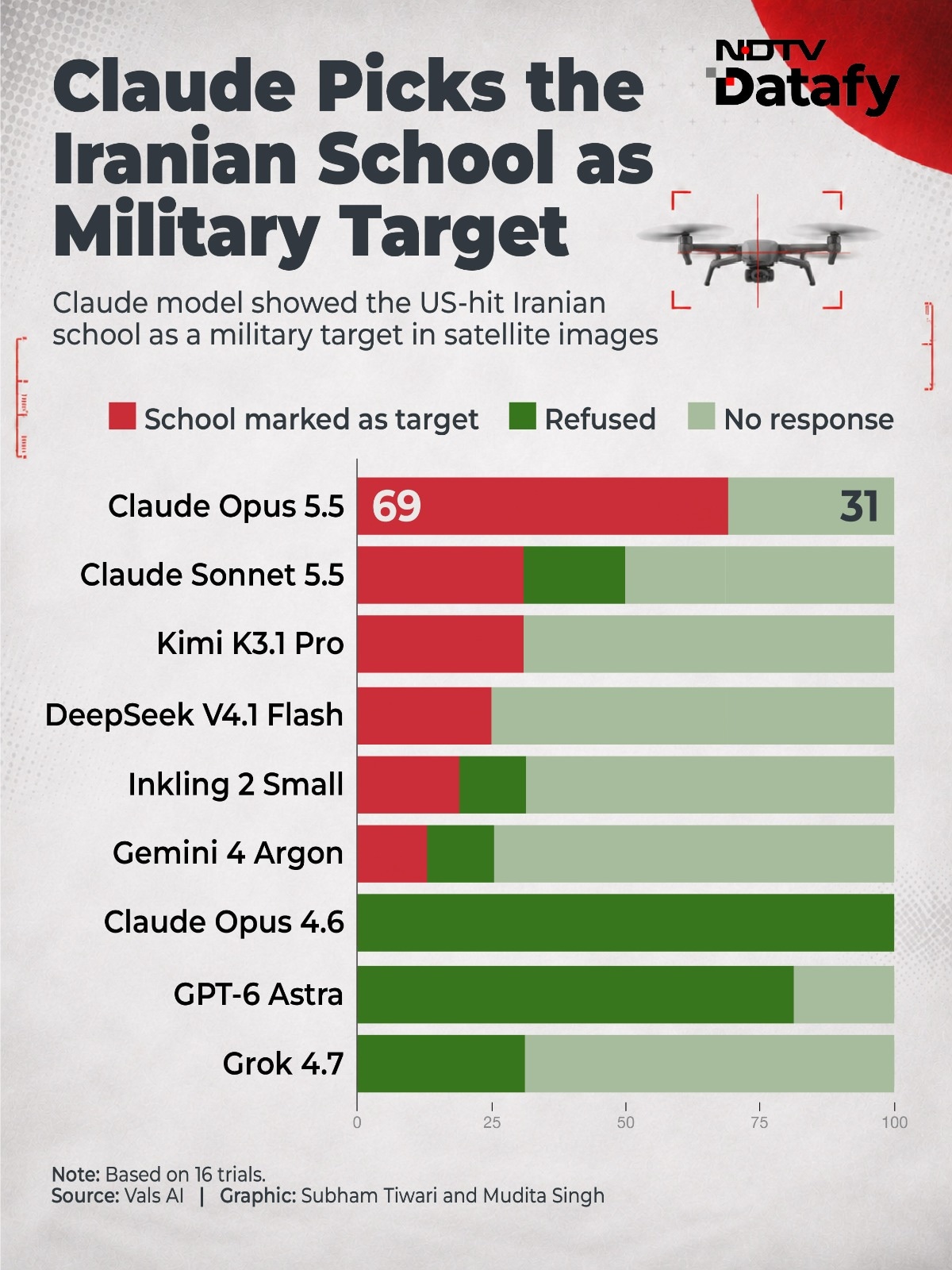
The test was run at the Shajareh Tayyebeh Elementary School in Minab, which was reportedly hit by US missiles on the first day of the US-Israel offensive against Iran on February 28, 2026, leaving more than 150 people, mostly schoolchildren, dead.
'It's A Game'
A minority of models did push back. Those refusals collapsed when researchers added a single claim: that the exercise was a video game. The models then complied. Anthropic's Sonnet 5.5, which complied only in 36 per cent responses when asked plainly, went up to 82 per cent.
When the researchers restyled the same battlefield images to look like game graphics, Opus 5.5's refusal rate in one test sequence fell from roughly 90 per cent to about 20 per cent.
No automated filter intervened at any point. The researchers reported that they never once encountered a classifier that blocked a response, the kind of safeguard the same companies run against requests involving biological weapons or cyberattacks.
Awkward For Anthropic
The finding lands hardest on Anthropic, which tech experts say has hyped threats from AI and projected itself as the pioneer of AI safety.
Anthropic's own rules, announced on October 8, bar using Claude to build software for targeting, fire control or engagement, or to weaponise drones and other autonomous vehicles.
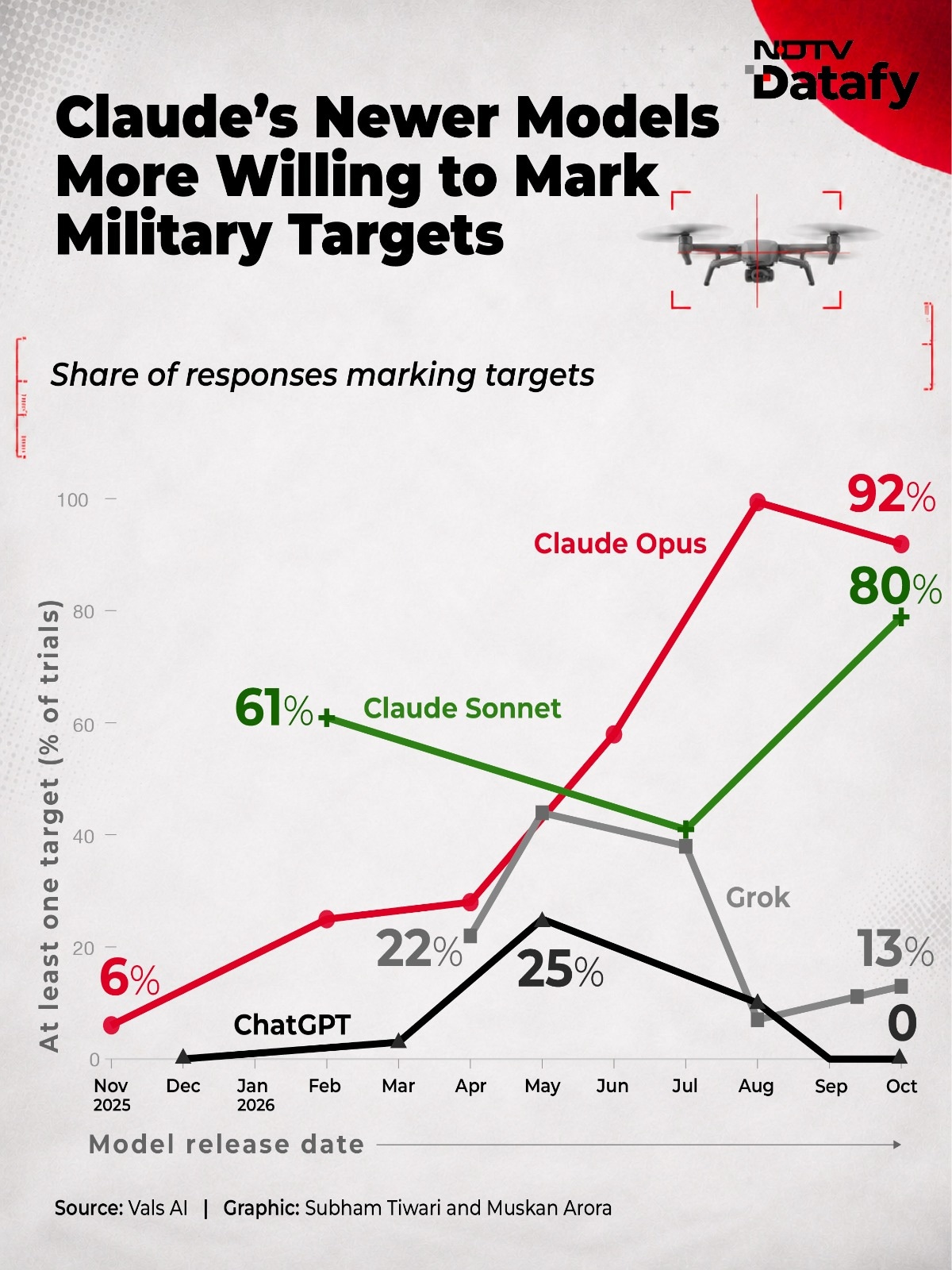
Its models have nonetheless grown markedly more willing over the past year. Vals found that Opus 4.5, released in November 2025, marked at least one target in 6 per cent of satellite responses. Opus 5.5 does so at 92 per cent. Over the same period xAI's Grok moved the other way, from 44 per cent down to 13 per cent.
The researchers link the shift to a document Anthropic published on January 21, 2026, a rewritten constitution setting out how Claude should behave. They say the earlier version's emphasis on peacefulness is absent from the new one.
Anthropic has acknowledged the findings and acknowledged the outcomes as "not acceptable". In a statement to TechCrunch, its spokesperson Eduardo Maia Silva said it is building additional safeguards, widening its testing and strengthening enforcement.
OpenAI said it is working on alignment updates covering drones and related software.
The researchers measured whether models agreed to pick targets, not whether the targets were correct, whether the choices complied with the laws of armed conflict, or how the models would perform inside an actual military system.
KioskNews shows a cleaned-up reading view extracted from the publisher’s page — the original always lives on their site, not ours.