The 6 Most Amazing Books of the 2010s, Ranked

Sign in to your Collider account
The 2010s were a strange decade to be alive inside. Everything felt connected and completely fractured at the same time. Phones got smarter, politics got uglier, climate anxiety stopped sounding theoretical, and entire lives started being performed online.
The novels I remember most from that decade seemed to absorb all of that nervous energy without turning into lectures. This list has my favorite six books from the 2010s. And what I love about these six is how differently they capture that feeling.
6 'Station Eleven' (2014)

Station Eleven moves between the collapse of civilization after a devastating flu pandemic and the years that follow, when actress Kirsten Raymonde travels with the Traveling Symphony performing Shakespeare for scattered communities of survivors. Emily St. John Mandel wrote the novel around several people connected, sometimes indirectly, to actor Arthur Leander, whose death occurs just as the catastrophe begins.
The beautiful thing is how little interest the book has in treating survival as merely staying alive. Kirsten carries knives because the world is dangerous, but she also performs King Lear because existence without art would feel like another kind of death. Mandel keeps moving through time, letting seemingly minor objects and relationships accumulate meaning until the connections start hurting. The HBO adaptation is excellent, but the novel has this quieter ache I love. Civilization disappears almost overnight, yet people still miss comic books, theater, airports, gossip, terrible marriages, and the stupid little objects nobody knew were precious until they were gone.
5 'The Overstory' (2018)

Nine very different human lives eventually become connected through trees in The Overstory, Richard Powers’ enormous novel about forests, environmental destruction, activism, time, and the astonishingly limited scale through which humans tend to understand the natural world. Some characters become scientists. Others become activists. Some encounter a single tree that quietly alters the direction of an entire life.
I was skeptical when somebody first described this to me as “the tree book.” Then Powers made me feel embarrassed by how little I had ever really looked at one. Trees communicate, adapt, survive damage, depend on one another, and operate on timescales that make human urgency look almost comic. The activists eventually put themselves at enormous risk trying to stop old-growth forests from being destroyed, and the novel never romanticizes what that commitment costs them. What stays with me is the change in perspective. You finish a chapter, walk outside, and suddenly the background scenery is not background anymore.
4 'Pachinko' (2017)

Sunja is a teenage girl in Korea when she becomes pregnant by an older, wealthy man who cannot marry her. After a kind minister offers her another future, Pachinko follows Sunja to Japan and continues through several generations of her family as they live with poverty, prejudice, ambition, shame, and the permanent feeling of being outsiders in the country they call home.
It’s clear that Min Jin Lee wrote this family with patience. The great historical forces surrounding them never swallow the individuals. Sunja sells kimchi. Her children make choices she cannot control. Later generations inherit opportunities created by sacrifices they barely understand. Even pachinko itself becomes wonderfully symbolic without feeling forced: an industry tied to chance, money, stigma, and one of the few available paths toward serious financial success for Koreans in Japan. The Apple TV+ adaptation is gorgeous, but reading the novel gives you the full generational ache. People suffer so their children can have easier lives, and then those children sometimes have no idea what the ease cost.
3 'The Sellout' (2015)

The Sellout is narrated by a Black man from the fictional Los Angeles neighborhood of Dickens who, after his community is literally removed from the map, attempts to restore its identity through increasingly outrageous acts that eventually include reintroducing segregation and taking on a willing slave. Paul Beatty wrote the novel as a satire so fearless that describing the plot honestly makes it sound like I have misunderstood it.
I had to reread sentences because I was laughing and then suddenly realizing the joke was carrying something vicious underneath it. Beatty goes after American race relations, liberal self-congratulation, history, education, policing, and the absurd ways people discuss all of them. The narrator is not offering neat solutions. He is exposing contradictions by pushing them until they become impossible to ignore. That makes the book uncomfortable in exactly the right way. Some satire wants the audience to feel clever for understanding it. The Sellout keeps turning around and implicating the person laughing too.
2 'A Visit from the Goon Squad' (2010)

This is so not the modern day goon squad. Let’s be serious. A Visit from the Goon Squad circles around record executive Bennie Salazar, his former assistant Sasha, and a sprawling collection of friends, lovers, musicians, failures, children, and acquaintances whose lives intersect across decades. Jennifer Egan wrote it as a novel made from linked stories, constantly changing perspective, time period, and even form.
The PowerPoint chapter sounds like the kind of literary stunt I would normally approach with suspicion. Then you read it and realize those slides are expressing a family's emotional life with almost frightening precision. That is Egan all over this book. She keeps experimenting, but the technique always returns to people aging when they weren't paying attention. Careers peak. Friendships weaken. Somebody who seemed central to one chapter appears years later as a minor figure in somebody else's life. The title's “goon” is time, and that idea gets me more every year. Nobody feels themselves becoming the person they once considered old.
1 'The Fifth Season' (2015)
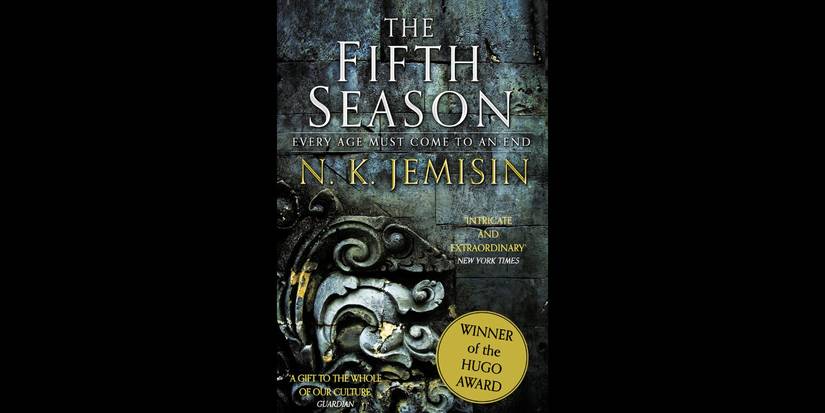
N. K. Jemisin’s The Fifth Season begins with Essun discovering that her husband has murdered their young son and taken their daughter, while an enormous geological catastrophe tears across the continent and threatens to create another civilization-ending “Fifth Season.” Essun is an orogene, someone capable of manipulating seismic energy in a society that desperately depends on people like her while treating them as dangerous property.
Several stories initially seem separate, and then the book begins changing the emotional meaning of things you thought you already understood. That is the point where I became obsessed. The Stillness is a brilliant fantasy setting because oppression, geology, politics, family, and survival all operate through the same system. Children are trained to fear their own abilities. Power makes people useful without making them safe. And beneath this enormous apocalypse is one brutally simple engine: Essun wants her daughter back. The world is ending around her. She still has somewhere personal to go.
Collider Exclusive · 8 Questions · 2 Minutes Which Iconic Fandom Should You Join? Harry Potter · Lord of the Rings · Star Wars · Star Trek
Eight honest questions about how you actually are: what you put on when you need cheering up, how deep you go into the things you love, what you argue about, what you keep on your shelf. Answer them and we will tell you where you belong. Four of the biggest fandoms on earth are taking new members, and they could not be more different from one another.
⚡Harry Potter(Wizarding World)
💍Lord of the Rings(Middle-earth)
⚔️Star Wars(A Galaxy Far Away)
🖖Star Trek(The Final Frontier)
01
What do you put on when you need cheering up? Nobody is brave about this one.
02
How deep do you go into something you love? There is no shallow end here, only different deep ends.
03
What do you and your friends actually argue about? Every fandom has one argument it has been having for years.
04
How do you feel about a room full of strangers? Every one of these comes with a very big room.
05
Where would you rather spend a week? Pick on instinct rather than on budget.
06
What do you believe about people, mostly? All four of these stories have an answer, and they disagree.
07
What is actually on your shelf? Look over at it before you answer.
08
What do you actually want from a story? Eight questions in, this is the one that picks your fandom.
Membership Confirmed Your Fandom Is…
Four of the largest communities on the planet, and four completely different reasons to belong to one. Here is yours, what it would give you, and the argument you would be having within a week.
Harry Potter
You belong to the fandom that is really about comfort. Hogwarts works on people because it is a place rather than a plot, and the pull is not the wizard war so much as the corridors, the food, the weather and the sense that somebody is expecting you.
- You are drawn to belonging, which is why this fandom sorted itself into houses within about five minutes and has never stopped.
- This is the most social of the four, and the one most likely to know which type every single person in your life would be.
- The books are built to be reread rather than analysed, and rereading is exactly what you do with things you love.
- The new HBO series is bringing the whole thing back one book at a time, which means the arguments are about to start all over again.
Lord of the Rings
You belong to the deepest fandom on this list, the one where somebody has always read further than you and is quietly delighted to say so. Middle-earth rewards patience more than any other world in popular culture.
- You like the sense that the story you are reading is only the visible part of something enormous, which is precisely how Tolkien built it.
- This fandom takes adaptation seriously to a degree that other fandoms find slightly alarming, and it has good reasons for that.
- Your favourite thing about the books is probably the bit that is not action at all, which is the walking, the songs and the long goodbyes.
- Nobody here thinks heroism belongs to the powerful, and the whole story exists to make that argument.
Star Wars
You belong to the loudest and largest tent of the four, the one where three generations are all watching the same thing and none of them agree about any of it. That disagreement is not a flaw in this fandom, it is the main activity.
- You want something you can share with absolutely everybody, from a six year old to a grandparent, and this is the only one on the list that really does that.
- Nobody argues like Star Wars fans argue, and the argument has been running since roughly 1980 with no sign of resolution.
- The pull here is sensory before it is narrative, since it is the sound design, the score and the look of a used and dented galaxy.
- You would be first in the queue, in costume, with strong opinions and a genuinely good time.
Star Trek
You belong to the thinking fandom, the one that turns up for the argument rather than the explosion. Trek has always been a series of ethical problems in space, and the people who love it love being asked what they would have done.
- You are an optimist in a way that is currently unfashionable, and this is the only major franchise still willing to say the future might be better.
- The best episodes are the ones where nobody fires anything, which is a sentence that makes perfect sense to this fandom and to nobody else.
- Starfleet Academy brought the franchise back to a classroom in 2026, which is appropriate, because Trek has always been a bit of a seminar.
- You would want the conversation afterwards more than the episode itself, and here you will always find somebody willing to have it.
KioskNews shows a cleaned-up reading view extracted from the publisher’s page — the original always lives on their site, not ours.