7 Grittiest Crime Series of All Time, Ranked

Sign in to your Collider account
Crime shows often make their worlds look more exciting than they actually are. That’s because spectacle is easy to dramatize. Violence, power, and corruption have the strange capacity of feeling extremely addictive and even aspirational on screen. However, the most effective crime shows resist that temptation and commit to showing the damage required to keep these dark worlds functioning.
In those stories, violence is rarely the most disturbing part. What really stays with the audience is how ordinary everything around it can start to feel. This is a list of seven of the grittiest crime shows of all time that refuse to romanticize their worlds while still delivering gripping television.
7 ‘ZeroZeroZero’ (2019–2020)

ZeroZeroZero, based on the book by Roberto Saviano, is an eight-part series that dives deep into the world of international cocaine trade. The story follows one massive shipment from Mexico to its buyers in Italy, with the American Lynwood family acting as the brokers in between. Emma (Andrea Riseborough) and Chris Lynwood (Dane DeHaan) become responsible for keeping the shipment moving after their family business is thrown into crisis. Meanwhile, a power struggle inside the Italian ’Ndrangheta threatens the deal from one side, while Mexican soldier Manuel Contreras (Harold Torres) becomes increasingly involved with the people supplying it from the other. ZeroZeroZero has all these moving parts, each with their own ups and downs. The show is the very definition of gritty because it doesn’t attach glamor to any part of this intense journey.
The people at the top may be moving millions of dollars, but they are still hiding in bunkers, betraying relatives, crossing dangerous borders, and constantly wondering who will turn on them next. Even the Lynwoods, who initially seem removed from the violence, quickly learn that simply transporting the product makes them part of everything that comes with it. The series keeps cutting between countries to show how one deal can connect people who will never meet but whose survival depends on the same shipment arriving. That scale makes the violence feel less random and more like part of a cruel business model. ZeroZeroZero is relentlessly bleak because it makes it clear that eliminating criminals would never change much, because after a point, it’s the system that keeps replacing them and moving forward.
6 ‘The Shield’ (2002–2008)
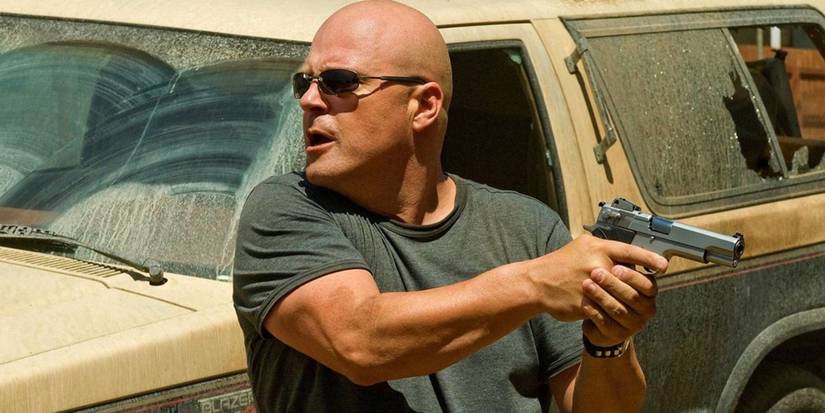
The Shield throws viewers into one of television’s dirtiest police units, and believe it or not, that is part of its charm. The series follows Vic Mackey (Michael Chiklis), the leader of an experimental LAPD Strike Team operating in the fictional Farmington district of Los Angeles. Vic and his men are good at their jobs, but their methods include everything from stealing money to planting evidence, intimidating suspects, and breaking almost every rule they are supposed to enforce. The show makes that very clear in the first episode when Vic murders fellow detective Terry Crowley (Reed Diamond) after discovering that he has been planted inside the team to investigate him.
That decision hangs over everything that follows, but The Shield only gets more intense with time because Vic’s corruption never exists in isolation. Eventually, the Strike Team starts turning on itself, and their increasingly elaborate schemes start to enter extremely dangerous territory. The show’s rough handheld camerawork adds to that feeling and makes every raid and interrogation look immediate. The show aims to put its audience in a constant state of moral discomfort, but that’s the entire point.
5 ‘Underbelly’ (2008–2013)

The great thing about Underbelly is that it is never very far removed from the real crimes it dramatizes. The Australian anthology series changes focus with each season, but the first installment is built around Melbourne’s gangland war between 1995 and 2004. It follows figures including Carl Williams (Gyton Grantley), Jason Moran (Les Hill), and Alphonse Gangitano (Vince Colosimo) as alliances collapse and a struggle for control of the city’s criminal world becomes increasingly violent. On the other side, the audience follows detectives, including Steve Owen (Rodger Corser), who are trying to make sense of a conflict with no end in sight. The show has an extremely different texture from traditional gangster dramas because the criminals are not presented as untouchable masterminds.
They are volatile people making emotional decisions, holding grudges, turning on friends, and often creating the very situations that eventually destroy them. The first season became controversial enough that its broadcast was initially restricted in Victoria over concerns that it could affect ongoing criminal proceedings, which only goes to show how close the series was to events still fresh in the public memory. The anthology format lets Underbelly widen that perspective across different periods of Australian crime. This structure contributes to why the show’s violence actually feels ugly rather than exciting, a feat that most other crime dramas don’t even try to achieve.
Collider Exclusive · Villain Personality Quiz Which Criminal Mastermind Would Be Your Nemesis? Lecter · Joker · Moriarty · Chigurh
Four of the finest criminal minds ever put on screen. One of them would look at you and see something worth their time. Eight questions decide which one comes for you, why they picked you, and what they would want when they arrived.
🍷Lecter
🃏Joker
♟️Moriarty
🪙Chigurh
01
What would a criminal mastermind notice about you first? Great villains choose their opponents carefully. Something about you got their attention.
02
How do they make first contact? The introduction tells you everything about what is coming next.
03
What do you actually believe about right and wrong? Every nemesis is really an argument about the thing you believe most.
04
What finally gets under your skin? Everybody has a pressure point. Finding yours is the whole plan.
05
They have made their move. How do you fight back? This is the part of the film where the audience finds out who you are.
06
What would they use against you? A good villain never brings a weapon you have not already handed them.
07
What do they actually want from you? The money is never the point. Something else always is.
08
How does it end between the two of you? Eight questions in, this is the one that decides who comes for you.
The Case File Is Complete Your Nemesis Is…
Four criminal masterminds. One of them was always going to be yours. Here is who comes for you, why they picked you out of everyone available, and what they want from the encounter.
Hannibal Lecter
Your nemesis does not want to beat you. He wants to know you completely, and he is patient enough to wait for it. The frightening part is how good the conversation is.
- Lecter is the most dangerous kind of opponent: the one who finds you interesting. He never raises his voice, because he has never needed to.
- You keep a great deal to yourself and you are careful about what you show. That reserve is exactly the door he would knock on.
- The films understood something other thrillers missed. The horror is not the violence. It is being perfectly understood by the wrong person.
- He would be unfailingly polite about all of it. That is the worst part.
The Joker
Your nemesis is not after money, territory or revenge. He is after a demonstration, and you are the person he has chosen to prove his point on.
- The Joker only picks opponents who believe in something. Your decency is not a defence against him. It is the entire reason he showed up.
- He has no plan you can predict and nothing you can take away, which removes every tool you would normally reach for.
- His whole argument is that you are one bad day away from being him, and you would spend the rest of your life proving him wrong.
- He would call it a magic trick. You would call it the worst night of your life.
Moriarty
Your nemesis respects you, which sounds flattering until you work out what it means. He chose you because nobody else was worth his time.
- Moriarty is the original criminal mastermind, the template every later one borrows from: a mind the equal of the hero's, pointed the wrong way.
- You enjoy being the cleverest person in the room. He is counting on exactly that, and he has already built the room.
- This is the rare nemesis who would be genuinely disappointed if you lost badly. He needs the game to be worth playing.
- It ends the way these things always end. Two people, one problem, and only one way down.
Anton Chigurh
Your nemesis has no personal interest in you whatsoever, and that is precisely what makes him unsurvivable. You are not a rival. You are a stop on the way.
- Chigurh does not negotiate, gloat or explain. He arrives, he asks one question, and the answer was decided long before you opened your mouth.
- You trust yourself to handle things. He is the one problem in the world that has no interest in how capable you are.
- No Country for Old Men rewrote the screen villain by removing the thing audiences quietly rely on: the sense that talking might work.
- Call it. He will wait.
4 ‘True Detective’ (2014–Present)

True Detective has always understood that a disturbing case becomes even more unsettling when the story shows what happens to the people investigating it. The anthology series changes characters and locations with every season, but its first installment established that identity through Louisiana detectives Rust Cohle (Matthew McConaughey) and Marty Hart (Woody Harrelson). The two begin investigating the ritualistic murder of a young woman, only for the case to keep resurfacing across different periods of their lives as new disappearances and old clues suggest that they never understood the full picture. What makes True Detective Season 1 so harrowing is how closely the investigation becomes tied to the men themselves.
Rust grows increasingly consumed by the case, while Marty’s personal life starts collapsing under problems he is much better at recognizing in other people than in himself. Even the show’s Louisiana setting feels inseparable from the mystery. That atmosphere became one of True Detective’s defining strengths. The series never treats solving a crime as a clean victory because the people involved still have to live with everything they uncovered along the way. The mystery may provide the structure, but the show’s lasting impact comes from watching obsession slowly change the people who refuse to let it go. Later seasons of True Detective keep that same basic idea intact, which is what gives the show its distinct identity.
3 ‘Gomorrah’ (2014–2021)

Gomorrah, based on Roberto Saviano’s work about the Camorra, is set largely in Naples, within the depths of the world of organized crime. The series follows the powerful Savastano clan, led by Pietro Savastano (Fortunato Cerlino). His trusted soldier Ciro Di Marzio (Marco D’Amore) becomes increasingly important as Pietro’s son Genny (Salvatore Esposito) is pushed deeper into the family business. This initial struggle over succession quickly expands into betrayals, shifting alliances, and violent attempts to control territory that never seems secure for very long.
The show’s world feels especially harsh because here, power never guarantees protection. Characters can spend entire seasons building influence only to lose it through one bad decision. Even family relationships are treated as extensions of business, with affection constantly competing against survival. Gomorrah removes any grandeur the audience might expect from a story about larger-than-life kingpins and million-dollar deals, instead showing how organized crime ultimately destroys everyone it touches.
2 ‘Narcos’ (2015–2017)
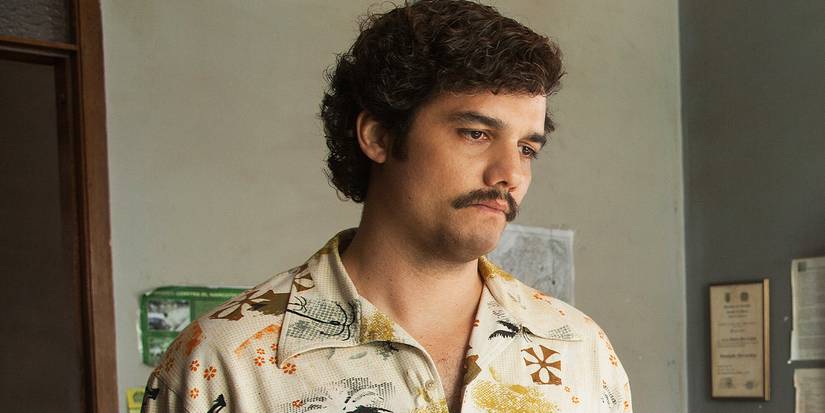
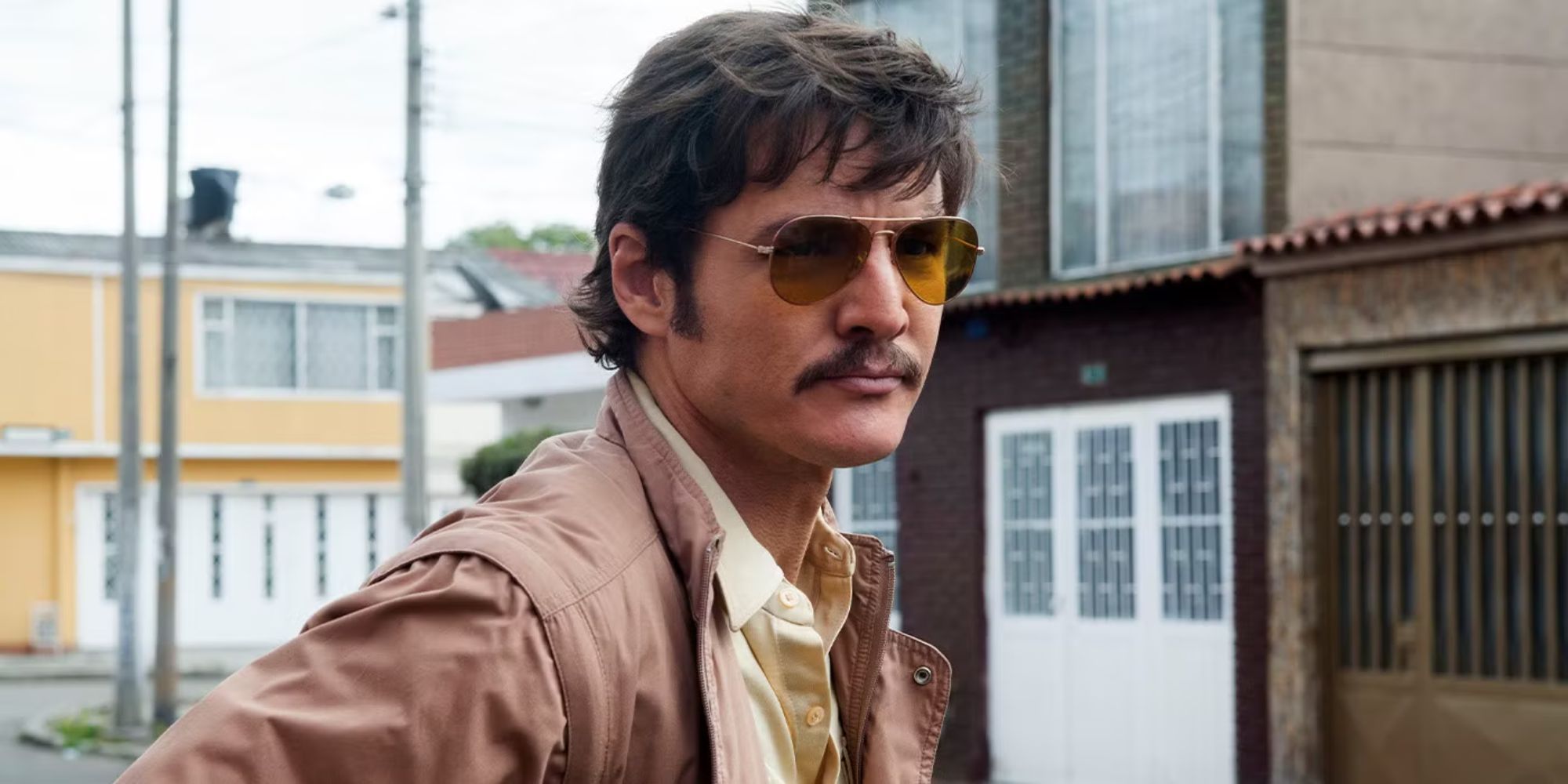
Narcos is one of Netflix’s most influential crime dramas, and for all the right reasons. The series begins with the rise of drug kingpin Pablo Escobar (Wagner Moura), but it quickly becomes clear that his story is only one part of something much bigger. The story is set largely in Colombia during the height of the Medellín Cartel and follows Escobar as he builds an enormous cocaine empire while DEA agents Steve Murphy (Boyd Holbrook) and Javier Peña (Pedro Pascal) work alongside Colombian authorities to bring him down. As Escobar’s influence grows, the conflict spreads far beyond the drug trade itself. The story gradually expands to show how politicians, police officers, rival cartels, paramilitary groups, and ordinary civilians enter a fight where almost everyone has something to lose.
Narcos never loses sight of this wider, systemic perspective, which gives its story so much weight. Escobar is powerful enough to influence elections, order assassinations, and force an entire government to respond to him, but the series never makes that power look stable. Narcos Season 3 shifts focus to the Cali Cartel, which proves how easily one criminal empire can be replaced by another because money, corruption, and the demands sustaining the system are always waiting for someone new to take control.
1 ‘The Wire’ (2002–2008)
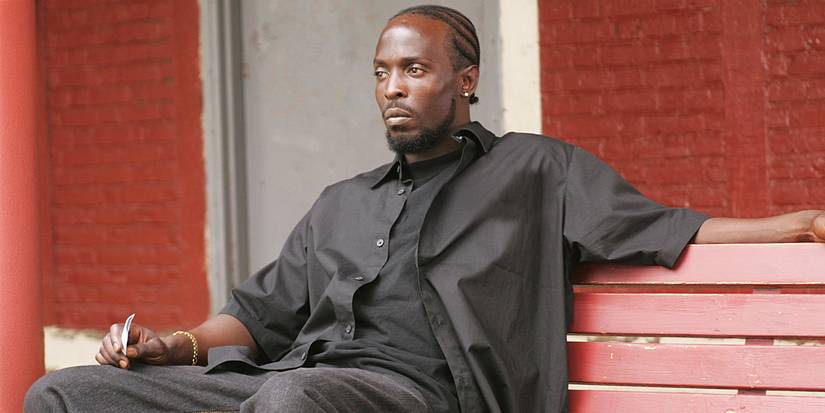
The Wire begins with what looks like a straightforward police investigation. The show is anything but that, though. Season 1 follows Baltimore detective Jimmy McNulty (Dominic West), who is frustrated after seeing members of the Barksdale organization repeatedly escape serious charges. This eventually leads to the creation of a special detail tasked with building a case against drug lords Avon Barksdale (Wood Harris) and Stringer Bell (Idris Elba). However, the show doesn’t do this through dramatic raids or intense shootouts. Instead, it shows how the detectives spend weeks following up on phone calls, monitoring street corners, tracing money, and slowly figuring out how the crime they are trying to stop actually works. The show never pretends the drug trade exists in a vacuum.
Every season pulls the camera further back and sheds light on another broken system, from Baltimore’s docks and city politics to its public schools and even the local newspaper. The idea is to show how crime is nothing but a product of institutions that keep failing the same communities in different ways. This approach also makes Baltimore feel less like a setting and more like the actual subject of the series. Even characters who genuinely want to change something eventually discover how difficult it is to move inside institutions designed to protect themselves first. The Wire never needs to exaggerate its world to make it feel brutal, because it reflects a reality that is already harsh enough on its own.
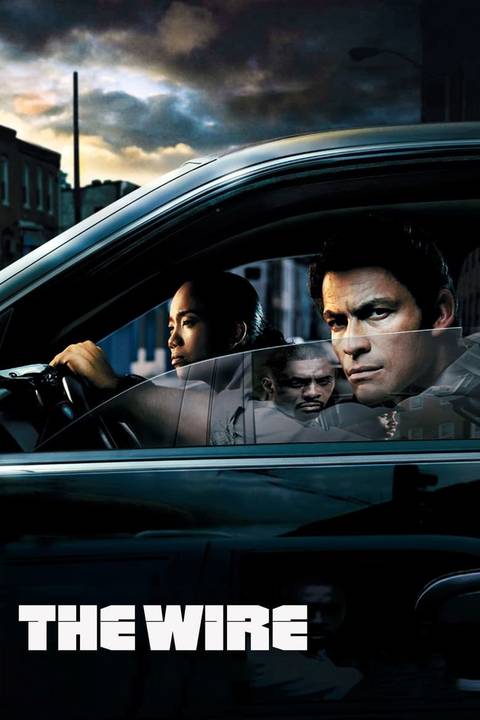
The Wire
- Release Date
- 2002 - 2008-00-00
- Network
- HBO
- Showrunner
- David Simon
- Directors
- Ernest R. Dickerson, Ed Bianchi, Steve Shill, Clark Johnson, Daniel Attias, Agnieszka Holland, Tim Van Patten, Alex Zakrzewski, Anthony Hemingway, Brad Anderson, Clement Virgo, Elodie Keene, Peter Medak, Rob Bailey, Seith Mann, Christine Moore, David Platt, Dominic West, Gloria Muzio, Jim McKay, Leslie Libman, Milcho Manchevski, Robert F. Colesberry, Thomas J. Wright
KioskNews shows a cleaned-up reading view extracted from the publisher’s page — the original always lives on their site, not ours.