Don't fear the Port Klang LCL fee hike just yet
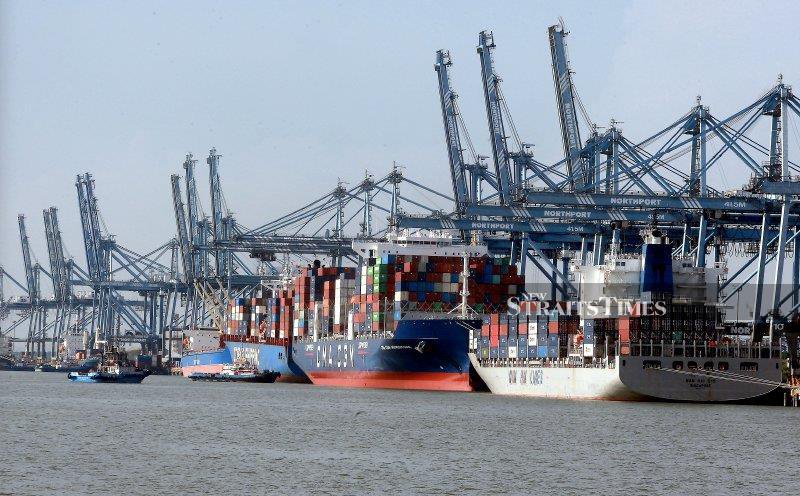
KUALA LUMPUR: Businesses may not need to fear the proposed revision of Port Klang's less-than-container-load (LCL) charges just yet, as the impact is expected to vary between import and export shipments, according to industry players.
While manufacturers and small and medium enterprises (SMEs) have raised concerns over higher logistics costs, freight-forwarding industry players said the proposed revision follows a roughly decade-long gap in the review of regulated LCL charges.
Federation of Malaysian Freight Forwarders (FMFF) president Datuk Dr Tony Chia said the review was timely, noting that the rates had remained unchanged for about 10 years.
"The Port Klang Authority has engaged us and analysed the charges after 10 years. They are trying to mitigate the increases," he told Business Times.
According to Chia, the proposed revision covers charges imposed on LCL cargo at container freight stations (CFS) and warehouses, including facilities within port terminals.
Chia stressed that the proposal was not limited to e-commerce shipments but covered loose cargo or consignments handled by CFS operators and consolidators for both imports and exports.
He said the charges were regulated by the Port Klang Authority and warehouse operators were required to comply with the prescribed rates.
"Costs have gone up, including fuel, equipment and maintenance. The authority has the power to review these regulated charges," he said.
However, Chia acknowledged that any increase in LCL-related charges would eventually be reflected in costs paid by importers and exporters.
"Of course, if the charges are implemented, they will be built into the costs for importers and exporters. Businesses have to include these costs in what they charge," he said.
PKA SEEKS TO SUSTAIN PORT OPERATIONS
According to the Port Klang Authority's public consultation, the proposed revision is intended to ensure LCL warehousing and freight-forwarding charges remain reasonable and in line with current market rates while taking into account higher operating costs.
The authority also said the review was aimed at preventing service providers from shutting operations within the port or moving them outside the port, which could disrupt the supply chain and create additional costs for importers and exporters.
"The consultation covers importers, exporters, freight and shipping agents, non-vessel operating common carriers (NVOCCs), warehouse operators and other Port Klang users involved in LCL cargo, and is open until October 9," it said.
Chia said Malaysia's port charges remained among the cheapest in Asean, which he said was one reason the country's ports remained competitive and trade continued to be vibrant.
Separately, Chia said customs brokers and agents could also reassess their own service charges based on the services provided, noting that standardised customs broking rates had been in place for more than two decades amid thin margins and keen competition in the forwarding business.
IMPORT AND EXPORT LCL FACE DIFFERENT DYNAMICS
Meanwhile, Infinity Logistics & Transport chairman and chief executive officer Datuk Seri Chan Kong Yew said the proposed increase would have different implications for import and export LCL cargo because of the way the two segments operate.
For import LCL, Chan said consolidators would ultimately have to pass on the full increase to importers, as operators were already dealing with higher operating costs and existing commercial arrangements with reciprocal overseas agents.
"The current model adopted by import LCL consolidators could become unsustainable if the higher charges were imposed," he said.
For export LCL, however, Chan said the commercial arrangement was different, with the charges handled through overseas agents rather than being passed directly to Malaysian exporters.
The distinction means the proposed rates, although applicable to both import and export LCL cargo, may not translate into an identical cost impact across the two segments.
SMEs FACE BIGGER COST SQUEEZE
The proposed increases include a 50 per cent rise in the minimum warehouse-handling charge, from RM20 to RM30.
Based on an illustrative 20 cubic metre or 20 metric tonne import shipment cited in the proposal, the FMM president Jacob Lee Chor Kok said warehousing charges would rise 31.78 per cent from RM1,010 to RM1,331, while freight-forwarding charges would increase 22.2 per cent from RM2,905 to RM3,550.
"For exports, the proposed increases are 31.89 per cent for warehousing charges and 18.88 per cent for freight-forwarding charges," said Lee.
According to him, the cumulative increase could put pressure on SMEs and manufacturers that rely on smaller and more frequent LCL shipments for raw materials, components, spare parts and lower-volume export consignments.
Lee said smaller manufacturers had fewer opportunities to spread logistics costs across larger shipment volumes, while LCL was also important for urgent inputs and replacement parts needed to avoid production disruptions.
"Manufacturers were already facing higher labour, energy, raw material, regulatory compliance and logistics costs, limiting their ability to absorb another round of port-related increases," he said.
Lee said this could compress margins and affect investment, production decisions and the commercial viability of accepting smaller orders.
He also warned that higher logistics costs could affect the landed cost and pricing competitiveness of Malaysian products, particularly for exporters handling smaller or lower-volume consignments.
"FMM is of the preliminary view that the proposed increases should not be approved in their present form.
"The existing LCL terminal-handling charge was already subject to a phased increase under the PKA General Manager's Circular No. 7/2025, with the current RM54 per cubic metre rate scheduled to rise to RM55 from January 1, 2027," he said.
Lee added that a further increase to RM60 should only be considered after the existing phased revision had been fully implemented and at least 12 months of impact data was available.
KioskNews shows a cleaned-up reading view extracted from the publisher’s page — the original always lives on their site, not ours.