6 Perfect Thrillers That Rival 'Gone Girl'

Sign in to your Collider account
Gone Girl was annoying. It was genius but it made me fidget. It spoiled a certain kind of thriller for everyone who fell hard for it. After Amy’s (Rosamund Pike) diary, Nick’s (Ben Affleck) television smile, the Cool Girl monologue, and that marriage turning into something closer to mutually assured destruction, ordinary twists started feeling cheap. You wanted a movie that could lie to you intelligently. Something where the characters were complicated enough to remain interesting after the mystery had been cracked, and where a second viewing made the first one look even smarter.
That standard eliminates a lot of perfectly good thrillers. The films that come closest have more going on than a rug-pull waiting near the finish line. They make you suspicious of rooms, relationships, motives, even your own sympathy. And crucially, they are still incredibly entertaining while doing it. These are the ones to hand somebody when they say, “I want another Gone Girl,” and you actually care whether they have a great night.
6 'The Invisible Man' (2020)
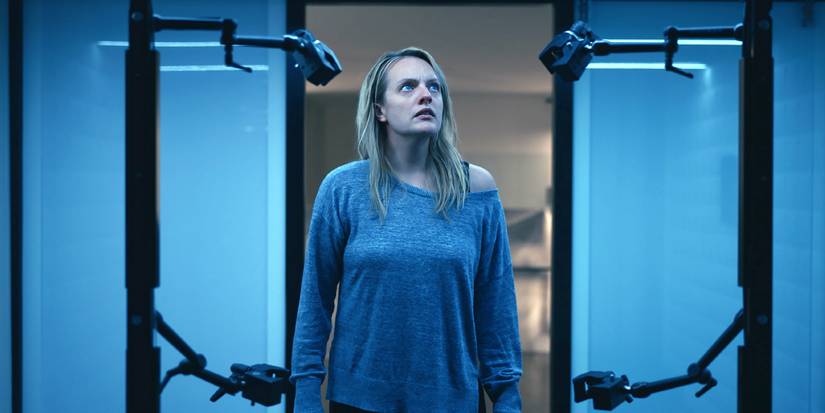
Cecilia Kass (Elisabeth Moss) escapes a wealthy, controlling boyfriend in the middle of the night, certain that Adrian Griffin (Oliver Jackson-Cohen) will come after her. Then she learns that he has died. Everyone around her sees an opportunity to finally move on. Cecilia starts noticing things that suggest he may never have left at all. The Invisible Man takes that clean sci-fi premise and immediately makes it personal because the central problem is not simply proving that an invisible person exists. Cecilia first has to convince people who already think trauma has made her unreliable.
That is where the movie gets vicious. Empty corners become suspicious. A pan left on a stove can feel like evidence. The camera will sometimes drift toward seemingly vacant space and just sit there, forcing you to stare at absolutely nothing until nothing becomes terrifying. Then the restaurant scene proves how brutally the premise can be weaponized in public. It is clever horror, but the real hook is watching Cecilia fight to reclaim authority over her own reality. If you love thrillers where being believed is almost as important as surviving, start here.
5 'Shutter Island' (2010)
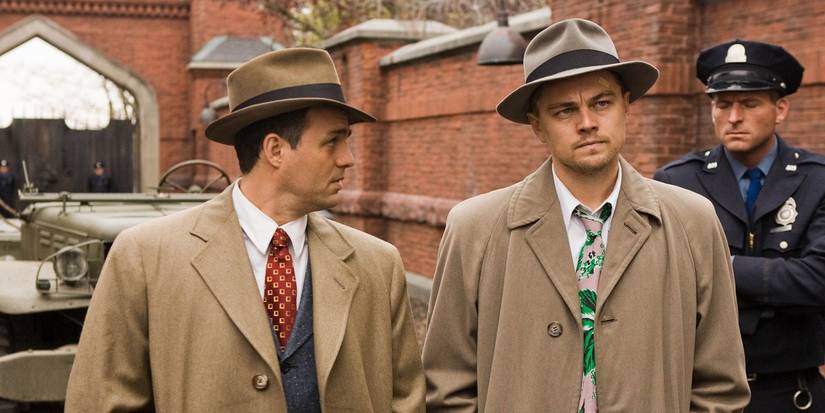
Shutter Island begins like a hard-boiled investigation and gradually makes every hallway, interview, nightmare, and half-finished answer feel questionable. U.S. Marshal Teddy Daniels (Leonardo DiCaprio) arrives at Ashecliffe Hospital for the criminally insane after a patient somehow disappears from a locked institution on a remote island. A storm cuts off the ferry, staff members become increasingly evasive, and Teddy already has his own reasons for wanting access to the facility.
The island itself does enormous work. The wards are oppressive, the cliffs feel hostile, and the lighthouse sits in the distance with exactly the sort of presence that makes you think, yes, obviously something terrible is happening in there. Teddy’s memories of Dachau and his wife keep bleeding into the investigation until his emotional history becomes impossible to separate from the case. Even conversations that seem straightforward can feel different once you know where the story is heading. Its rewatch value is the big reason it belongs here. The first time, you chase answers with Teddy. The second time, you start watching everybody else.
4 'The Girl with the Dragon Tattoo' (2011)

Disgraced journalist Mikael Blomkvist (Daniel Craig) is hired by wealthy industrialist Henrik Vanger (Christopher Plummer) to investigate a disappearance that has haunted the family for decades. Harriet Vanger vanished from an island in 1966, and Henrik believes someone inside his own deeply unpleasant family killed her. Running alongside that mystery is Lisbeth Salander (Rooney Mara), a brilliant hacker whose own life contains violence and exploitation that the film never treats casually. The Girl with the Dragon Tattoo eventually brings those two investigations together without sanding down how different Mikael and Lisbeth are.
The pleasure comes from the actual work. Old photographs are enlarged. Family histories are compared. Biblical references turn into patterns. A face barely visible in one image suddenly becomes useful decades later. The Vanger estate is full of people who would rather the past remain politely buried, which makes every interview feel like somebody editing themselves in real time. And Lisbeth is simply fascinating to watch think. The movie is cold, patient, nasty when it needs to be, and incredibly satisfying if your favorite thrillers involve smart people noticing the detail everyone else dismissed.
Collider Exclusive · 8 Questions · 2 Minutes Which Coen Brothers Movie Would You Thrive In? Lebowski · O Brother · Fargo · No Country
Nobody writes people like the Coen brothers. The decent ones. The talkers. The ones who stopped trying years ago. And the ones who can already see how bad this is going to get. Four films, four completely different ways of handling trouble. Eight questions decide which one you would actually walk out of.
🎳Lebowski(1998)
🎸O Brother(2000)
❄️Fargo(1996)
🪙No Country(2007)
01
A bag of money lands in your lap. What happens next? Every Coen film starts roughly here. It never goes smoothly.
02
Somebody is being completely unreasonable with you. How does it go? Coen dialogue is mostly people failing to understand each other.
03
What is your actual relationship with work? Everyone in these films is either working far too hard or not at all.
04
Long drive, bad weather, nobody else on the road. How are you? There is always a drive in these films. It is never a good drive.
05
You are offered a shortcut that is not quite legal. This is the moment where the Coens find out who you really are.
06
The plan has fallen apart completely. What is your move? In a Coen film the plan always falls apart. That is the genre.
07
Which of these sounds most like something you would say? Nobody writes a line quite like the Coens. Which one is yours?
08
How does your film end? Eight questions in, this is the one that decides your movie.
The Verdict Is In Your Coen Film Is…
Four films, four completely different ways of handling money, trouble and other people. This is the one you would survive, why it suits you, and what it would cost you to be there.
The Big Lebowski
You have quietly arranged your life so that very little can get to you, and a surprising number of people find that infuriating. You would be completely at home here.
- The Dude is the only person in the film with no ambition, and the only one who comes out the other side undamaged. That is not an accident.
- You do not chase things. You let situations arrive and you deal with them at your own pace, which is a genuine skill however lazy it looks.
- This is a full crime plot happening around a man who mostly wants his rug back, and that is exactly the energy you would bring to it.
- Everything goes wrong. You abide. The film ends.
O Brother
You talk your way through life and it works far more often than it should. Give you a bad situation and an audience and you will find a way out of both at once.
- Everett never has a plan that survives contact with reality. He has something better, which is the ability to keep talking until a new one turns up.
- You are the optimist in the group, the one who makes a ridiculous idea sound reasonable at two in the morning.
- This is the warmest film the Coens have made. It is a chase, a comedy and a musical at once, and nobody in it is quite beyond saving.
- You would end up famous entirely by accident, and act like you planned it all along.
Fargo
You would survive Fargo because you are the only kind of person who does: patient, decent, and completely unimpressed by anybody trying to be clever.
- Marge Gunderson solves the whole case by being polite, thorough and unhurried while everybody around her panics. That is the entire argument of the film.
- You do the boring parts of the job, which is precisely why you would notice the thing everyone else walked straight past.
- Fargo is about ordinary greed causing enormous damage, and about one person who simply refuses to be corrupted by any of it.
- You would go home at the end of it, have dinner, and sleep perfectly well.
No Country
You do not expect the world to be fair and you stopped being surprised about it a long time ago. That clear-eyed quality is exactly what this film asks for.
- No Country is the Coens at their coldest: a film where being smart, fast and careful might still not be anywhere near enough.
- You plan for the worst, you keep your own counsel, and some part of you is already working out the exit.
- Llewelyn Moss is competent, prepared and resourceful, and the film is honest about whether any of that is ever sufficient.
- You would see it coming. Whether that helps is the one question the film refuses to answer.
3 'The Handmaiden' (2016)
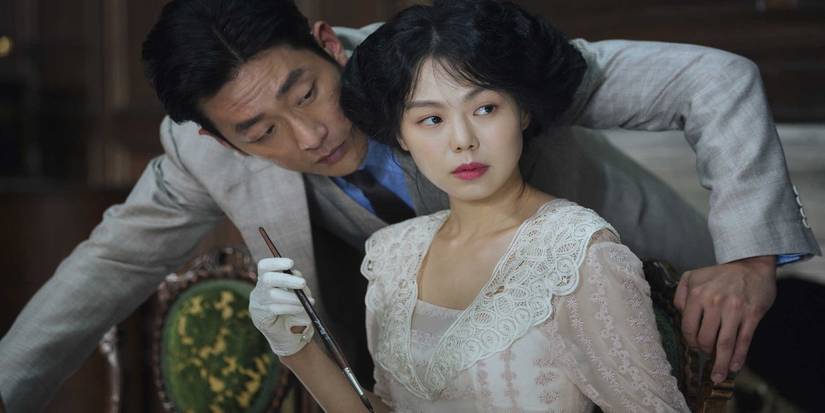
In The Handmaiden, a pickpocket named Sook-hee (Kim Tae-ri) is recruited into an elaborate con against Lady Hideko (Kim Min-hee), a wealthy Japanese heiress living on an isolated Korean estate with her controlling uncle, Uncle Kouzuki (Cho Jin-woong). Sook-hee becomes Hideko’s maid while a con man posing as Count Fujiwara (Ha Jung-woo) plans to seduce the heiress, marry her, steal her fortune, and have her committed. That is already enough plot for a terrific thriller. The Handmaiden then starts revealing how incomplete our understanding of that arrangement actually is.
The movie is an absolute joy when perspective begins changing. Scenes you thought you understood return with different information, and tiny gestures suddenly mean something else because another character was running a plan you could not see. The estate itself is gorgeous and deeply unsettling, split between Japanese and Western architectural influences while hiding uglier rituals inside its elegance. Desire becomes part of the power struggle rather than decoration around it. And the best thing to know before watching is almost nothing beyond the premise. Let the movie get ahead of you. It is much more fun that way.
2 'Nightcrawler' (2014)

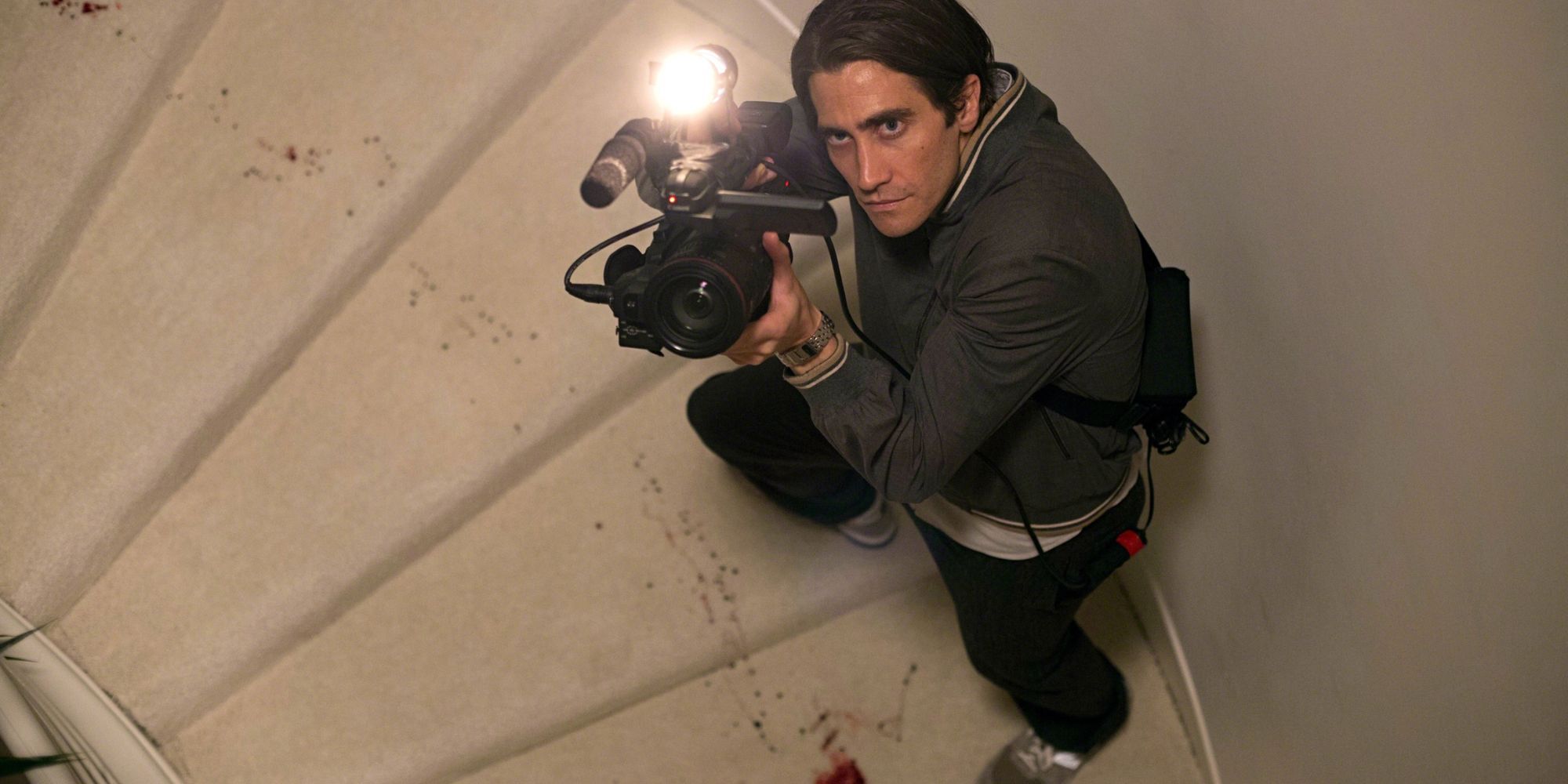
Lou Bloom (Jake Gyllenhaal) is wandering Los Angeles at night looking for anything he can turn into money when he discovers freelance cameramen selling footage of accidents and violent crime to local television stations. He buys a camera, gets a police scanner, and very quickly realizes that the more shocking his footage becomes, the more valuable he becomes to the people buying it. Nightcrawler follows that realization to places any normal person would recognize as moral boundaries. Lou mostly recognizes them as opportunities.
What makes him so unnerving is how reasonable he thinks he sounds. He speaks in the language of self-improvement, negotiation, career development, and professional growth while doing things that become increasingly monstrous. Nina Romina (Rene Russo), the news director buying his footage, keeps rewarding exactly the instincts she should be horrified by because ratings are moving in the right direction. That feedback loop is the whole nightmare. The movie can also be wickedly funny because Lou delivers corporate optimism while behaving like a predator. If you loved how Gone Girl turned media appetite into part of the crime story, Nightcrawler digs its fingers into the same nerve and squeezes harder.
1 'Prisoners' (2013)
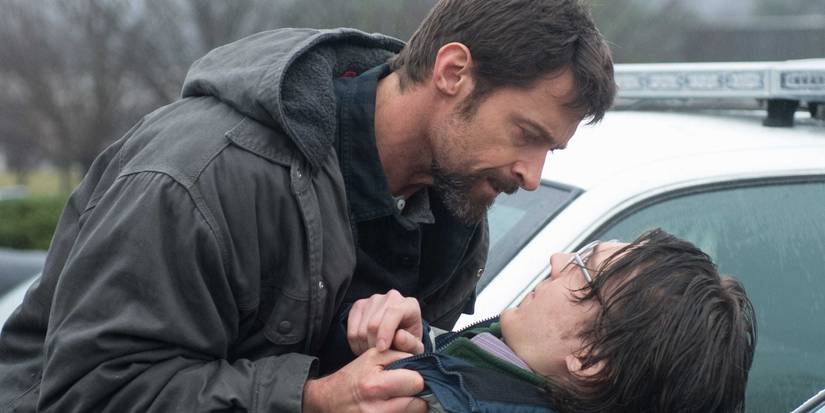
Two little girls disappear on Thanksgiving after playing near a parked RV. Detective Loki (Jake Gyllenhaal) investigates, but the vehicle’s driver, Alex Jones (Paul Dano), cannot be held once the available evidence runs out. Keller Dover (Hugh Jackman), father of one of the missing children, becomes convinced the police are releasing the person who knows where his daughter is. He decides waiting for the legal process is no longer something he can tolerate. Prisoners takes that decision and makes nearly every minute afterward morally uncomfortable.
Keller’s desperation is easy to understand right up until understanding it starts frightening you. Meanwhile, Loki keeps working through old cases, strange suspects, mazes, abandoned buildings, and connections that never arrive quickly enough for anyone with a missing child. The movie refuses to make either man’s approach feel emotionally simple. That is why the tension gets so ugly and so good. Rain seems permanent, Roger Deakins’ images make Pennsylvania look cold enough to hurt, and even a drive across town can become unbearable once time is running out. Do yourself a favor and watch this without trying to beat the mystery. The real reason Prisoners is this good is everything it makes you feel while you are desperate for the answer.
KioskNews shows a cleaned-up reading view extracted from the publisher’s page — the original always lives on their site, not ours.