[Vantage Point] Clark’s billions demand public accounting

Joshua Bingcang’s move from BCDA to PEZA leaves unanswered questions over Clark International Airport’s concession returns and asset valuations, alongside procurement, financing, and tax issues surrounding the New Clark City sports complex. While leadership changes neither prove wrongdoing nor absolve officials, true accountability demands opening the books to show whether taxpayers secured a fair bargain.
Joshua Bingcang’s transfer from the Bases Conversion and Development Authority (BCDA) to the Philippine Economic Zone Authority (PEZA) leaves a massive public accounting unfinished.
While his successor Ariel Nepomuceno now inherits the institutional duty to explain BCDA’s transactions, a simple changing of the guard does not settle the questions raised by state auditors and government agencies on how government funds were handled.
Establishing public accountability begins with examining the roles officials actually held. BCDA’s 2023 annual report identifies Bingcang as New Clark City’s overall project manager during his tenure as senior vice president, placing him in charge of business strategies and construction oversight.
He also chaired the special bids and awards committee for Clark airport operations and maintenance. While holding these positions does not prove personal wrongdoing or confirm his sign-off on every specific transfer or payment, it squarely justifies scrutinizing the recommendations he made while steering these multi-billion-peso ventures.
An airport concession is worth far more than the terminal it operates, just as a sports complex costs more than its concrete and steel. At Clark, a true public accounting must capture the land, commercial contracts, financing obligations, and tax responsibilities underpinning the infrastructure. Official records raise pointed questions about these contributions, making documentary transparency all the more essential.
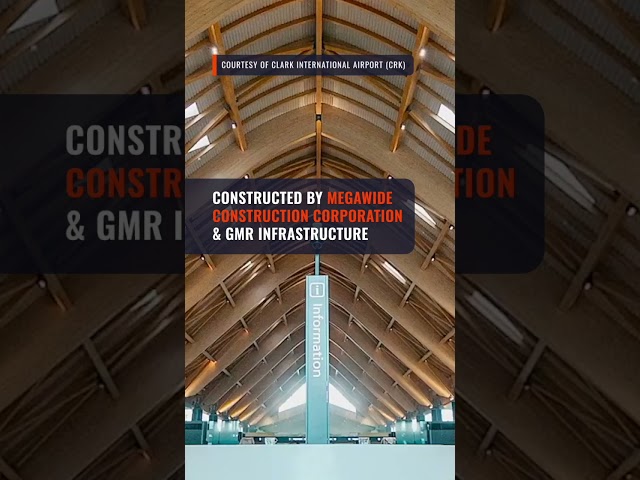
Consider the 25-year concession for Clark International Airport, operated by the Luzon International Premiere Airport Development Corp. (LIPAD). Bringing together Philippine corporate and aviation players—Filinvest Development Corp., JG Summit Holdings Inc., and Philippine Airport Ground Support Solutions Inc.—alongside Singaporean expertise via Changi Airports Philippines, LIPAD manages a vast commercial footprint.
According to the Clark International Airport Corp. (CIAC), the concession covers 759 hectares and includes 110 transferred lease agreements. Although these figures describe operating coverage and transferred contracts rather than an outright sale of state land, existing tenants and leases carry substantial economic value that the government’s returns must accurately reflect.
BCDA maintains that the government receives an 18.25% revenue share plus P500 million annually for 20 years—a P10-billion stream before discounting or examining contractual qualifications. Yet numbers in isolation tell an incomplete story. Without weighing those receipts against the commercial rights transferred, investment obligations, and retained public risks, it is impossible to establish whether taxpayers secured a favorable bargain or an undervalued concession.
Audit issues
Underlying asset valuations complicate the picture further. A CIAC audit-action report describes separate negotiations over assigning assets to BCDA for the LIPAD concession. In June 2025, BCDA reported that 40 buildings valued at P934 million were already recorded in its books—a move CIAC said occurred without its knowledge, prompting it to contest BCDA’s recording of the passenger terminal and crash-fire-and-rescue buildings that CIAC itself financed.
Meanwhile, seven other buildings worth approximately P478 million were excluded from the proposed assignment after CIAC clarified it did not own them under existing leases. By September 2025, BCDA’s recommended P263.73-million assignment figure stood sharply against the P777.12-million net book value under CIAC review.
Different asset coverage and accounting treatments might explain those figures without establishing a financial loss, and asset assignment to BCDA must be distinguished from LIPAD’s operational use, but the public deserves a reconciled ledger.
BCDA and the SEA Games controversy
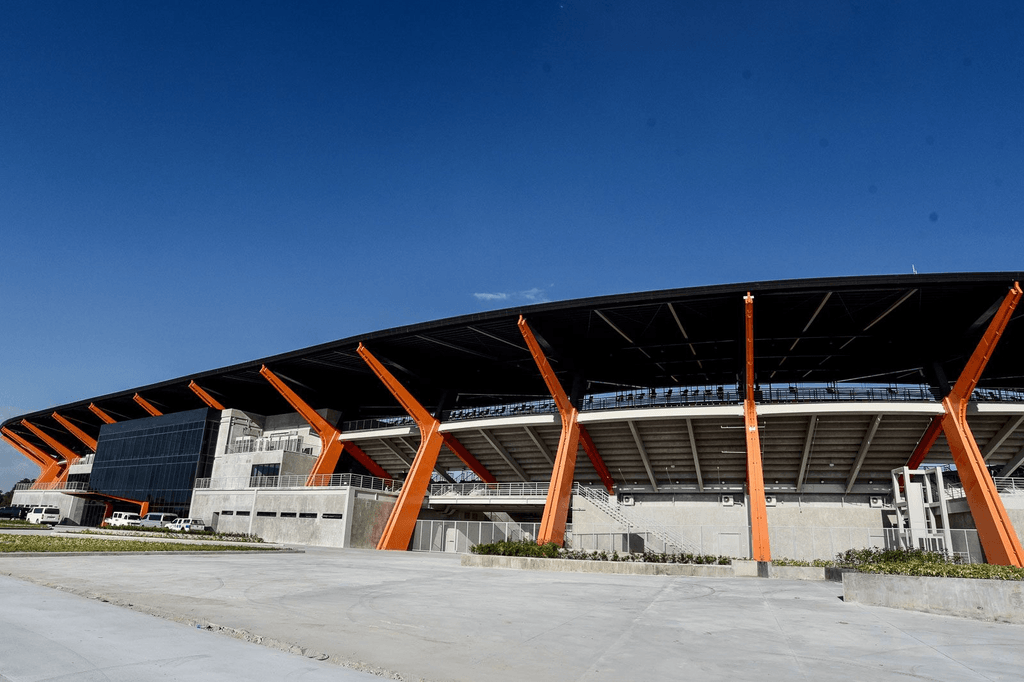
The Southeast Asian Games sports facilities at New Clark City present a distinct set of questions involving a different partner and agreement. While the Philippine Competition Commission confirmed that Malaysian firm MTD Capital Berhad’s unsolicited proposal went through a competitive challenge, and BCDA’s financial statements show that government acquisition of the facilities—with an option to shorten repayment—was contemplated by the agreement, acquisition alone establishes no improper buyback. (Read Rappler’s special report on this controversy by clicking these links below:
- BCDA, Malaysian firm ink questionable P11-billion SEA Games deal
- OGCC flagged non-bidding of BCDA’s New Clark sports facilities
- How BCDA’s multi-billion New Clark deal slipped through
However, the Commission on Audit (COA) questioned the procurement route itself, finding that sports facilities originally conceptualized by BCDA were negotiated into an unsolicited proposal, granting MTD an “undue advantage.”
BCDA disputed this finding, defending the integrity of its Swiss challenge. Resolving these competing positions requires opening up to public view the original proposal, negotiated changes, and challenge documents. (Read more stories on the SEA Games controversy by clicking these links below:
- Bloated SEA Games budget and other exposés
- P1.5 billion worth of SEA Games funds will not undergo public bidding
- Drilon questions P50-million ‘kaldero’ for 2019 SEA Games
The financial breakdown also warrants closer inspection. BCDA’s published figures put total payment at P9.539 billion: P8.510 billion for the sports facilities, P579 million in financing costs, and P450 million in ICT (Information and Communications Technology) variations.
These additions are not all interest or automatic evidence of overpricing. BCDA defended a 7.5% financing rate under an arrangement where savings below that benchmark would be shared 90:10 between the government and MTD. Settlement records should verify actual borrowing costs and confirm whether any credited savings materialized.
Tax compliance adds another unresolved thread. An audit done in 2020 recorded payments of P5.145 billion in December 2019 and P4.394 billion in April 2020, flagging P343 million in taxes withheld but not remitted to the Bureau of Internal Revenue (BIR), alongside P274.613 million in required withholding taxes never deducted from the later payment. Management explained that the venture was not yet fully incorporated or BIR-registered while anticipating PEZA tax incentives, citing missing incorporation approvals and promising a resolution in 2021.
Auditors maintained that the withholding obligation still applied. Instead of relying on unsupported assertions of continuing nonpayment, the relevant focus today should be what registrations, remittances, and corrective actions actually took place afterward.
Legal developments offer no shortcuts to accountability. An earlier complaint involving then-BCDA chief Vince Dizon and others was dismissed for insufficient evidence in December 2021, a ruling the Ombudsman announced it would review in July 2026. (READ: NBI probes 2019 SEA Games: What we know so far)

Neither development establishes liability for Bingcang, who became BCDA president in 2023—well after the original award and payments. Individual responsibility cannot be inferred from a job title alone. It requires tracing the documentary record to identify who proposed each arrangement, evaluated its financial terms, and authorized its implementation.
Ultimately, an institution’s account of benefits must be tested against its contractual commitments and actual receipts, payments, and recoveries. Both the airport and the sports facilities must be assessed through their separate contracts and documented obligations. (READ: Auditors flag P290-M Clark air traffic control tower project delays, cost overruns)
Publishing reconciled asset schedules, procurement justifications, financing calculations, and tax resolutions would allow the public to evaluate these bargains for themselves.
The real test is whether the government can demonstrate that it properly valued its contribution, obtained adequate returns, and enforced the protections written into its agreements. – Rappler.com
KioskNews shows a cleaned-up reading view extracted from the publisher’s page — the original always lives on their site, not ours.