Post-property boom, China still has plenty to build and upgrade

It was no happy accident that last week’s Asia-Pacific Economic Cooperation (Apec) summit took place in Shenzhen.
The futuristic southern metropolis is home to the nation’s technology champions and provides the ideal backdrop for China’s economic transformation and vision. Shenzhen also illustrates the change in the foundational drivers of China’s economy.
It has been five years since one of China’s largest private property developers defaulted on its debt, marking the beginning of a housing market correction amid a broader shift in the national growth model. It was also in 2021 that China introduced its 14th five-year plan, focusing on high-quality development.
This set the stage for rapid progress across industries where Chinese companies today find themselves global leaders: in renewable energy and electric vehicles, advanced manufacturing and robotics, as well as biotechnology and artificial intelligence (AI).
With this economic transformation, fixed-asset investment has slowed down over the past five years, even when excluding the property segment. Fixed-asset investment fell last year for the first time in decades and dropped a further 8.1 per cent year on year for the first 10 months this year.
For January-October, infrastructure investment was down by 5.1 per cent while purchases of equipment and tools rose by 8.9 per cent and investment in intellectual property products jumped by 9.2 per cent.
The buildout of advanced infrastructure over the past two decades is visible in the high-speed rail network, bridges and highways, as well as in renewable energy and telecommunications. With so much already built, what productive fixed-asset investments remain?
Plenty. I see decades of such productivity-enhancing projects ready to deploy. Three key themes come to mind: quality upgrades, including of buildings, transport and the electricity grid; a steady, sustained expansion of data centres and related AI infrastructure; and an expansion of Chinese transport infrastructure to its neighbours, including in Central and Southeast Asia.
While first-time travellers to China marvel at its gleaming airports, LED-clad skyscrapers and cavernous railway stations, decades’ worth of infrastructure that was hastily assembled during China’s rapid economic expansion is in need of refurbishment and upgrades.
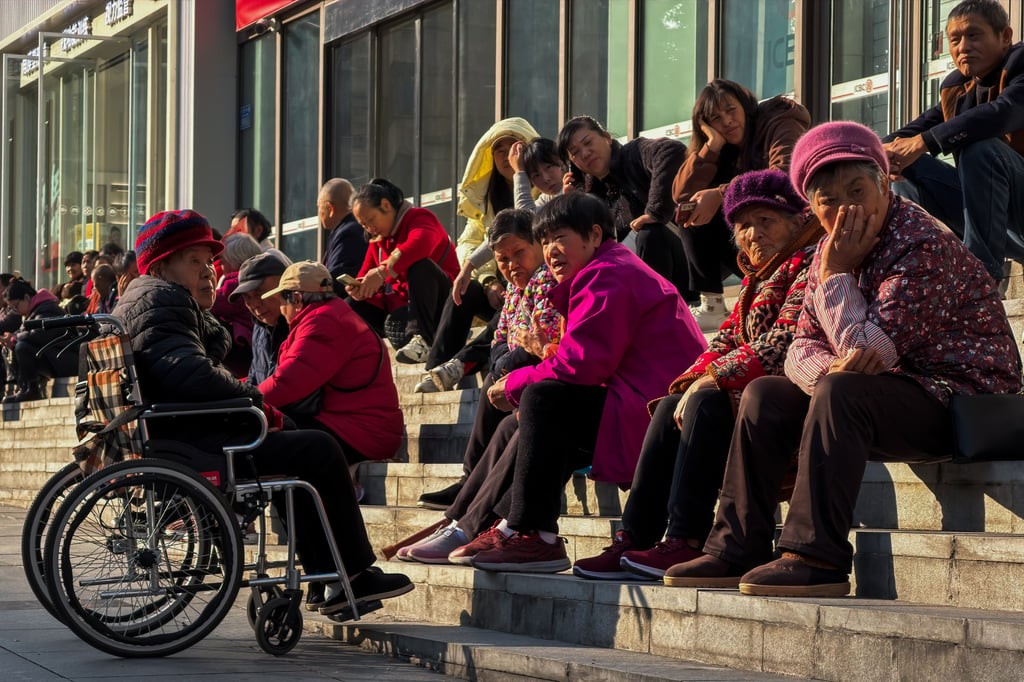
Buildings could be a particular focus since China introduced codes in 2023 to support the creation of barrier-free spaces and accommodate wheelchair users, among others. In a rapidly ageing society, this will be an urgent priority.
The vaunted high-speed rail network has meanwhile integrated older downtown train stations built for a different era. Overcrowded and drab, these facilities are also ready for upgrades and capacity expansion. In the energy grid, renewable generation capacity still needs to be connected and backed up by energy storage.
What about AI? China has more than 400 data centres, but the US has more than 12 times as many. Demand and revenues from AI services in the US are also some way ahead of competitor nations, but analysts have become increasingly worried that the AI infrastructure buildout in the US is making less economic sense.
SCMP Plus is a new premium news platform that gives you an
all-inclusive edge to stay ahead on China news.
To access our exclusive content you’ll need to subscribe.
Already a subscriber?
LOG IN
Additionally, the US midterms reflected growing voter resistance to data centre development, coinciding with a more generalised anxiety about AI. Markets are concerned the AI buildout will slow and the industry will navigate a newly assertive and potentially hostile regulatory environment.
In China, where there is more social acceptance around AI, the government has identified special zones for data centre construction, simplifying the permitting process.
02:57
China trials underwater data centres to solve energy woes
It’s true that Chinese AI models are cheaper to run and may use less electricity than the frontier models coming out of US laboratories – this could translate into less demand for compute and thus fewer data centres and related power infrastructure. Still, the segment is a strategic priority for the government, and global capital looking to diversify away from the crowded US AI trade may see the world’s second largest AI market as an opportunity worth examining.
Finally, there are plenty of places for China to extend its rail network, both for passengers and freight. Chongqing is being positioned as a “Suez Canal” on rails to transport goods to Europe, with Turkey having completed a rail corridor last month that seamlessly connects both continents. Chinese trains already connect to Vietnam and Laos as well as Central Asia.
This infrastructure upgrade and expansion cycle will not drive as much productivity as the previous round, but it will be part of a long-term fixed-asset investment programme. Most importantly, we should remember that such investments can deliver widespread benefits to society, aligning with China’s long-standing development goals.
Although the property construction boom has long subsided, the next fixed-asset investment cycle, built on upgrades, digitisation and connecting people, has begun.
KioskNews shows a cleaned-up reading view extracted from the publisher’s page — the original always lives on their site, not ours.