Hong Kong needs a civil service fit for a changed world

Hong Kong’s civil service has long enjoyed a reputation for efficiency, professionalism and probity. It has also been a pillar of stability, particularly during the transition from British to Chinese rule.
Outside the general and administrative grades, many civil servants spend much of their careers in relatively specialised areas of responsibility. This allows them to develop deep expertise and makes them dependable regulators and administrators. However, it can also make it harder to adapt when new challenges cut across established departmental boundaries.
Recent events have put this model under scrutiny. The fire that engulfed Wang Fuk Court in Tai Po last November, claiming 168 lives and destroying more than a thousand homes, raised grave questions about building safety and regulatory oversight. Subsequent construction scandals involving luxury homes and public housing estates, together with concerns over lift installations at a major public hospital and in numerous other buildings, have further tested public confidence in the government.
Hong Kong was once a British outpost built on trade. Government played a relatively limited role in economic development, while free trade, market forces and the city’s strategic position at the crossroads of East and West helped it prosper.
The city continues to be recognised internationally for its economic freedom. That said, the experience since 1997 has shown that free markets cannot address every economic and social challenge.
Following the handover, the 1997-98 Asian financial crisis and the outbreak of severe acute respiratory syndrome dealt severe blows to the economy. Then-chief executive Tung Chee-hwa sought to revive growth through initiatives including Hong Kong Disneyland and the development of a cruise terminal. A substantial relaxation of travel arrangements for mainland residents subsequently helped tourism and the wider economy recover.
Hong Kong Disneyland’s ‘magical’ rebound #ytshorts
The lesson is not that government should replace market forces, but that it must be capable of responding decisively when circumstances change.
Today, the civil service must contend with changes unseen in a century. China has become the world’s second-largest economy and a major technological power. Hong Kong’s comparatively small economy is increasingly intertwined with a mainland economy undergoing rapid technological transformation.
China’s strategic competition with the United States is likely to shape the global economic and technological landscape for years to come. Beijing has made the development of “new quality productive forces” a key national priority.
For Hong Kong, the implications are substantial. The need to harness technology, develop new industries and improve productivity features prominently in the national development agenda and the city’s own planning priorities. The challenge is to translate these ambitions into effective policies, an enabling regulatory environment and tangible economic gains.
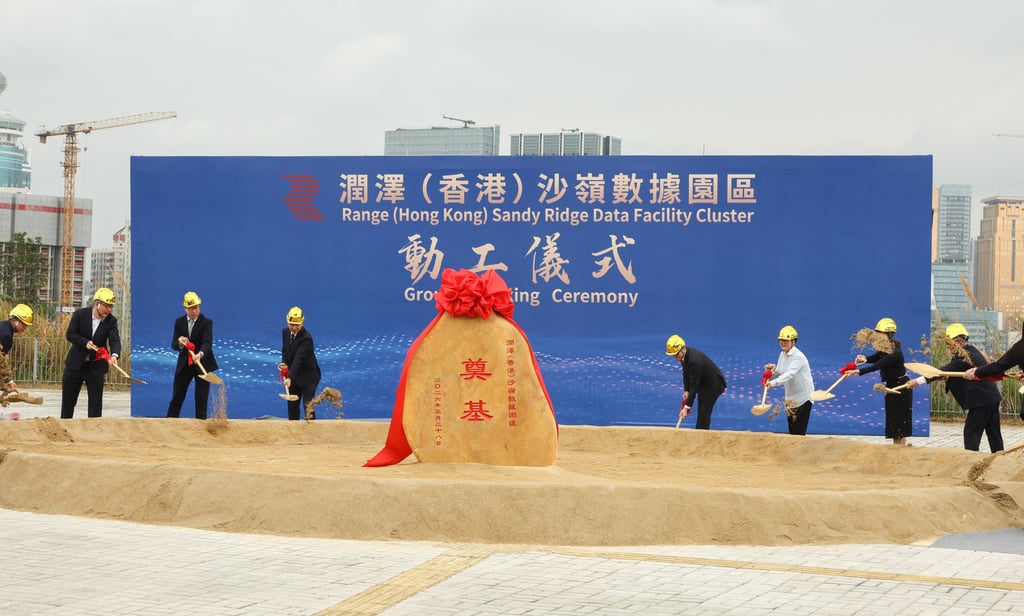
Artificial intelligence (AI) presents perhaps the greatest test. The government has committed substantial resources to AI research and development, including support for universities and the expansion of computing infrastructure. A proposed data centre in the Northern Metropolis is expected to increase Hong Kong’s computing capacity substantially.
Investment in infrastructure is only part of the equation. Hong Kong also needs a coherent strategy for AI adoption and governance across government and the wider economy. This should address issues such as data protection, cybersecurity, accountability, workforce disruption and the responsible use of AI in public services.
The organisation of government itself deserves attention. The Digital Policy Office, established in July 2024 through the merger of the Office of the Government Chief Information Officer and the Efficiency Office, provides an institutional base for advancing digital government. However, structural changes and new titles alone cannot deliver transformation. What matters is whether the government can develop the expertise, leadership and clear lines of responsibility needed to turn digital ambitions into results.
Meeting these challenges will require the civil service to look beyond established routines. Recruiting specialist talent from outside government, including people with experience in technology and emerging industries, can help broaden its capabilities.
There are encouraging signs of a more outward-looking and entrepreneurial approach. For example, officials have travelled to Switzerland to explore opportunities to attract gold refineries to Hong Kong. Such initiatives suggest a willingness to engage directly with businesses and pursue opportunities beyond the traditional confines of departmental administration.
05:03
Paul Chan woos Middle East companies to visit Hong Kong in 2023 to explore listing opportunities
Geopolitical change calls for a similar adjustment. As economic influence becomes more widely distributed and countries in the Global South play a growing role in international affairs, Hong Kong needs to diversify its external connections. Officials have been working to build links with countries in the Middle East and Central Asia, in line with the broader direction of the mainland’s international engagement.
The government’s leadership has also recognised the need to make the civil service more responsive to public expectations. Chief Executive John Lee Ka-chiu has introduced measures to strengthen the accountability of senior officials, while a performance appraisal enhancement scheme launched earlier this month is intended to link annual salary increments more closely to performance and address underperformance among staff.
Ultimately, Hong Kong’s civil service does not need to discard the qualities that have served it well. Professionalism, integrity, institutional knowledge and administrative continuity remain essential, but these strengths must be matched by technological literacy, strategic thinking, cross-departmental cooperation and a greater readiness to adapt.
The choice is not between stability and change. It is whether Hong Kong can preserve the best of its administrative tradition while equipping its civil service for a world in which yesterday’s experience is no longer sufficient to meet tomorrow’s demands.
KioskNews shows a cleaned-up reading view extracted from the publisher’s page — the original always lives on their site, not ours.