Johor Bahru-Singapore RTS Link passenger service delayed to February 2027
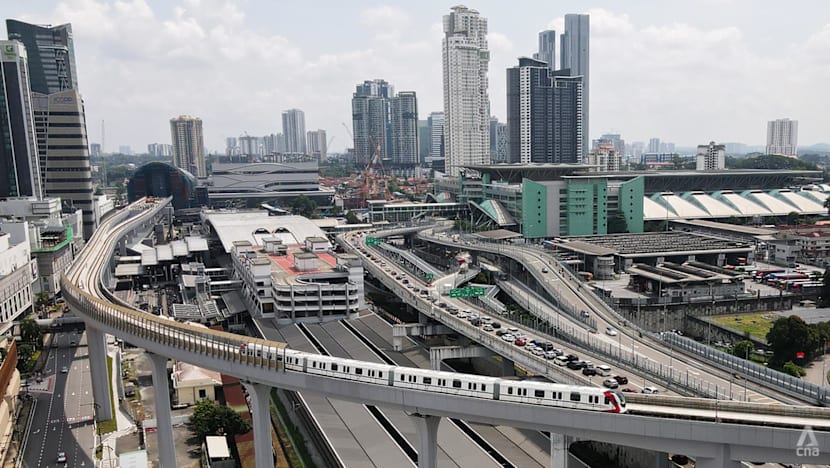
SINGAPORE: Passenger services on the Johor Bahru-Singapore Rapid Transit System (RTS) Link are now expected to begin in February 2027, with more time needed to complete testing, safety certification and regulatory approvals before the cross-border rail service can open.
Singapore's Land Transport Authority (LTA) and Malaysia's Ministry of Transport said in a joint statement on Friday (Oct 2) that they had been informed of the revised timeline by RTS Operations (RTSO), the operator of the rail link.
The February 2027 target remains subject to RTSO obtaining independent safety certification for the RTS Link and securing final regulatory approvals, they said.
Infrastructure works on both sides of the border are substantially complete and remain on track to support passenger services once the remaining testing and commissioning activities have been satisfactorily completed.
However, the authorities said more time is needed for the remaining work before services can begin.
The 4km rail link, which will connect Singapore’s Woodlands North Station to the Bukit Chagar Station in Johor Bahru, was initially expected to begin service at the end of 2026.
RTSO now expects to complete its final system tests and trial runs by Dec 31, 2026.
It will then have to obtain safety certification from an independent safety assessor.
Regulatory approvals for passenger operations can be granted only after authorities in Singapore and Malaysia have reviewed the independent safety certification and are satisfied with it, according to the ministries' joint statement.
“The Grantors will continue to work with RTSO to facilitate the smooth and safe delivery of the project,” the ministries said.
“We note RTSO’s commitment to completing the remaining activities expeditiously and safely, and working closely with the Grantors on the operationalisation of the RTS Link.”
In a separate statement, RTSO confirmed that passenger services are currently expected to start in February 2027.
“Taking into account the expected duration of works and the estimated duration required for safety certification from a third party and approval by both Grantors, passenger service is currently expected to commence in February 2027,” the operator said.
“Our goal is to provide a safe and reliable service on the RTS Link.”
Once operational, the cross-border rail service will have a peak capacity of up to 10,000 passengers per hour in each direction, with the journey between the two stations expected to take about five minutes.
Customs, immigration and quarantine facilities will be co-located at both stations, allowing passengers to clear immigration at their point of departure.
MISSED MILESTONES, PROJECT SUSPENSION
Plans for the RTS Link were first announced in 2010 as a joint project between Singapore and Malaysia.
The neighbours signed a legally binding agreement in January 2018, aiming to complete the project by Dec 31, 2024.
However, the original deadline was pushed back following several missed milestones and a suspension in April 2019 due to Malaysia requesting time to review the project.
Work on the RTS Link officially resumed in July 2020, with several key differences, including a change to the depot used on Malaysia's side.
The rail link also shifted to a standalone Light Rail Transit system instead of leveraging Singapore's Thomson-East Coast Line MRT system as initially planned.
The project completed its first test run in December 2025. In mid-August this year, Malaysian Transport Minister Anthony Loke said the station and rail infrastructure on his country’s side were completed, and the final testing phase was ongoing.
Authorities hope the new rail link will ease traffic conditions on the Causeway, which is one of the world's busiest border crossings.
It is also expected to have a significant impact on the economic front, shaping consumer spending, tourism flows and business competitiveness in the retail and F&B sectors.
A study commissioned by the Singapore Business Federation, Restaurant Association of Singapore and Singapore Retailers Association projected that Singapore residents would spend S$1.05 billion (US$810 million) more a year in Johor Bahru once the RTS Link opens.
Johor Bahru visitors, in comparison, are expected to spend S$756 million more in Singapore annually.
The study also projected a 51 per cent increase in outbound trips by Singapore consumers, adding 11.2 million Singapore-to-Johor Bahru round trips a year.
Trips in the other direction are expected to grow by 3.3 million.
KioskNews shows a cleaned-up reading view extracted from the publisher’s page — the original always lives on their site, not ours.