US panel urges Congress to punish China over Panama-flagged ship detentions
The panel also recommended taking the case to the International Maritime Organization, the United Nations’ shipping agency, to build a formal record of China using port access as punishment.
Congress should order the US Federal Maritime Commission, which had already flagged the surge in detentions, to investigate and report back within 90 days, the report said.
Lawmakers were also urged to require the US director of national intelligence to publish an annual unclassified assessment of China’s presence in ports, energy, telecommunications and space infrastructure across the western hemisphere, and to brief other governments on its findings.
The Chinese embassy in Washington rejected the allegations as “completely unfounded” and said Chinese authorities had conducted routine vessel inspections in accordance with laws and regulations.
It accused Washington of politicising matters concerning the port terminals and said US interference in cooperation between China and Latin American and Caribbean countries “will win no support and is doomed to fail”.
04:23
Trump wants the Panama Canal: empty talk or real threat for Hong Kong?
The commission advises Congress and its recommendations are not binding. Panama was the centrepiece of its chapter titled “China’s Predatory Diplomacy in Latin America”.
“Beijing’s actions in Panama typify how Beijing secures access through weak governance and wields economic coercion when its access is threatened,” the report said.
The proposal amounted to “a largely symbolic gesture, one intended to signal to Beijing that the United States is quite serious about Chinese involvement, especially in Panama, but in general in strategic infrastructure”, said Margaret Myers, managing director of the Institute for America, China, and the Future of Global Affairs at Johns Hopkins University.
In July, foreign ministry spokesman Lin Jian said they complied with international conventions, under which port authorities can inspect foreign-flagged ships for safety and detain those with serious deficiencies until they are fixed. He cited data showing that Panama-flagged ships accounted for a disproportionate share of accidents in Chinese waters.
The Chinese embassy in Washington did not immediately respond to a request for comment.
The ports dispute has become one of the sharpest clashes between Beijing and a Latin American government over Chinese-held infrastructure.
The canal handles about 5 per cent of global seaborne trade, and US President Donald Trump has said Washington should “take back” the strategic waterway that Secretary of State Marco Rubio has warned China could turn into a choke point in a conflict.
Detentions peaked in May before talks in Beijing
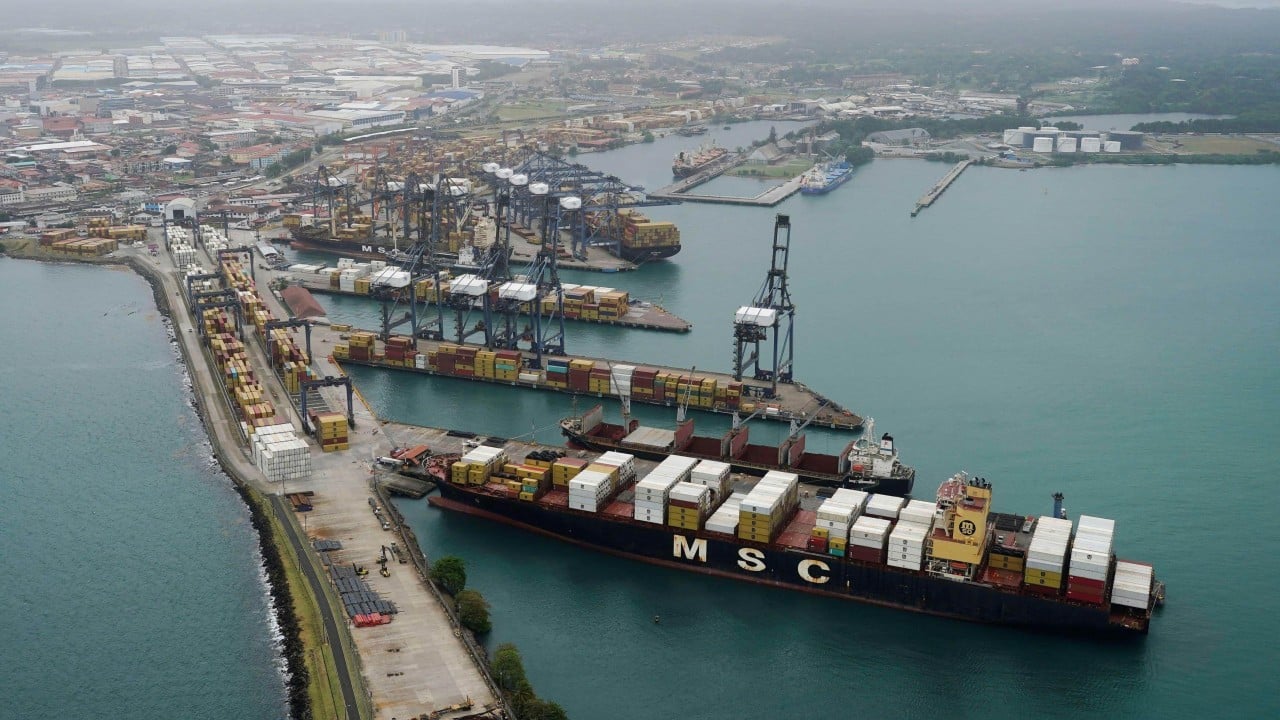
The January ruling annulled both an original 1997 concession and its 2021 extension of the contract held by the CK Hutchison subsidiary, Panama Ports Company (PPC). Panama took over the Balboa and Cristobal terminals in February and handed them to units of Maersk and MSC for up to 18 months while it prepared a new tender.
Detentions of Panama-flagged ships in Chinese ports climbed from an average of about 21 a month last year to 140 in May, according to Tokyo Memorandum of Understanding inspection data compiled by Lloyd’s List. The commission put the total at nearly 500.
“Despite Beijing’s denials, it does, at the very least, come across as politically motivated,” Myers said.
“If this was uncommon before the determination regarding Hutchison, and then all of a sudden became exceedingly common and more so than it ever had been, then I think that strikes not just Panamanians, but also casual external observers as something of an anomaly.”
The detentions have hit Panama directly because shipowners pay to fly its flag, which has made its registry one of the world’s largest and a steady source of state revenue. More than 80 ships moved to other registries in April and 150 more left in May, according to the report.
China’s top economic planner also reportedly pressed Maersk and MSC to pull out of the ports.
The report said Beijing’s response showed “a willingness to use commercial infrastructure for political purposes through operational disruptions, regulatory pressure and economic retaliation”.
US Federal Maritime Commission chair Laura DiBella said in July that the “retaliatory” inspections had continued with “no sign of abatement” and warned that the regulator could open an investigation, saying Panama-flagged ships “carry a meaningful share of US trade”.
The drop to 16 detentions in July followed talks in Beijing involving a Panamanian delegation. Acting foreign minister Carlos Hoyos said both sides had agreed on terms to renew a maritime agreement that gives Panama-flagged ships lower fees and faster clearance in Chinese ports.
The commission said Beijing had reportedly let that deal lapse over domestic “procedural issues” and that its status remained unclear.
But Western governments have also used maritime controls as foreign policy tools. European Union members have stepped up inspections of tankers linked to Russia’s shadow fleet, and British Royal Marines seized an Iranian tanker off Gibraltar in 2019 over alleged breaches of EU sanctions on Syria.
Myers said the line between legitimate pressure and coercion depended largely on who was looking.
“To Panamanians, the sorts of actions that the US is suggesting that policymakers take would be viewed in a very similar vein,” she said.
“It’s hard to say that one is malicious and the other is not, and how one distinguishes that is very much in the eye of the beholder.”
Report cites Chinese pressure on Peru, Argentina and Guatemala
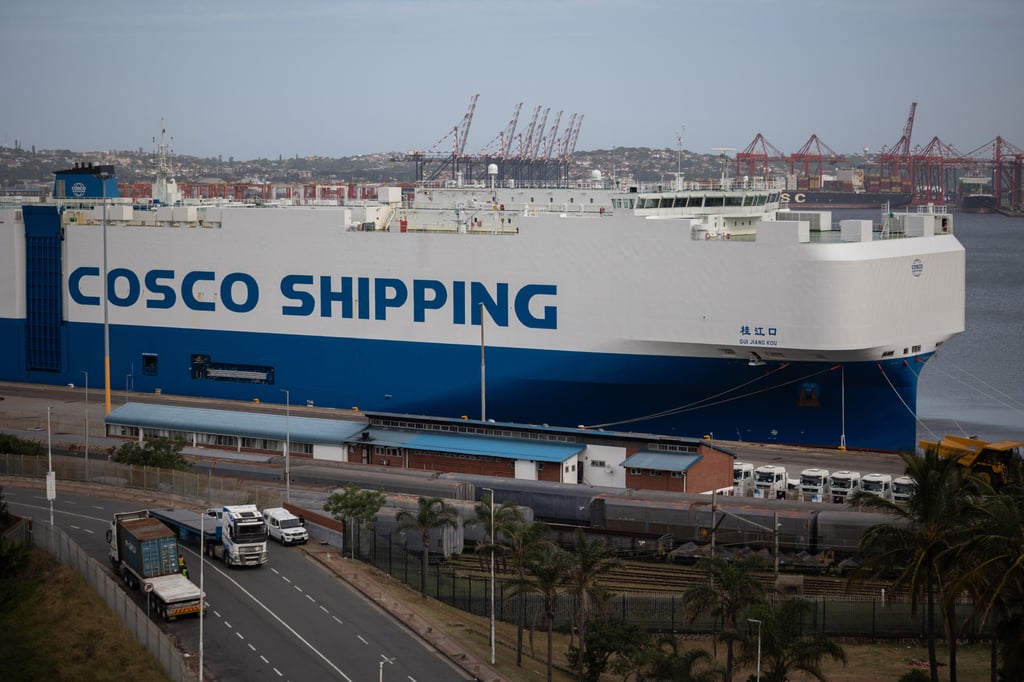
Peru faced a similar stand-off in 2024, when its port authority concluded that Cosco’s exclusive right to operate the Chancay megaport broke Peruvian law and moved to annul it.
Cosco reportedly threatened arbitration and to walk away from the unfinished port, and Lima amended its ports law to keep the concession intact.
Argentina gave way in a dispute over a Chinese-financed hydropower dam, according to the report.
When the government considered scrapping it over environmental concerns, Chinese lenders warned that a clause linking the contracts would also cancel funding for a railway Buenos Aires wanted, and the dam went ahead partly to save the railway loan.
In Brazil, Huawei Technologies hired former president Michel Temer as an adviser in 2021 while the government was weighing a ban on the Chinese tech giant’s 5G equipment and used his network to fight the restrictions, the report said. Brasilia did not impose a ban.
Governments that side with Taipei have faced more open punishment. After Guatemala reaffirmed ties with Taiwan in 2024, Beijing imposed an undeclared embargo on its macadamia nuts and held up Guatemalan containers in the Chinese port of Ningbo, the commission said.
Chinese diplomats were also accused in 2024 and 2025 of bribing politicians in Paraguay, which still recognises Taiwan’s sovereignty, and of warning the country to “make a correct decision as soon as possible”.
Beijing sees Taiwan as part of China to be reunited by force if necessary. Most countries, including the United States, do not recognise Taiwan as an independent state, but Washington is opposed to any attempt to seize the self-ruled island by force and is committed to supplying it with weapons.
Honduras cut ties with Taipei in 2023 and saw shrimp exports fall 67 per cent when Chinese buyers failed to replace Taiwanese demand, leading to 60 company closures and 14,000 lost jobs, according to the report.
To help governments screen Chinese investment for security risks, the commission proposed a US Treasury team that would embed with Latin American officials, including at provincial and municipal levels, where many infrastructure deals are negotiated.
“The costs of shaping these trends now are far lower than the costs of contesting deeply embedded dependencies later,” the report said.
Myers said US measures aimed at China had often failed to achieve their goals and that this one was unlikely to dent Beijing’s standing in the region, given how many drivers of Chinese engagement it left untouched.
She added the dispute had left Panama “very much stuck in the middle and navigating what continues to be a deeply complex situation”.
“The challenge for the US will continue to be that it views that its Latin America policy is a China policy,” she contended. “So long as that is the case and the region is not viewed as a partner, many of these efforts will fall flat.”
KioskNews shows a cleaned-up reading view extracted from the publisher’s page — the original always lives on their site, not ours.