The 6 Best Books Released Since 2005, Ranked

My ideal type of novel leaves behind a new vocabulary for experiences I’d already had. It puts me in actual scenarios, and allows me to look at them while I can imagine completely new visuals for them. It’s this new headspace created because an author chose to position their words in a distinct beautiful way.
That is the company we are dealing with here. These are not six books I would recommend because they are important, which is usually the fastest way to make reading sound like homework. I would recommend them because they are alive. They contain people you become protective of, people you want to shake, entire societies that start making horrible sense from the inside. The craft is extraordinary. The emotional residue is the reason I’ve dissected them below. Let’s get started.
6 'Demon Copperhead' (2022)
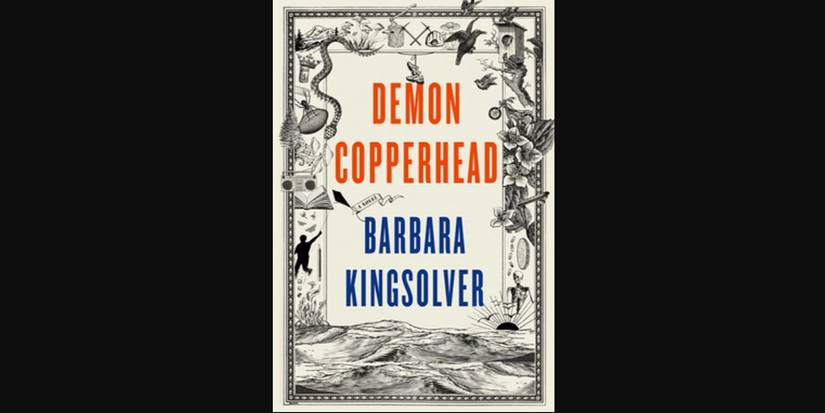
Demon Copperhead follows a boy born into poverty in rural Virginia who loses his mother, moves through an abusive foster-care system, discovers an extraordinary talent for football, and eventually becomes trapped in the opioid addiction devastating the community around him. Barbara Kingsolver wrote the novel as a modern reworking of Charles Dickens’ David Copperfield, but Demon’s voice belongs completely to Appalachia and to this particular century.
That voice is what got me. Demon is funny before he is safe, observant before anybody considers listening to him, and capable of turning something horrific into a joke because sometimes that is the only form of control available. The foster homes hurt. His relationship with Angus gives him one of the rare places where affection does not immediately come with a price. Then painkillers enter his life so naturally that the catastrophe barely announces itself. Kingsolver understands addiction as something arriving through injury, medicine, economics, loneliness, and a system already prepared to abandon people. You do not pity Demon from a distance. You live inside how he keeps explaining the world to himself.
5 'Pachinko' (2017)

Pachinko follows Sunja, a young Korean woman who becomes pregnant by a wealthy married man in the 1930s and leaves Korea for Japan after a kind minister offers to marry her, beginning a family story that continues through several generations of Koreans living under discrimination in Japan. The novel was written by Min Jin Lee, and she makes one private decision ripple through decades without ever reducing the family to symbols of history.
Sunja is wonderful because survival never turns her into some polished inspirational figure. She works. She worries. She sells kimchi. She protects her children. She makes choices that become incomprehensible to people born into the life those choices created. And the pachinko business itself becomes such a sharp piece of the family story: lucrative, socially stigmatized, one of the few industries where Koreans can build serious wealth in a country that still regards them as outsiders. Apple TV+ turned the novel into an ambitious series, but the book has the brutal intimacy of knowing what one generation sacrifices before the next even realizes there was a sacrifice.
4 'The Fifth Season' (2015)

The Fifth Season begins with Essun discovering that her husband has murdered their young son and kidnapped their daughter while a massive geological catastrophe tears across the continent, forcing her to cross a collapsing world where people with her ability to control seismic energy are feared, exploited, and controlled. N. K. Jemisin wrote it, and she makes the apocalypse almost secondary to the much more immediate fact that a mother has somewhere she needs to go.
There is a structural decision in this book that I refuse to spoil because experiencing the pieces lock together is part of what makes it extraordinary. What I can say is that the form is doing emotional work, not showing off. Orogenes can save entire cities from earthquakes and still be treated as dangerous property. Children learn very early that power will not protect them from the people who need that power. The Stillness is one of fantasy’s great worlds because geology, politics, oppression, and family all operate as one system. Then Jemisin keeps dragging everything back to something painfully simple. The world may be ending. Essun still wants her daughter.
3 'The Road' (2006)

The Road follows an unnamed father and son walking south through the burned remains of America after an unspecified catastrophe has destroyed society, carrying their food in a shopping cart and trying to survive long enough to reach somewhere warmer. Cormac McCarthy wrote the novel with almost everything nonessential stripped away, which is why finding a can of food can suddenly feel like winning a war.
I used to think the horror of this book was the cannibalism and ruined landscape. It is really the father’s fear. He loves his son so completely that every stranger becomes a possible threat, and that love slowly pushes him toward a form of caution the boy sometimes recognizes as cruelty. The child still wants to help people. The father knows what helping can cost. “Carrying the fire” becomes their private language for remaining good, but the painful question is whether survival keeps allowing goodness to exist. The 2009 film captured the ash and dread. The novel leaves you alone with the harder problem: what would you teach your child about humanity if humanity had already given you every reason to stop trusting it?
Collider Exclusive · 8 Questions · 2 Minutes Which Coen Brothers Movie Would You Thrive In? Lebowski · O Brother · Fargo · No Country
Nobody writes people like the Coen brothers. The decent ones. The talkers. The ones who stopped trying years ago. And the ones who can already see how bad this is going to get. Four films, four completely different ways of handling trouble. Eight questions decide which one you would actually walk out of.
🎳Lebowski(1998)
🎸O Brother(2000)
❄️Fargo(1996)
🪙No Country(2007)
01
A bag of money lands in your lap. What happens next? Every Coen film starts roughly here. It never goes smoothly.
02
Somebody is being completely unreasonable with you. How does it go? Coen dialogue is mostly people failing to understand each other.
03
What is your actual relationship with work? Everyone in these films is either working far too hard or not at all.
04
Long drive, bad weather, nobody else on the road. How are you? There is always a drive in these films. It is never a good drive.
05
You are offered a shortcut that is not quite legal. This is the moment where the Coens find out who you really are.
06
The plan has fallen apart completely. What is your move? In a Coen film the plan always falls apart. That is the genre.
07
Which of these sounds most like something you would say? Nobody writes a line quite like the Coens. Which one is yours?
08
How does your film end? Eight questions in, this is the one that decides your movie.
The Verdict Is In Your Coen Film Is…
Four films, four completely different ways of handling money, trouble and other people. This is the one you would survive, why it suits you, and what it would cost you to be there.
The Big Lebowski
You have quietly arranged your life so that very little can get to you, and a surprising number of people find that infuriating. You would be completely at home here.
- The Dude is the only person in the film with no ambition, and the only one who comes out the other side undamaged. That is not an accident.
- You do not chase things. You let situations arrive and you deal with them at your own pace, which is a genuine skill however lazy it looks.
- This is a full crime plot happening around a man who mostly wants his rug back, and that is exactly the energy you would bring to it.
- Everything goes wrong. You abide. The film ends.
O Brother
You talk your way through life and it works far more often than it should. Give you a bad situation and an audience and you will find a way out of both at once.
- Everett never has a plan that survives contact with reality. He has something better, which is the ability to keep talking until a new one turns up.
- You are the optimist in the group, the one who makes a ridiculous idea sound reasonable at two in the morning.
- This is the warmest film the Coens have made. It is a chase, a comedy and a musical at once, and nobody in it is quite beyond saving.
- You would end up famous entirely by accident, and act like you planned it all along.
Fargo
You would survive Fargo because you are the only kind of person who does: patient, decent, and completely unimpressed by anybody trying to be clever.
- Marge Gunderson solves the whole case by being polite, thorough and unhurried while everybody around her panics. That is the entire argument of the film.
- You do the boring parts of the job, which is precisely why you would notice the thing everyone else walked straight past.
- Fargo is about ordinary greed causing enormous damage, and about one person who simply refuses to be corrupted by any of it.
- You would go home at the end of it, have dinner, and sleep perfectly well.
No Country
You do not expect the world to be fair and you stopped being surprised about it a long time ago. That clear-eyed quality is exactly what this film asks for.
- No Country is the Coens at their coldest: a film where being smart, fast and careful might still not be anywhere near enough.
- You plan for the worst, you keep your own counsel, and some part of you is already working out the exit.
- Llewelyn Moss is competent, prepared and resourceful, and the film is honest about whether any of that is ever sufficient.
- You would see it coming. Whether that helps is the one question the film refuses to answer.
2 'Never Let Me Go' (2005)

Never Let Me Go is narrated by Kathy H., who remembers growing up with Ruth and Tommy at the English boarding school Hailsham before gradually revealing that the students are clones created so their organs can be harvested for other people. Kazuo Ishiguro wrote it, and he delivers that horrifying premise in the voice of someone remembering school friendships, cassette tapes, jealousy, crushes, and misunderstandings with almost unbearable normality.
That is why this book wrecks me more than louder dystopias. Nobody needs to place Kathy behind bars. The children have been raised inside a world where their fate has been explained just vaguely enough to become ordinary. They hear rumors that genuine love might earn them a temporary deferral from donating, and the hope is so modest that you desperately want it to be true. Ruth’s regrets arrive too late. Tommy’s rage arrives after years of trying to be good. Kathy keeps narrating with the composure of somebody who has learned how much emotion the world permits her to have. The cruelty is institutional. The heartbreak is completely personal.
1 'Wolf Hall' (2009)

Wolf Hall follows Thomas Cromwell as he rises from the son of a violent Putney blacksmith to become one of Henry VIII’s most important advisers, helping the king navigate his attempt to end his marriage to Catherine of Aragon and pursue Anne Boleyn while England’s political and religious order shifts around them. Hilary Mantel wrote the novel, and she somehow takes one of the most overfamiliar periods in English history and makes every room feel newly dangerous.
Cromwell fascinates because he remembers everything useful. Who owes money. Who married whom. Who insulted somebody ten years ago. Who needs something but is too proud to ask. Mantel makes intelligence practical rather than mystical. His power grows because he notices connections faster than the aristocrats who still think birth is the only qualification that counts. Yet he is also a widower, a father, a man carrying memories of violence and loss while becoming increasingly capable of inflicting consequences himself. The BBC adaptation with Mark Rylance is superb, but the novel gives you the thing I love most: proximity to Cromwell’s thought. You start seeing the room the way he does. That is when Wolf Hall becomes almost frighteningly addictive.
KioskNews shows a cleaned-up reading view extracted from the publisher’s page — the original always lives on their site, not ours.