Construction begins for Singapore’s long-delayed fourth egg farm
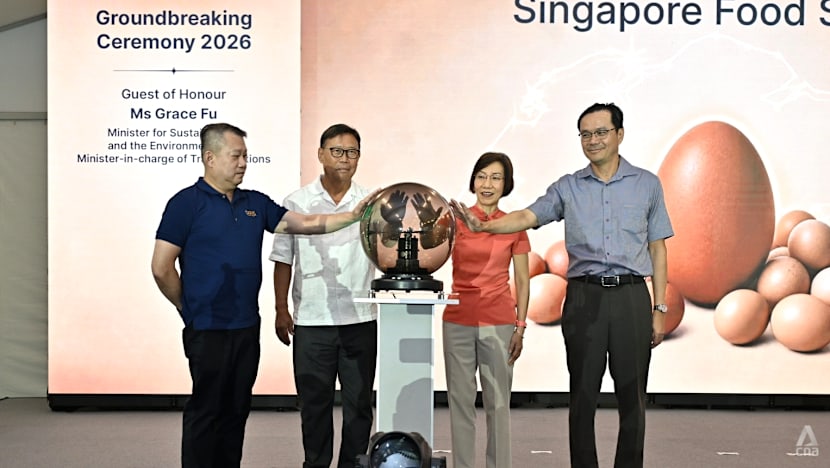
SINGAPORE: Construction began in Lim Chu Kang on Tuesday (Sep 29) on Singapore's long-delayed fourth egg farm, which will be able to produce about 380 million eggs a year when its first phase is completed in less than two years.
The first eggs from the new DoMo Farm are expected to hit store shelves in 2028.
The farm, which is operated by Singapore firm ISE Foods Holdings, is projected to yield more than 500 million eggs annually when it reaches full capacity, which is equivalent to nearly a quarter of the country's current annual demand.
This also meant that at full production, locally produced eggs could meet half of Singapore's needs, Minister for Sustainability and the Environment Grace Fu said at the groundbreaking ceremony.
Singapore consumed more than 2.2 billion eggs last year, with three existing local egg farms, Seng Choon, N&N Agriculture and Chew's Agriculture, supplying about one-third of domestic consumption. The rest was supplied through imports.
Ms Fu said that the development of upstream parent stock and hatchery capabilities for day-old chick production in the farm's next phase is significant.
Day-old chicks eventually mature to become the layer chickens that produce eggs. Having such a facility will reduce reliance on imported chicks, further strengthening Singapore’s resilience, said Ms Fu, who is also Minister-in-charge of Trade Relations.
“During periods of disruption, our local farms provide an additional layer and buffer by providing a domestic source of eggs, vegetables, and seafood to ensure we continue to have food on our tables,” she said.

ISE Foods Holdings chairman David Ong Kim Huat said the name DoMo reflected the company's aim to "do more with less".
"In land- and resource-scarce Singapore, we must become smarter and more productive with the resources available to us.
"We are designing DoMo Farm from the ground up as a next-generation egg farm, leveraging AI, smart sensors and the Internet of Things to improve efficiency, boost productivity and raise standards across every part of our operation," said Mr Ong, who is a former Member of Parliament for Jurong GRC and Bukit Batok SMC.

TWO PLOTS OF LAND
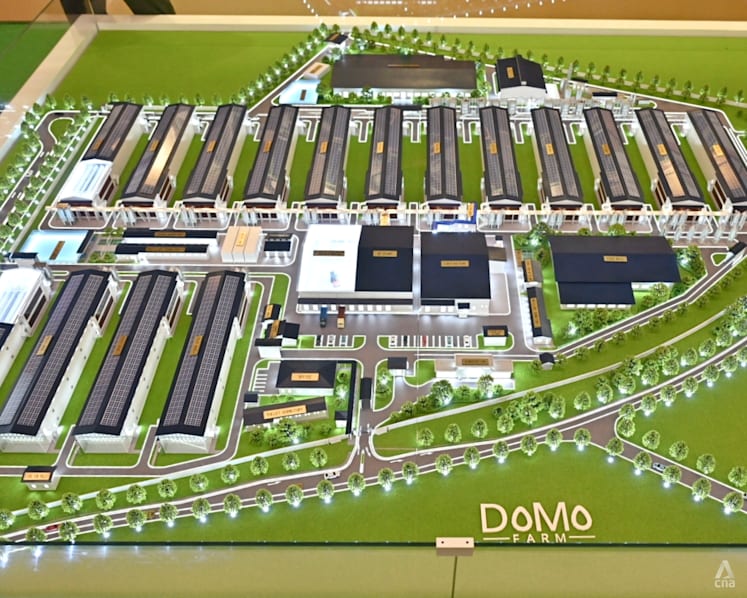
The farm occupies two plots of land in Lim Chu Kang on 30-year leases: a 15ha layer and pullet farm on Kranji Way and a 4ha parent stock and hatchery farm on Neo Tiew Crescent.
Layer hens produce eggs for consumption, while pullets are young female chickens less than a year old that have not started laying eggs.
The parent stock and hatchery farm will breed and hatch chicks that will eventually become layer hens.
In the first phase, nine layer houses and three pullet houses will be built at the Kranji Way facility, housing about 1.35 million layer hens and 450,000 pullets respectively. This will give the farm an annual production capacity of about 380 million eggs.
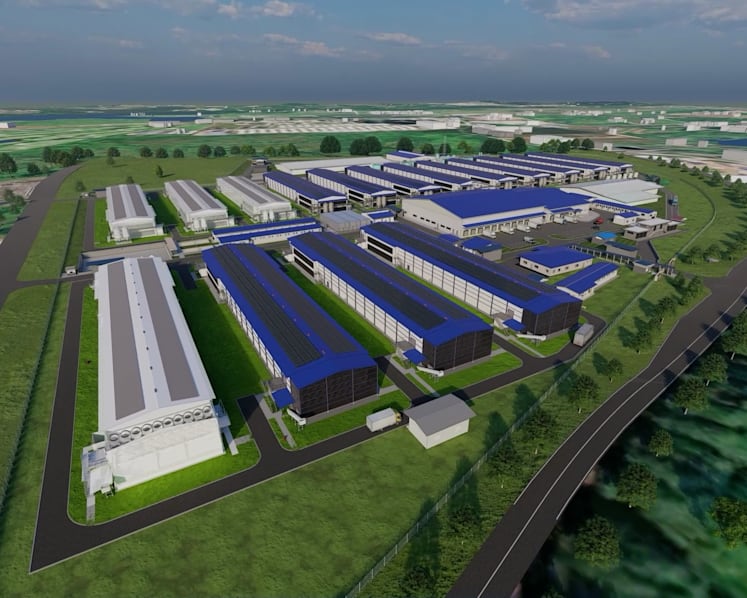
The parent stock and hatchery farm at Neo Tiew Crescent is expected to be completed in the subsequent phase.
The 12 layer houses and four pullet houses could house 1.8 million layers and 600,000 pullets respectively when the farm is fully built.
The Kranji Way site will also have a grading and packaging plant, a liquid egg plant and a manure treatment plant, with a food processing plant planned for the future.
YEARS OF DELAY
The farm comes about five years after ISE Foods Holdings first signed an agreement with the Singapore Food Agency (SFA) in 2021 to develop the farm.
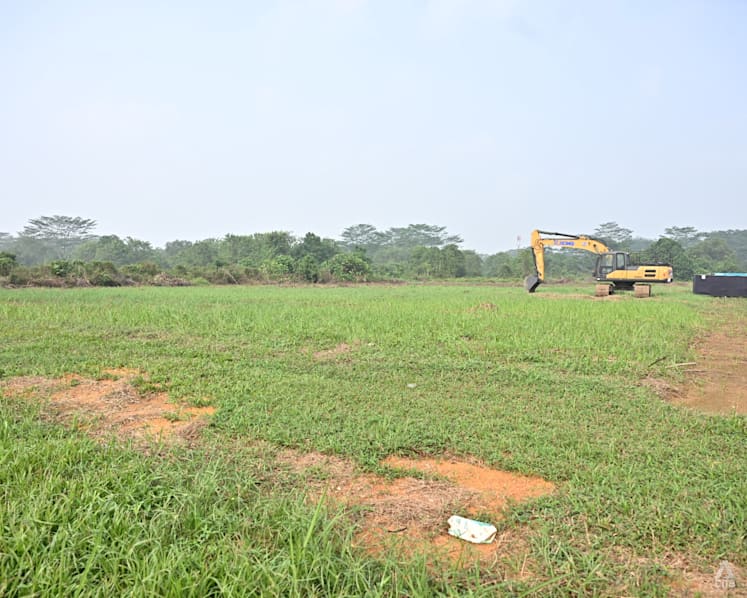
Construction was initially slated for 2022, with three plots of land across Lim Chu Kang, Sungei Tengah and Tuas planned for the facilities. The 10ha commercial egg farm in Lim Chu Kang was meant to be operational by 2024.
However, the project was confronted by challenges including the COVID-19 pandemic, supply chain disruptions and inflationary pressures from geopolitical tensions, according to filings on the Singapore Exchange by Ellipsiz, the parent company of ISE Foods Holdings.
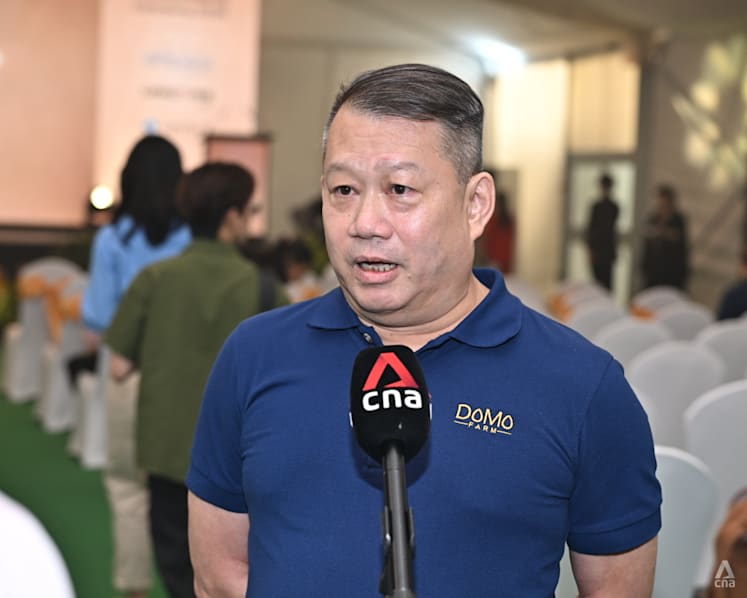
Mr Kenneth Ho, chief executive of Ellipsiz, said the project had to contend with uncertainties emerging from the pandemic and geopolitical tensions, including the war between Ukraine and Russia.
"Then the energy crisis caused escalation and supply chain disruption," Mr Ho told CNA ahead of the groundbreaking ceremony.
Biosecurity concerns added to the delays as the company reconsidered the farm's design to better protect chickens from diseases affecting birds spreading around the region.
Mr Ho said more land had to be allocated to the farm for greater separation between poultry houses. A larger site would also accommodate bigger poultry houses.
As a result, the space needed for the farm grew from the initial planned 10ha to 15ha, which is equivalent to about 21 football fields.
Larger layer houses would allow the farm to scale production capacity from the initial target of about 360 million eggs annually to more than 500 million when fully developed.
The delays prompted the company to reassess the viability of the project in its earlier stages.
Asked what led to the decision to proceed, Mr Ho said the company conducted a feasibility study examining the economics of the farm across its operating life, including its scale, technology and management, which he said would help increase yields and keep operating expenses manageable.
The years-long delay gave the farm an opportunity to incorporate technologies into its design from the outset.
Mr Ho described the delay as a "blessing in disguise", pointing to how artificial intelligence technologies have become more mature and cost-effective.
"So the AI part in terms of health, the layer hens health management, monitoring, preventive measure, predictive measures all come into place," Mr Ho said.
When completed, the farm will deploy technologies such as advanced optics and heat-detection sensors paired with AI models that will capture and analyse operational data. Patrol robots that use AI will also operate within each layer house to monitor the health of hens round the clock.
Other parts of the operation will also be automated, such as feeding, egg collection and grading.
While most of the processes will be automated, around 150 employees will still be needed to handle livestock for processes such as vaccination.
LOCAL DEMAND FOR EGGS
Mr Ho said that the layer farm is expected to cost about S$110 million (US$86 million) to develop.
The development is partially financed by Maybank through a term loan facility of up to S$65 million, with the bank serving as the farm’s sole financing partner. Unicore Agri and Vertex Exploratory Fund are co-investors.
Ms Fu said that DoMo is one of the local farms to have tapped SFA’s Agri-Food Cluster Transformation Fund 2. SFA launched a new tranche of S$70 million under the fund earlier this year.
Asked whether continuing geopolitical tensions could drive the cost of construction even higher, Mr Ho said the farm has largely locked in these costs with contractors and subcontractors.
He said the farm had kept capital expenditure similar to what was budgeted for the original 10ha site, while increasing production yield on the expanded 15ha farm.
"So more or less the budget, the cost, they are in place already," he said.
He noted that the farm's high upfront capital expenditure could help keep operating expenses low, but said these could still be affected by global conditions.
With such an investment, Mr Ho said the company believes there would be sufficient demand from consumers given Singapore's high per capita egg consumption.
In her speech on Tuesday, Ms Fu said as Singapore ramps up supply of local produce, it is equally important to ensure sufficient and sustained demand off-take.
"Businesses and retailers have an important role in supporting our local farms by using local produce. Consumers too can contribute by choosing local produce, (and) thereby help to sustain local farms," she said.
To this, Mr Ho said Singapore's large appetite for eggs leaves room in the market for DoMo Farm's offerings.
"Gradually, I think we will see more consumers do not only go for price, especially for perishable things.
"They also go for freshness, reliability, food safety, and so on and so forth," said Mr Ho, adding that these factors give local egg farmers an advantage.
KioskNews shows a cleaned-up reading view extracted from the publisher’s page — the original always lives on their site, not ours.