#CourageON: Why this climate activist still believes in COP31

Already have Rappler+?
to listen to groundbreaking journalism.
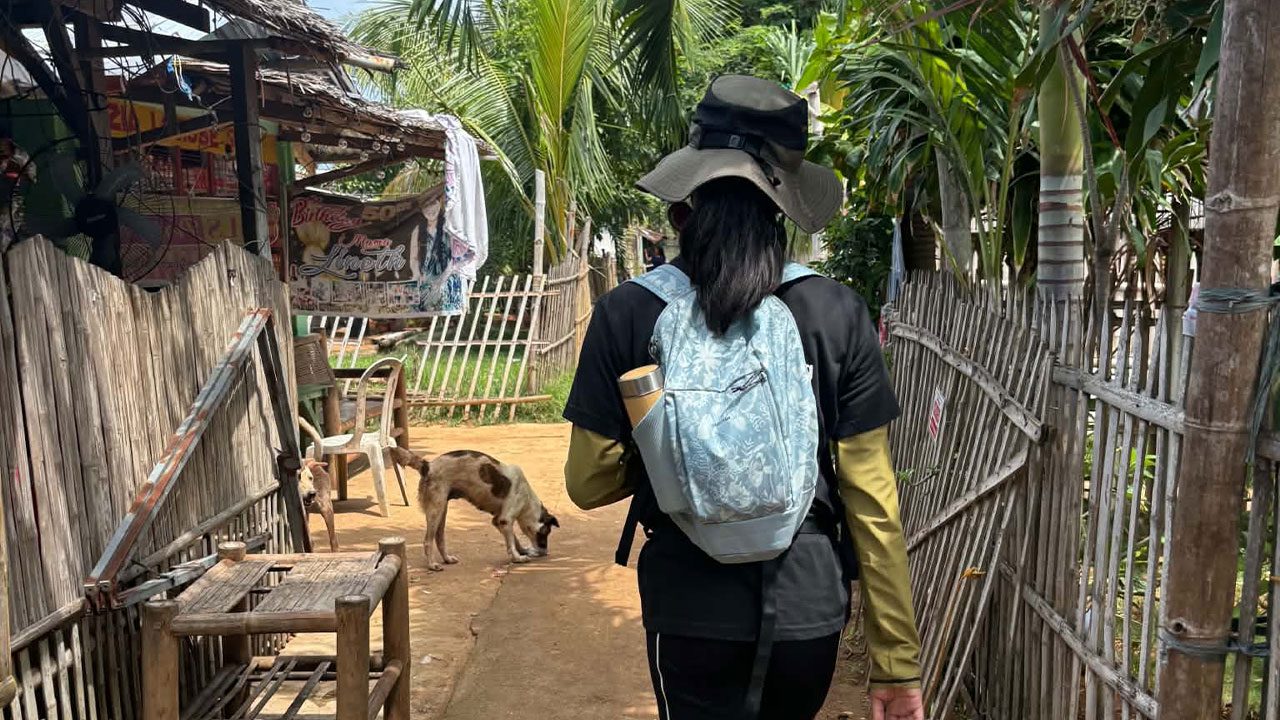
JOSHUA VILLALOBOS. Climate activist and secretary-general of Negrosanon Initiative for Climate and the Environment, Joshua Villalobos, visits Matabas Island in Sagay City, Negros Occidental, to work on the solar-powered facilities of the island in October 2026.
Photo courtesy of Joshua Villalobos
For Joshua Villalobos, COP31 would be a success if it means more money flowing into the communities he works with, particularly for projects that provide renewable energy
“Am I optimistic about this COP? Well, that’s a challenging question.”
Usually quick-witted, Joshua Villalobos took time to gather his thoughts about the 31st United Nations Climate Change Conference (COP31) happening this November. He is a climate activist and secretary-general of the Negrosanon Initiative for Climate and the Environment (NICE). In November 2025, we featured him in a story on young Filipinos championing renewable energy across the Philippines.
“Sometimes, the talks within the negotiations are taking so much time. The talks have been ongoing [for] the past three decades.”
The world has struggled to meet the commitments made in these negotiations. For one, countries agreed in 2015 to keep global warming well below 2 degrees Celsius above pre-industrial temperatures, while pursuing efforts to limit the increase to 1.5 degrees Celsius.
“There’s a new report that we’ll overshoot the 1.5,” he said.
The work of climate activists like Joshua isn’t confined to the streets. Behind the placards and protests, they pore over lengthy documents and study climate policies. Joshua, in fact, finds the law “beautiful.” But what keeps him invested in the negotiations is the possibility of seeing solutions.
“Most of these solutions are being championed by communities, people’s organizations, environmental movements. These are things that I am optimistic about.”

Based in Bacolod City, Joshua works closely with the people of Matabas Island in Sagay City, Negros Occidental. Matabas, like many small islands in the Philippines, used to have no electricity.
Once, at night, Joshua witnessed island residents sleeping outside their homes. Without electricity, households didn’t have the luxury of electric fans or air-conditioning. “We are seeing how they are paying the price in their daily lives, sleeping outside because of the heat,” he said.
Through partnerships with foundations, Joshua’s organization, NICE, installed solar panels to light up communal areas, including the island’s walkways. NICE now hopes to power the island’s water desalination facility to give residents access to fresh water. It also plans to bring electricity to the island’s only school.
For Joshua, COP31 would be a success if it meant more money flowing into the communities he works with, particularly for projects that provide renewable energy.
During COP30 in 2025, parties agreed to develop a just transition mechanism. This year, discussions are expected to further define how the mechanism will work.
NICE is a member of Aksyon Klima Pilipinas, a Philippine civil society network that prepares policy positions and proposals ahead of COP. The network also held a pre-COP31 conference on just transition in October.
For Joshua, the pre-COP31 conference was an important opportunity to bring the realities of communities in Negros and other parts of the Philippines into the discussions.
“We know that these communities are already paying the price for the impacts of the climate crisis,” Joshua explained.
“If we don’t make the transition just, then they will most likely pay the price of the transition… through job displacement, land displacement, or environmental degradation.”

Joshua will attend the second week of COP31 in Antalya, Türkiye, bringing with him stories from the communities he has worked with.
“It is exactly because of the work that we are doing year-round [that] we are going to the COP more informed about the realities of the communities and demand what the COP should deliver.”
Still, Joshua is not confident that the negotiations will deliver political breakthroughs. Climate negotiations tend to be exclusive, technical, and jargon-laden. Joshua understands why young people and communities affected by the climate crisis might lose faith in the process. Many of them also struggle to find the money to participate.
Asked why he continues to attend the annual climate conference despite its shortcomings, he answered: “For now, there’s no alternative for that kind of global space where communities can raise our voices and governments are there.”
“It is still a space that we must not give up on, and we should continue to fight for.” – Rappler.com
#CourageON is a bi-monthly newsletter providing updates from our communities. In time for the 31st United Nations Climate Change Conference (COP31), the month of November features stories of courage and resilience from our partner communities and advocates.
KioskNews shows a cleaned-up reading view extracted from the publisher’s page — the original always lives on their site, not ours.