Trump announces ‘biggest trade deal’ between Philippines, US
Already have Rappler+?
to listen to groundbreaking journalism.
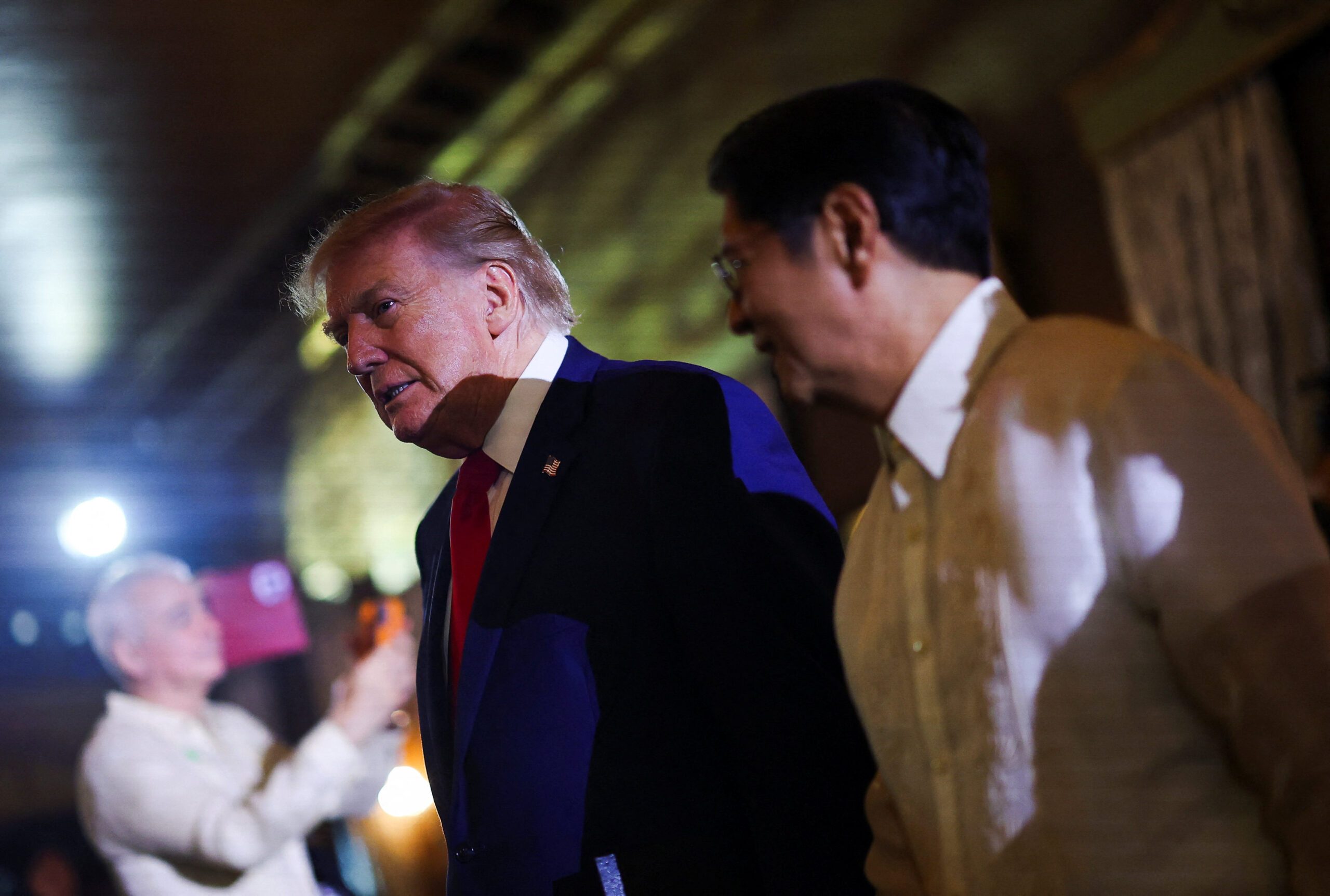
US President Donald Trump arrives for a state visit banquet luncheon with Philippine President Ferdinand Marcos Jr. at Malacanang Palace on November 18, 2026.
Carlos Barria/Reuters
Trump shares the supposed highlight of his brief state visit to the Philippines but gives no details. Malacañang says both sides reached an understanding on areas of economic cooperation, but does not mention a trade deal.
AT A GLANCE
- US President Donald Trump announced a significant trade deal with the Philippines during his state visit, describing it as the largest trade agreement between the two nations.
- While details of the trade deal were not disclosed, both countries' representatives will work on translating commitments into concrete initiatives, focusing on economic cooperation. Philippine officials say no deal was signed during Trump's state visit.
- Trump emphasized the strengthening of defense ties and collaboration in energy security, particularly in nuclear energy, as part of the ongoing alliance between the US and the Philippines.
This is AI-generated. Read the article for full context. Report any errors.
MANILA, Philippines – US President Donald Trump on Wednesday, November 18, announced what he described as “the biggest trade deal” between the Philippines and the United States during the final activity of his brief state visit to Manila.
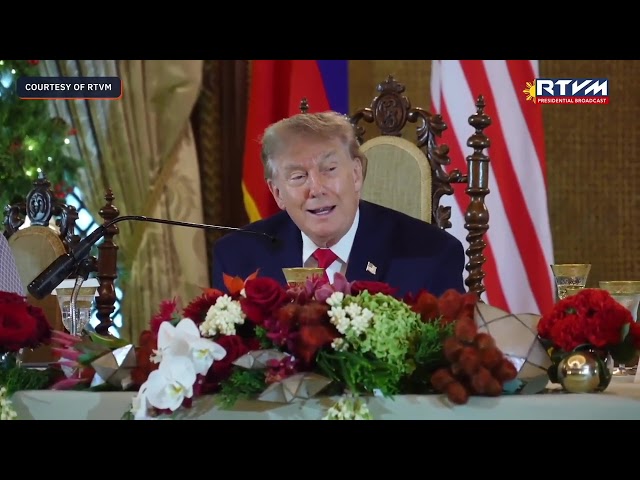
Trump disclosed this in his remarks at the state luncheon in his honor in Malacañang Palace following his bilateral meeting with President Ferdinand Marcos Jr., but gave no details about the deal.
“We’ve just consummated a trade deal, the biggest trade deal we’ve ever made by far and it’s a fair deal for both countries. We’re very happy with it. We didn’t know that was going to take place but it took place very quickly. It’s a magnificent deal for both,” Trump said.
“So today, under the leadership of President Marcos and myself, I’m proud to say that we’re making the alliance between the United States and the Philippines much stronger than it’s ever been before, especially with the consummation of this deal,” he added.
Marcos’ office later said both sides reached an understanding on areas of economic cooperation, but made no mention of a trade deal.
Trade representatives of both countries will work closely to translate the commitments into concrete initiatives, it said in a statement.
“I am pleased to announce that we made a new and completely different trade deal with the Philippines, one that will be a true landmark, and, in particular, a deal that will be great for our farmers and those in the business of ‘energy,'” Trump said on Truth Social after his Philippine visit, but gave no further details.
Negotiations on a trade deal between the two allies were not mentioned in any schedules released by either country.
“The US offered for us to diversify our food supply and energy requirements,” said Philippine Ambassador to the US Jose Manuel Romualdez.
Asked whether anything was signed, Romualdez said in a text message, “None.”
Marcos, in his luncheon speech, said that the partnership between the two countries are also “building stronger ties in trade, in investment, in energy, in technology, resilient supply chains, education.”
Expanding defense ties, ‘something very big’ in nuclear
Trump said in his remarks at the start of his bilateral meeting with Marcos that the US is expanding its defense cooperation with the Philippines.
The Philippines and the US are treaty allies through the 1951 Mutual Defense Treaty, the core of their ties, signed years after Washington recognized Manila’s independence. The treaty covers possible attacks in the South China Sea.
In December 2025, the US Congress passed the Philippines Enhance Resilience Act, which authorizes allocating $500 million annually in foreign military financing to the Philippines, totaling $2.5 billion by 2030.
Trump also signaled that the US wants deepened collaboration in energy security, particularly nuclear energy. He added that the US may do “something very big” in the civilian nuclear industry.
“And for the Philippines to embrace American technology in its first modern nuclear project would underscore the strength of the important relationship,” he said.
In February, the US announced several initiatives to help the Philippines in integrating nuclear power into its energy mix by 2032. This was two years after the enforcement of a landmark civil nuclear cooperation agreement between the two countries in 2024. (READ: A nuclear Philippines in six years? OECD’s nuclear chief isn’t convinced.)
While the Philippines and the US have been strong allies, this alliance was tested during the administration of Marcos’ predecessor, Rodrigo Duterte, who sought a pivot to China, but this foreign policy direction had since been reset under Marcos.
The years that followed saw an increase in the intensity of military training exercises, as well as the frequency of joint sails in the West Philippine Sea, including near areas that China claims or de-facto controls.
Asked if he was concerned about tensions in the West Philippine Sea, Trump told reporters: “I’m not concerned about that at all, that will be taken care of.”
After the state visit and bilateral meeting, Trump headed to Shenzhen, China, for the Asia-Pacific Economic Cooperation Summit. – With reports from Reuters/Rappler.com
KioskNews shows a cleaned-up reading view extracted from the publisher’s page — the original always lives on their site, not ours.