Wall Street's AI Wipeout Hits Asia, But India Shrugs Off Crash. Here's Why

Stock Market Rally: The global stock market sell-off was supposed to be a bad omen for Dalal Street. Wall Street had suffered its worst single-day decline in 19 months. Asian markets were bleeding. Indian stocks, too, opened lower on Friday.
But then came a remarkable turnaround. By 1:50 pm, the Sensex had surged over 1,000 points from its intraday lows. The Nifty 50 climbed above 24,800, extending a rally that has gathered momentum over the past week. FOLLOW LIVE MARKETS UPDATES
Why Is India's Stock Market Rising When Wall Street Is Crashing?
The answer lies in a combination of foreign investor buying, falling oil prices, improving earnings and India's relatively limited exposure to the artificial intelligence trade that has suddenly come under fire globally. The biggest difference between Wall Street and Dalal Street is their exposure to artificial intelligence.
Also Read | Layoffs Are Rising In Tech, But These Skills Are Helping People Unlock Better Pay
US markets had rallied sharply after the midterm election results. But the optimism quickly evaporated as investors began worrying that Democrats could push for tighter regulations on AI infrastructure, data centres and electricity consumption.
The concerns are significant because America's AI boom depends on massive investments in chips, servers, power and data centres. Any slowdown in infrastructure expansion could hurt companies across this investment chain.
The sell-off was brutal.
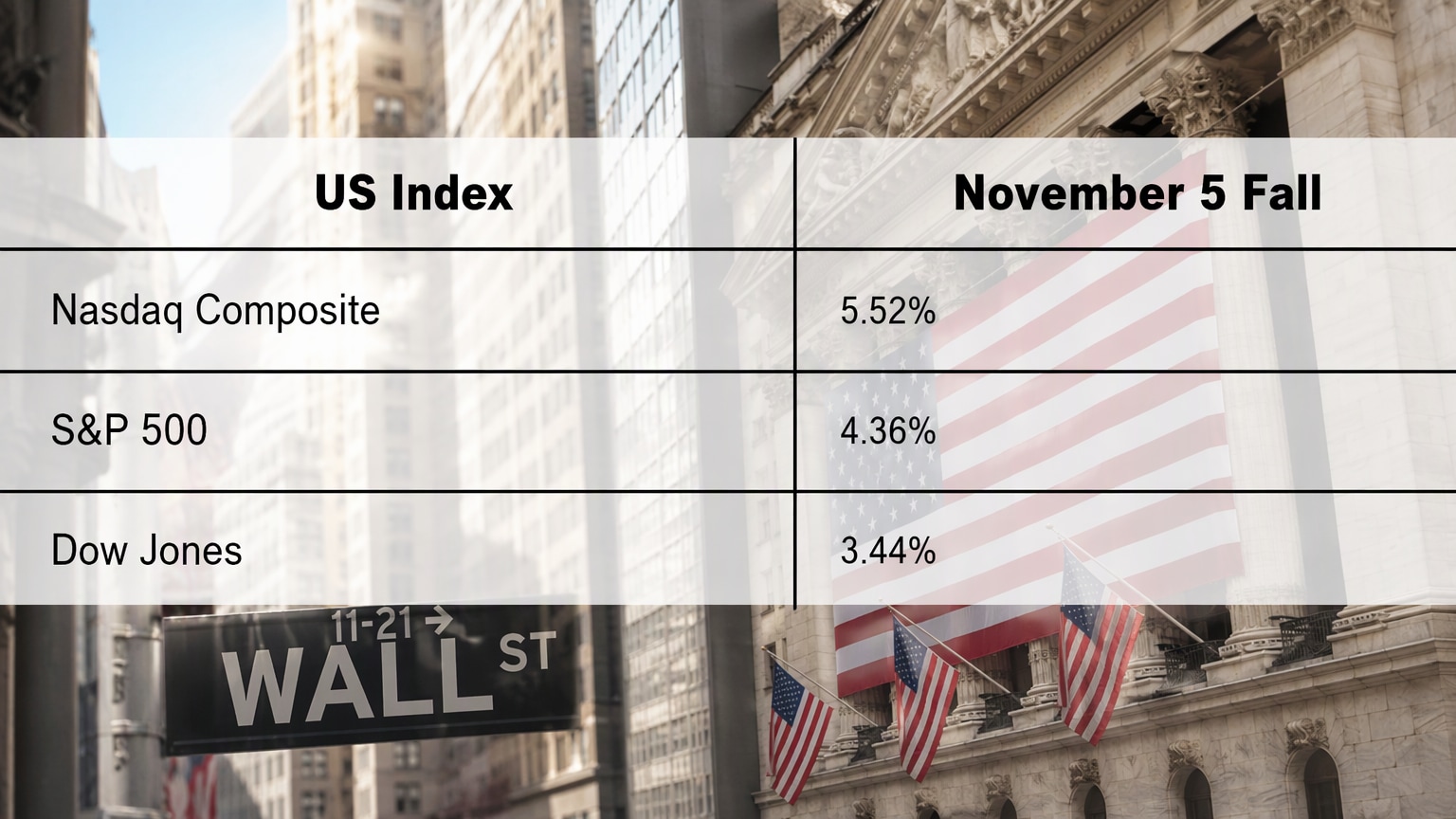
The Nasdaq suffered its biggest daily fall in 19 months. The sell-off wiped out an estimated $2.5 trillion from Nasdaq 100 market value. India, however, has a relatively limited direct exposure to these AI infrastructure companies.
Interestingly, Indian IT stocks have also been rising. Investors are increasingly looking at traditional IT services companies as a potential alternative to expensive AI-linked stocks, even as questions remain over how AI could affect their business models.
Foreign Investors Are Back. And They Are Buying Big
Perhaps the biggest reason behind India's market resilience is the sudden return of foreign institutional investors (FIIs). After months of selling Indian equities, foreign investors have started buying aggressively.
According to provisional exchange data, FIIs purchased Indian shares worth nearly Rs 15,000 crore on Thursday. This was their biggest single-day net purchase in almost six years.
The buying has continued through the week, providing a powerful cushion to domestic markets. The shift is particularly significant because global investors are now reassessing their exposure to AI-linked investments. Some of that money is finding its way into Indian equities.
According to Reuters, foreign inflows, combined with India's relatively limited AI exposure, were helping insulate the domestic market from the global rout.
Falling Oil Prices Have Changed India's Market Story
India imports a large share of its crude requirements. When oil prices rise, the country faces higher import bills, inflationary pressure and risks to its currency. That is why expensive oil has been one of the biggest concerns for Indian markets this year.
But crude prices recently slipped below $100 per barrel, improving sentiment. Investors are also hoping that the political developments in the US could accelerate efforts to end the US-Iran conflict, potentially reducing geopolitical risks and pressure on energy prices.
The decline in oil prices has helped revive interest in Indian equities. There is, however, a caveat. Brent crude climbed back above $100 on Friday, reminding investors that the oil risk has not disappeared.
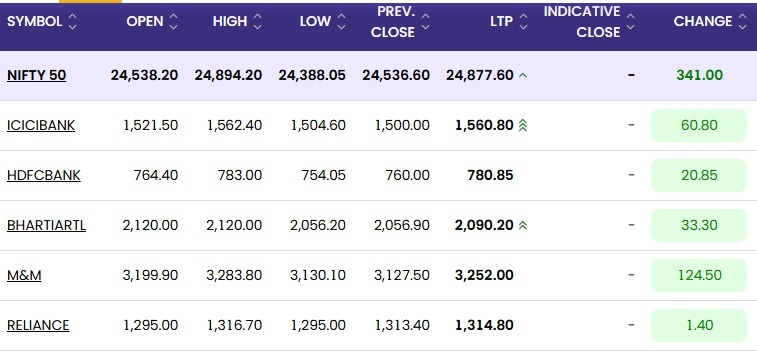
Nifty Top Performers At 3 pm On November 6
Earnings Are Giving Investors Another Reason To Buy
Investors are increasingly finding opportunities in companies that have delivered better-than-expected results. Mahindra & Mahindra was among the biggest gainers on Friday after reporting a 25 per cent increase in second-quarter consolidated profit.
Titan, Infosys, TCS, HCL Technologies and Bharti Airtel also supported the rally. Also, large-cap stocks had become attractively valued after a prolonged sell-off.
While American investors are questioning whether AI companies can justify their enormous valuations, Indian investors are finding opportunities in established businesses whose valuations have become more reasonable after months of correction.
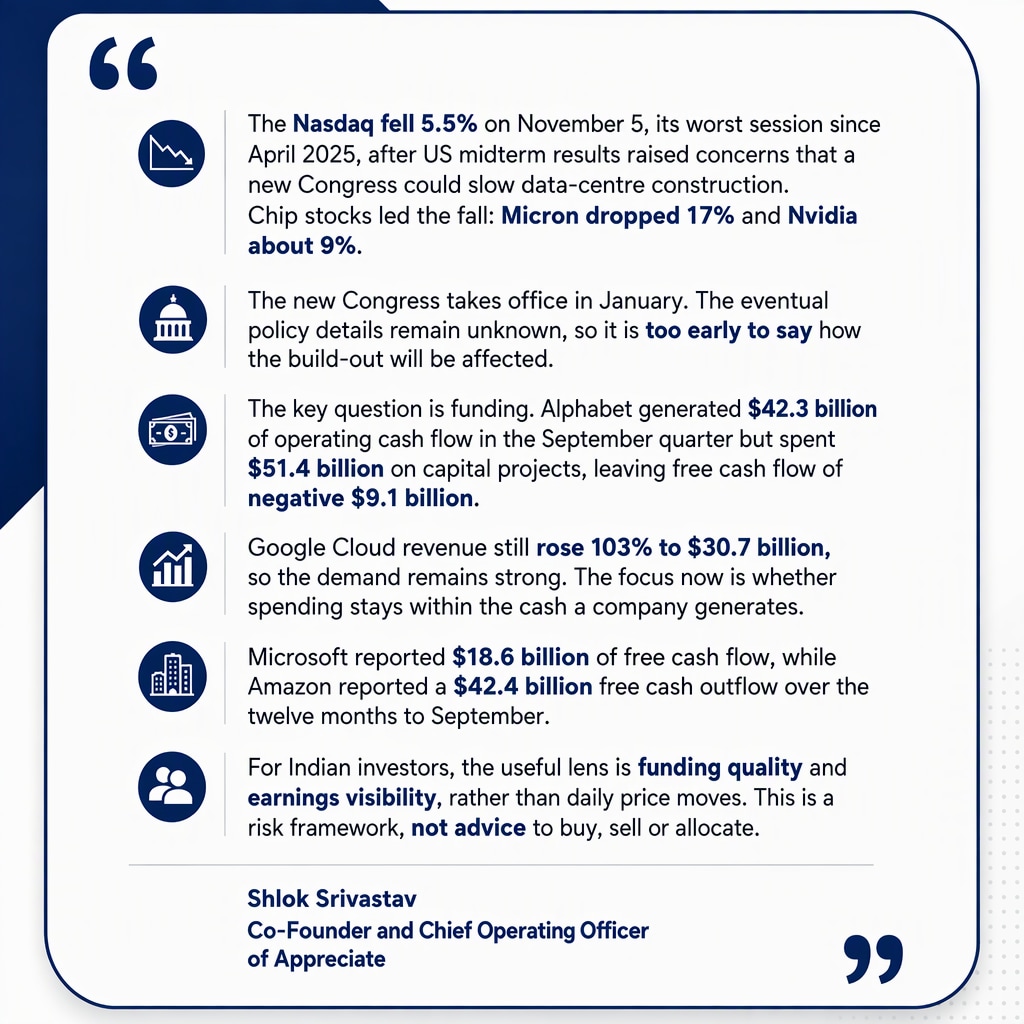
Is India's Rally Broad-Based?
Not entirely. While the Sensex and Nifty have risen sharply, smaller companies have struggled to keep pace.
The Nifty Smallcap 250 and Nifty Midcap 100 indices were trading lower on Friday, even as the benchmark indices climbed. This suggests that investors are favouring large, established companies rather than buying stocks indiscriminately.
India's market rally also comes after a period of underperformance against several emerging markets. The Sensex and Nifty remain below their record highs, leaving room for a recovery if foreign inflows and earnings momentum continue.
Explaining the response of Indian investors to the correction in the US markets, Vested Finance told NDTV, "Despite the sell-off, investors remained net buyers, indicating that many viewed the correction as an opportunity to increase their exposure. We also witnessed exceptionally strong activity across the platform. Trading activity reached an all-time high, with volumes significantly exceeding previous levels. Investor participation and order activity also touched record highs, reflecting heightened engagement during the correction."
KioskNews shows a cleaned-up reading view extracted from the publisher’s page — the original always lives on their site, not ours.